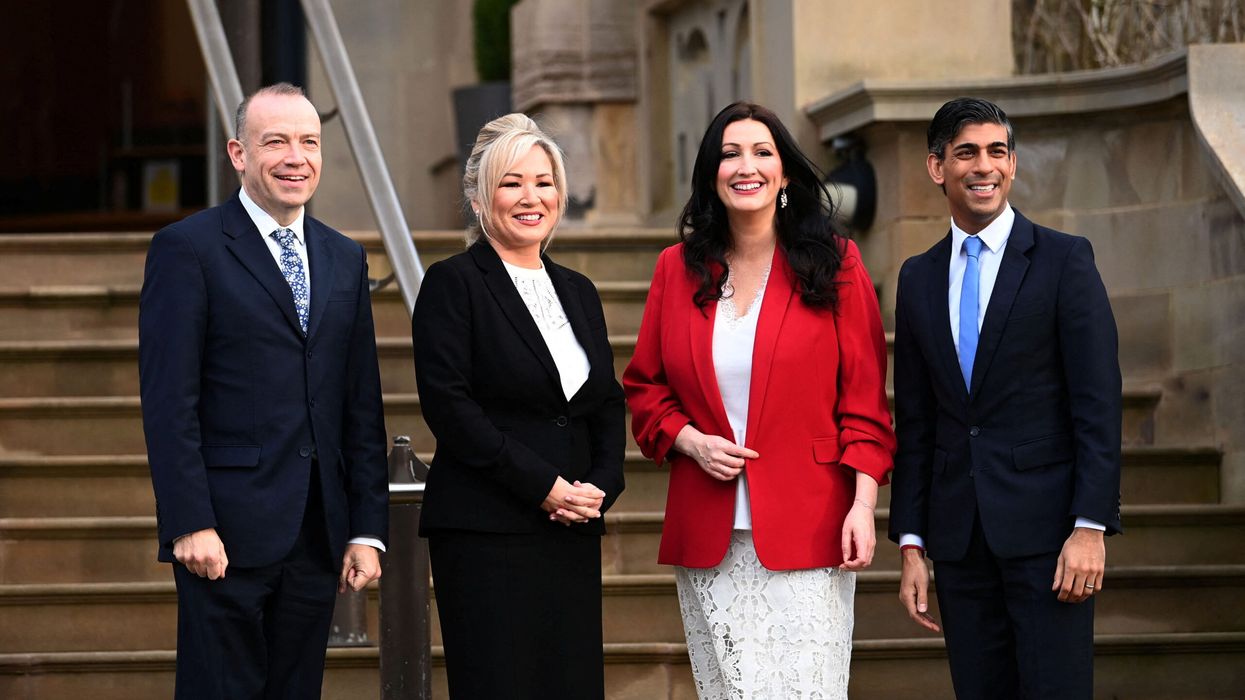

BREXIT complicated the already convoluted communal politics of Northern Ireland, but the role of the British prime minister Rishi Sunak in bringing about power sharing in Stormont has been praised by Sir Jeffrey Donaldson, leader of the Democratic Unionist Party (DUP).
“Credit to Rishi Sunak, he delivered where others haven’t,” Donaldson said last week.
For two years, the DUP refused to share power in the Northern Ireland executive with the republican Sinn Féin party. The problem is historic. The DUP believes in Northern Ireland remaining an integral part of the United Kingdom.
The problem is also geographical. On the island of Ireland, Northern Ireland shares a border with the Irish Republic, a member of the European Union (which explains why it has managed to attract investment from a number of Indian companies).
In the June 2016 referendum, Northern Ireland, unlike the UK as a whole, voted 55.8 per cent to 44.2 per cent in favour of remaining in the EU.
The New York Times pointed out: “Last year Rishi Sunak, Britain’s prime minister, struck a new deal with the EU, known as the Windsor Framework Agreement. That won some concessions from Brussels to reduce those checks, but they were insufficient for the DUP and its leader Jeffrey Donaldson.”
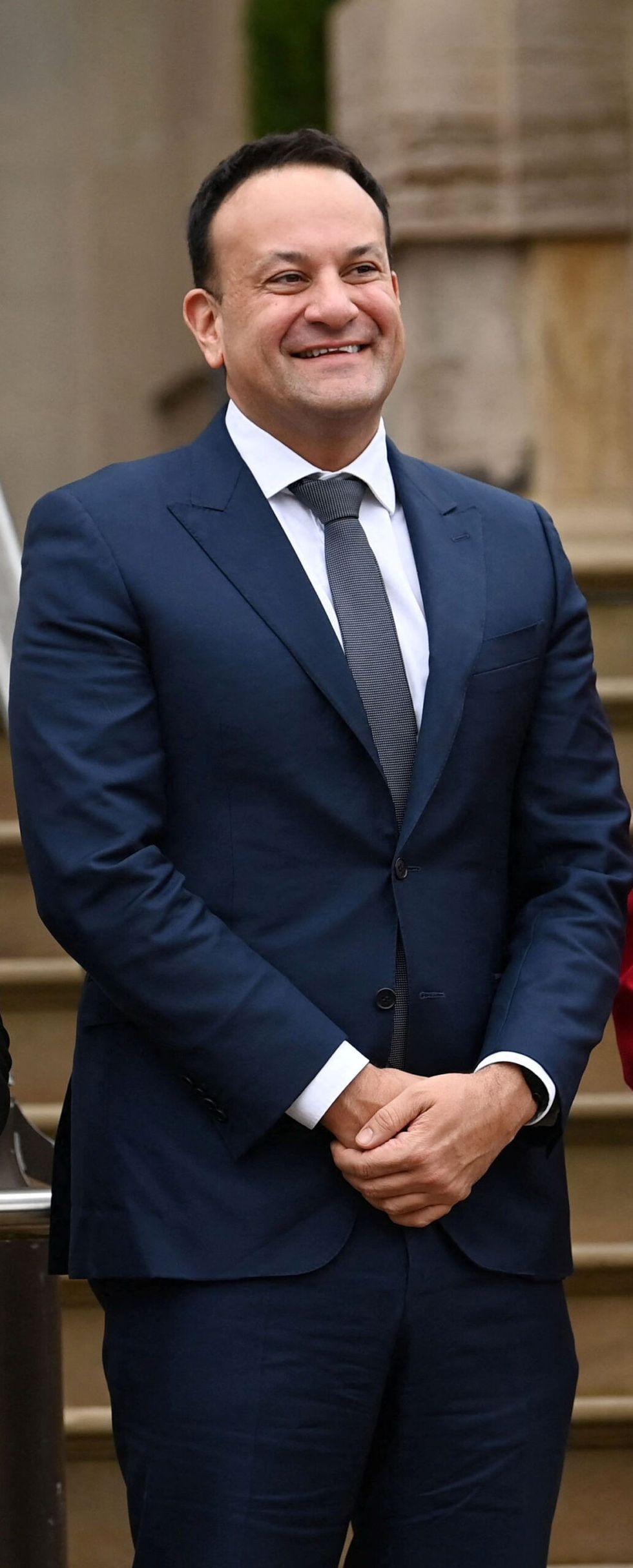 Leo Varadkar
The paper added: “In a dry, 76-page document published on Wednesday – coincidentally the four-year anniversary of Brexit coming into effect – the British government laid out details of the deal it has struck with the Democratic Unionist Party to end its boycott of the power-sharing assembly in Belfast. Crucially, the government said it would reduce checks on goods entering Northern Ireland from Britain.”
Rishi told the Commons that restored power sharing in Northern Ireland offered the prospect of a “brighter future”. When Shailesh Vara was briefly Northern Ireland secretary, he had said his “immediate priority” was to restore the Northern Ireland assembly and the executive as soon as possible.
Sinn Féin’s Michelle O’Neill, who has made history as Northern Ireland’s first nationalist first minister, said she would “serve everyone equally”. The DUP’s Emma Little-Pengelly was appointed deputy first minister.
Ireland’s Indian-origin Taoiseach, (prime minister) Leo Varadkar, offered his “heartfelt congratulations” to the two women. “It’s really good to see the executive and the assembly functioning again. I really want to see the Good Friday Agreement work for everyone on the island,” he said.
Rishi’s enemies on the far right of British politics are unlikely to acknowledge that “he delivered where others haven’t”.


 Ghent University iStock