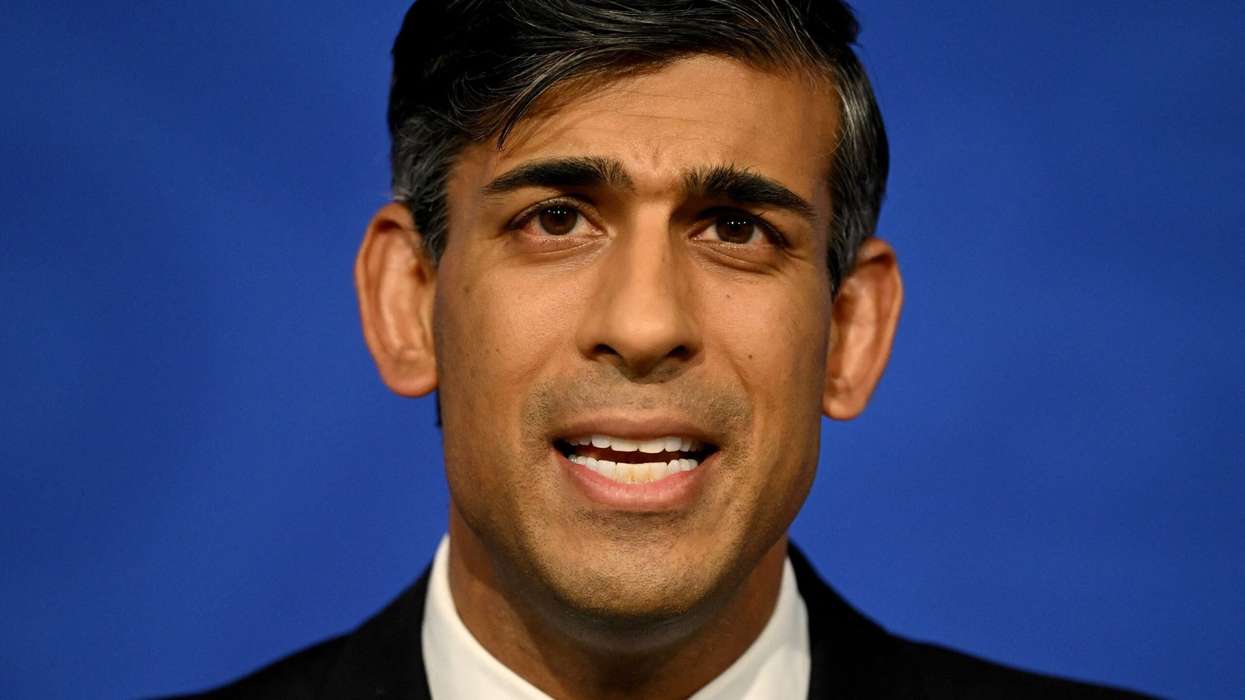

Prime minister Rishi Sunak is set to announce a funding pledge of £1.6 billion ($2 billion) during the UN climate summit on Friday (1), as an effort to enhance his green credentials, following the alterations made to Britain's measures aimed at achieving net zero, targets.
Sunak, in Dubai for COP28 Leaders' Day, will try to restore Britain's reputation as a leader in tackling climate change by committing to spend the most new money on projects in Africa and Asia to tackle deforestation and energy innovation.
But he will also underline Britain's "pragmatic" approach to climate change, a description he has stuck with since he was criticised by environmental campaigners for delaying a ban on sales of new petrol cars, easing the transition to heat pumps and granting new North Sea drilling licences.
Running way behind the opposition Labour Party in the polls before a national election expected next year, Sunak's team believes voters will only support measures to tackle climate change when, or if, they are affordable.
"The world made ambitious pledges at previous COP summits to limit global warming to 1.5 degrees. But the time for pledges is now over – this is the era for action," Sunak said in a statement.
"The transition to net zero should make us all safer and better off. It must benefit, not burden ordinary families. The UK has led the way in taking pragmatic, long-term decisions at home."
The funding, which will be announced during the two-week summit, includes up to £500 million to tackle the causes of deforestation, 316 million for energy innovation projects around the world and up to 60 million for loss and damage.
King Charles, a long-time environmental campaigner, will give the opening address to the summit, calling on world leaders to acknowledge the repeated warning signs of the impact of climate change and take "genuine transformational action."
(Reuters)






 Curator Emma Slocombe with ikat robes and arabachi coats in the Peter the Great Room in Blickling Hall Amit Roy
 View of the entrance to Blickling Hall on a rainy autumn dayAmit Roy
 Kente cloth from Ghana in the Long Gallery in Blickling Hall
 Decoration in the Great Hall at Blickling Hall Amit Roy
 Palampore fragment made in coastal south-east India in the Brown Room in Blickling Hall Amit Roy
 Bed valance dating from early 1700s in the Italian Print Room at Blickling Hall Amit Roy
 Indian inspired fabric draped on sofas in the South Drawing Room in Blickling Hall Amit Roy
 Indian inspired fabric draped on sofas in the South Drawing Room with Indian carpet in Blickling Hall Amit Roy
 Karun Thakar has picked out the geometric patterns in the bookcase and the Kente cloth in the Long Gallery in Blickling Hall Amit Roy
 Large tapestry depicting Peter the Great defeating the Swedish army at the Battle of Poltava in 1709 Amit Roy
 ikat robes and arabachi coats in the Peter the Great Room in Blickling Hall Amit Roy
 Baghs and kanthas made by women provide contrast to the men only portraits in the Great Hall at Blickling Hall Amit Roy
 Baghs and kanthas in the entrance Great Hall at Blickling Hall Amit Roy
 Baghs and Kanthas in the Great Hall in harmony with stained glass window at Blickling Hall Amit Roy
 Kimonos reflect Japanese influence in Upper Ante Room in Blickling Hall Amit Roy
 Kimono in Upper Ante Room in Blickling Hall
 A view of the Palace and fort at Agra shows romantic side of India Amit Roy
 Blickling Hall Amit Roy
 Table carpet, European 1670-1680 Amit Roy
 Unfinished 17th century Italian embroidery in the Print Room at Blickling Hall Amit Roy
 Picture of Kashmir shows a romantic view of India Amit Roy
 A panel of Ashburnham bed hangings made in Gujarat for sale in Europe in the Brown Room in Blickling Hall Amit Roy
 Colcha made in the 1600s by women in Bengal for the Portuguese market in the Long Gallery at Blickling Hall Amit Roy




