
RESEARCH says 90 per cent abuse experienced by grassroots referees have gone under-reported, but there have been instances where local football associations have campaigned against it through open letters and social media.
This season so far has seen referee strikes, officials withdrawn for their own safety, teams expelled from tournaments and some leagues refusing to provide referees for games.
The treatment meted out to them and the fear of their protection at the grassroots level have forced officials to leave the sport and taking up another profession.
In recent months there have been several letters and posts from county football associations which have gone viral warning coaches, players and parents about their conduct. There are videos on social media of abuses the officials have to go through during matches.
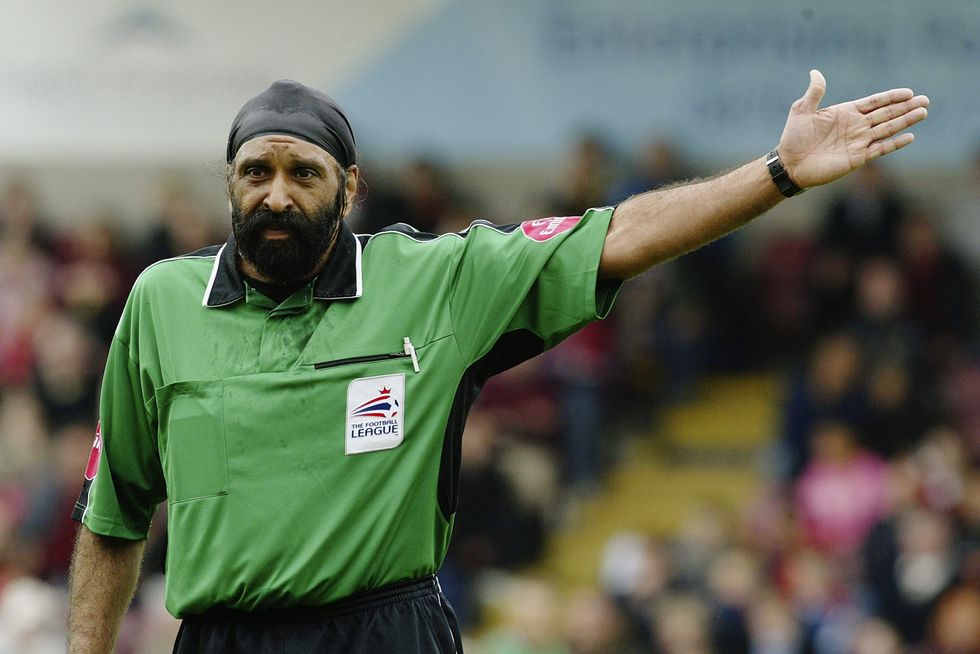 File photo of referee Jarnail Singh during the League Two match between Northampton Town and Lincoln City held at Sixfields Stadium, Northampton in 2005. (Photo by Pete Norton/Getty Images)
Recently the Football Association launched a 'Respect the Ref' campaign that wants "parents, players, spectators, coaches and everyone else" to see the game from an official's perspective.
Simon Mahomed, who has 20 years of experience refereeing, told BBC Sport: "I have been racially abused, sworn at, had flags thrown, players ranting and raving, you know the usual.
"A few weeks ago, I did a game and the abuse was constant. When I got home I said to myself: 'Why am I even doing this?'"
He is not the first referee to have asked the question, many others like him too have asked the same question.
"You don't give a decision, you get eight or nine players surrounding you and that shouldn't be part of the game," he says.
"That's not to say every game is a bad game, it's the minority," he says. "We are a valuable asset within grassroots football and without a referee there can be no game.
"Being a referee, it's amazing. It gives me a challenge. It gives me an ability to switch off from a normal 9-5 job. It gives me a freedom. And it's a chance to give something back to the community."
FA's official figures say, of the 850,000 grassroots fixtures in England during the 2019-2020 season there were 77 reported cases of assault on a referee.
The FA told BBC Sport: "We are clear that all forms of abuse, whether on or off the pitch, are completely unacceptable and we will continue to do everything we can to stamp out this behaviour.
"The FA works very closely with our 50 county FAs around the country to recruit, retain, support and develop the referee workforce to service the game and give them the best experience possible.
"The retention of all referees is crucial and this remains a priority as part of the FA's wider Respect campaign."





 Vari Vari Remix artApel, Taylor
 Lara's collaboration with Dhee a notable crossover between Tamil music and the global pop spaceApel, Taylor