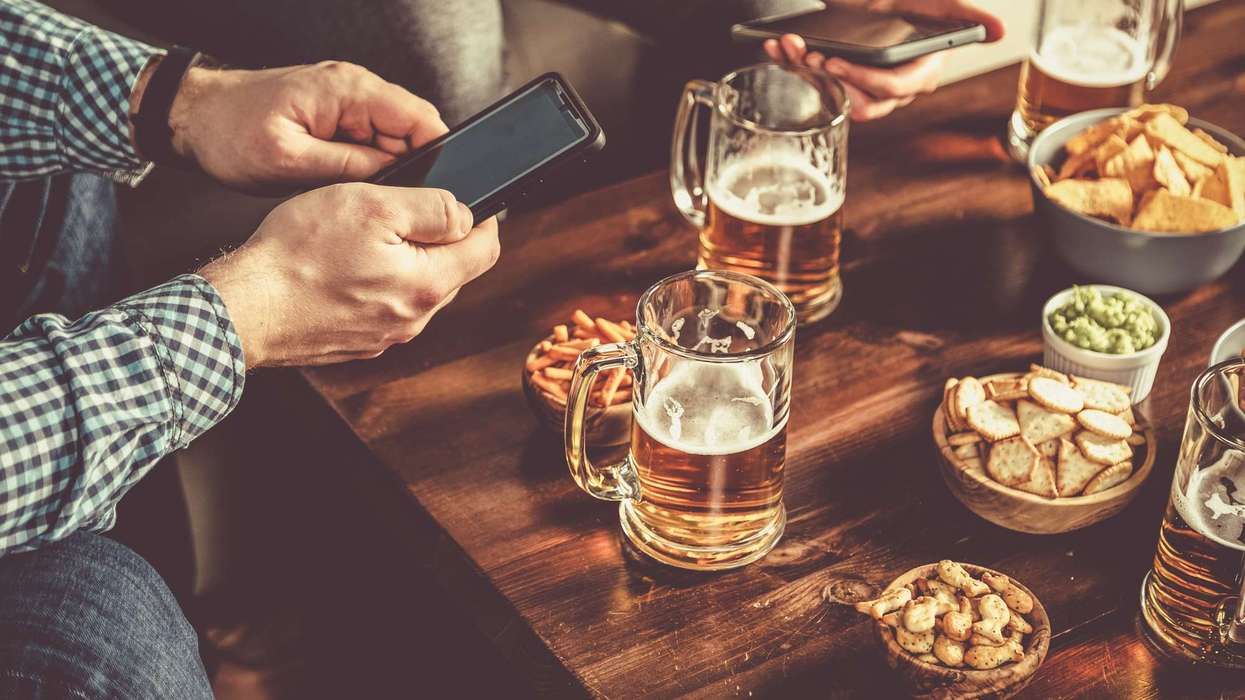

- Customers can use a smartphone instead of physical ID to prove their age.
- A short-lived QR code will be generated after an identity check.
- The government wants the technology to eventually cover tobacco and vaping products.
A QR code on your phone could soon be enough to prove your age when buying a pint, as new rules allow pubs and shops in England and Wales to accept digital ID for alcohol purchases.
Changes to the Licensing Act came into force today, giving digital proof of age the same legal standing as physical ID for age-restricted alcohol sales. However, the technology is expected to take some time to become widely accepted by businesses.
Digital ID will be provided through third-party apps such as Yoti, which is already used for age verification in other situations, including buying cinema tickets.
The process is designed to make sure the person presenting the digital ID is actually the person it belongs to. Each time the ID is used to buy alcohol, the customer will have to complete an authentication step, which could involve scanning their face or entering a PIN.
Once verified, the app generates a token, such as a QR code, which is valid for around 30 seconds. The code can then be scanned by the pub, shop or other licensed business to confirm that the customer is old enough to make the purchase.
A new choice at the till
In some cases, a photograph of the customer may also be sent to a terminal so that the bartender or person behind the till can compare it with the person standing in front of them.
Physical documents such as driving licences will continue to be valid, and customers can still use them to prove their age.
The government has said businesses and individuals will be free to decide whether to use or accept digital ID. It does not expect physical ID to disappear, partly because continuing to accept it does not carry an additional cost and abandoning it could exclude customers who do not use digital ID.
Ministers have also asked developers of digital ID systems to make their technology interoperable. The aim is to allow customers to use one ID app across different businesses rather than having to download separate apps for different retailers.
The system is also expected to work offline, in a similar way to contactless payments.
From a pint to other age-restricted products
The government hopes digital proof of age can eventually be used beyond alcohol, with tobacco and vaping products among the next areas being considered.
Digital Government Minister Stephanie Peacock said the change could make age checks more convenient while reducing the amount of personal information customers need to hand over.
“From pubs and restaurants to music venues and festivals, licensed businesses carry out millions of age checks every year,” she said.
“It will remain an individual or business’ choice whether to use or adopt it, and physical ID will remain a valid way for customers to prove their age,” Peacock reportedly said.
She added that digital proof of age would mean customers would not need to carry physical ID or hand over information such as their name or address simply to prove their age.
The hospitality industry has also welcomed the change, although it has called for the roll-out to remain affordable and straightforward for businesses.
Allen Simpson, chief executive of UKHospitality, said the system would provide “greater flexibility and convenience for customers and businesses”.
He also said the industry wanted to work with the government to ensure the roll-out, with multiple suppliers available, was cost-efficient and did not create an additional burden for hospitality businesses.
The cost of adopting the technology remains unclear. However, it is expected that some businesses could integrate digital ID checks into tablets they already use.
For customers, the change raises a fairly simple question: if a phone can now prove you are old enough to buy a pint, how far will digital ID eventually extend into everyday life?