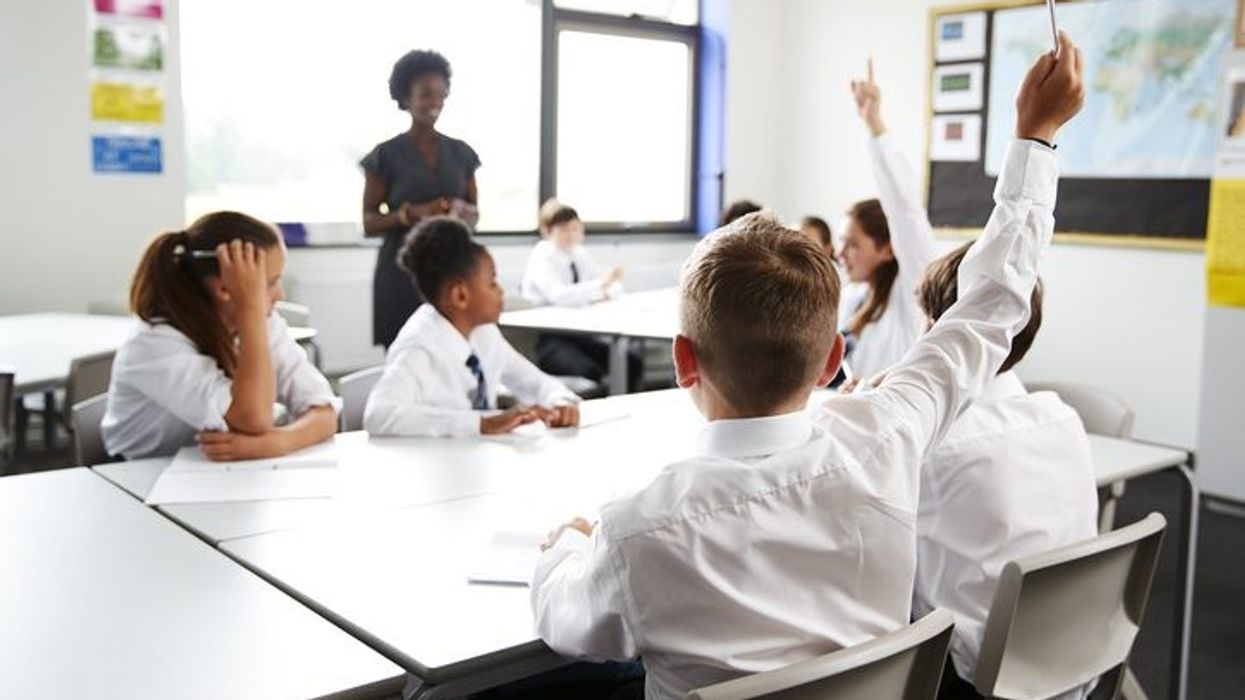

Labour party leader Sir Keir Starmer’s proposal to restore VAT on private schools has sparked concern among parents as it could result in a 20 per cent hike in fees.
This is expected to trigger a pupil exodus from private to state schools.
But many of the parents looking to admit their children to state schools are being told that only limited slots are available, The Telegraph reports.
Starmer had recently confirmed that the VAT exemption currently enjoyed by private schools would be removed on 'day one' if his party comes to power.
Labour party aims to redirect this financial advantage to improve the quality of state education.
One parent told the daily that when she contacted her local council in Newcastle about the possibility of moving her child from private to state education, she was told that secondary schools are so oversubscribed that students are on a waiting list.
Many other councils, including Cambridgeshire, Wokingham and Leeds, have issued similar warnings.
Headteachers in some private schools claim that some parents have already started pulling their children out or cancelling places at fee-paying schools.
Parents' concerns
Education Not Taxation, a grassroots campaign group, said that parents are now worried that children may be left without a school to attend in September.
Group spokesperson Loveena Tandon said the plans were “not only disruptive” but “unfair” and would ruin the future of young people.
The group has called for a consultation on the plans if Labour wins the election, amid growing pressure on the party to re-think the pledge.
Starmer recently said that he understood and respected the concerns of parents who have sent their children to private schools, but the party has to make difficult choices.
Julie Robinson, the chief executive of the Independent Schools Council has urged the Labour party to carry out an impact assessment before implementing the hike.
She pointed out that the Labour party has not yet provided details or timelines for the policy. "Schools and parents alike cannot adequately plan based on headlines,” she added.
Robinson said that 100,000 students with special educational needs are currently in private schools and they should be protected from the taxes.






 Curator Emma Slocombe with ikat robes and arabachi coats in the Peter the Great Room in Blickling Hall Amit Roy
 View of the entrance to Blickling Hall on a rainy autumn dayAmit Roy
 Kente cloth from Ghana in the Long Gallery in Blickling Hall
 Decoration in the Great Hall at Blickling Hall Amit Roy
 Palampore fragment made in coastal south-east India in the Brown Room in Blickling Hall Amit Roy
 Bed valance dating from early 1700s in the Italian Print Room at Blickling Hall Amit Roy
 Indian inspired fabric draped on sofas in the South Drawing Room in Blickling Hall Amit Roy
 Indian inspired fabric draped on sofas in the South Drawing Room with Indian carpet in Blickling Hall Amit Roy
 Karun Thakar has picked out the geometric patterns in the bookcase and the Kente cloth in the Long Gallery in Blickling Hall Amit Roy
 Large tapestry depicting Peter the Great defeating the Swedish army at the Battle of Poltava in 1709 Amit Roy
 ikat robes and arabachi coats in the Peter the Great Room in Blickling Hall Amit Roy
 Baghs and kanthas made by women provide contrast to the men only portraits in the Great Hall at Blickling Hall Amit Roy
 Baghs and kanthas in the entrance Great Hall at Blickling Hall Amit Roy
 Baghs and Kanthas in the Great Hall in harmony with stained glass window at Blickling Hall Amit Roy
 Kimonos reflect Japanese influence in Upper Ante Room in Blickling Hall Amit Roy
 Kimono in Upper Ante Room in Blickling Hall
 A view of the Palace and fort at Agra shows romantic side of India Amit Roy
 Blickling Hall Amit Roy
 Table carpet, European 1670-1680 Amit Roy
 Unfinished 17th century Italian embroidery in the Print Room at Blickling Hall Amit Roy
 Picture of Kashmir shows a romantic view of India Amit Roy
 A panel of Ashburnham bed hangings made in Gujarat for sale in Europe in the Brown Room in Blickling Hall Amit Roy
 Colcha made in the 1600s by women in Bengal for the Portuguese market in the Long Gallery at Blickling Hall Amit Roy




