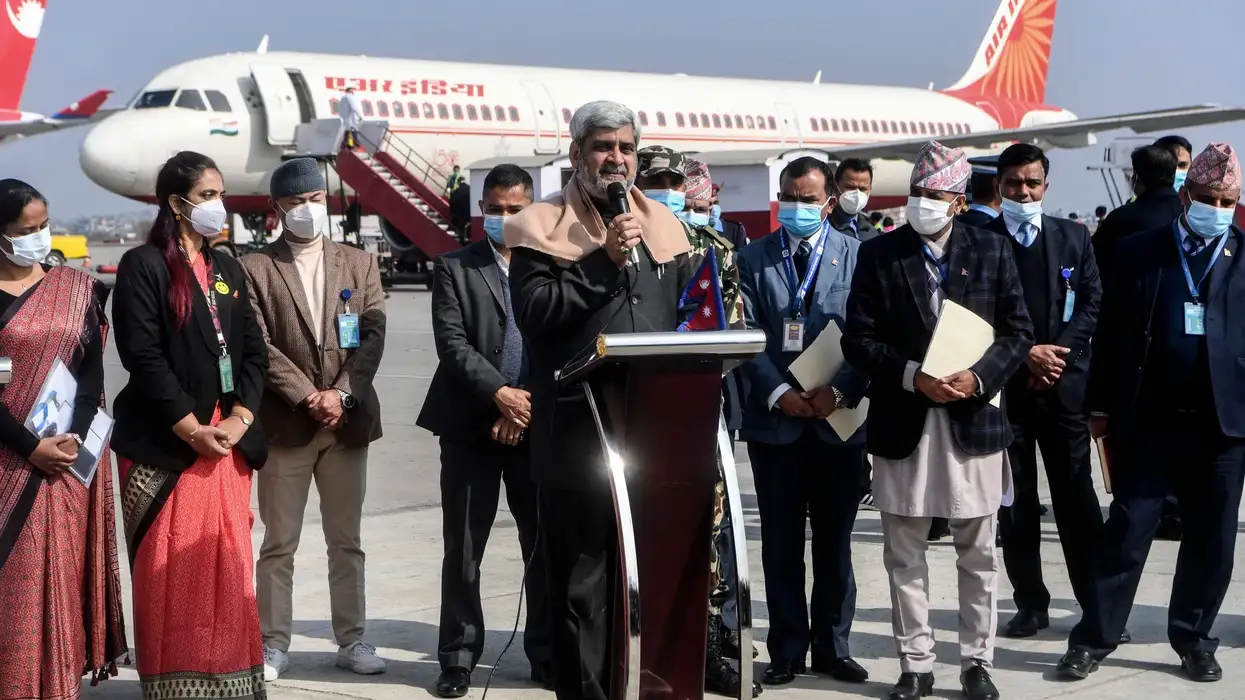

India exported its first batch of locally produced coronavirus shots on Wednesday (20), officials said, as the world's biggest vaccine manufacturer scrambled to meet requests from other countries desperate to protect their populations.
The Maldives and Bhutan will be the first recipients of India's coronavirus vaccine, while Brazil and South Africa are also among those on the waiting list.
Foreign minister S. Jaishankar said on Twitter that the "Pharmacy of the World will deliver to overcome the COVID challenge".
The policy is seen in part as a push by India to boost its soft power and take on rival China, which is also supplying vaccines to other countries.
In January, Indian regulators approved two vaccines -- one, Covishield, developed by AstraZeneca and Oxford University and produced by India's Serum Institute, and the other Covaxin, made by local firm Bharat Biotech.
The Indian government said the Maldives will receive a free supply of 100,000 doses of Covishield on Wednesday, while Bhutan will receive 150,000 as a "gift".
Bangladesh, Nepal, Myanmar and Seychelles will follow shortly, New Dehli said.
India plans to offer 20 million doses to its South Asian neighbours, Bloomberg News reported last week, with others in Latin America, Africa and Central Asia next in line.
The Serum Institute, the world's biggest vaccine maker by volume, also plans to supply 200 million doses to Covax, a World Health Organization-backed effort to procure and distribute inoculations to poor countries.
Meanwhile, Covaxin's maker Bharat Biotech last week signed a deal with a Brazilian firm and is ramping up annual production to 700 million doses, a spokesperson told financial outlet the Mint Daily on Wednesday.
India on Saturday began rolling out Covishield and Covaxin jabs to its 1.3 billion people, although the shot for the latter is yet to complete human trials.
As of Wednesday, India had vaccinated almost 675,000 people, according to the government, as it pushes to inoculate 300 million people by July.
But amid some public scepticism and technical problems, many people have not been showing up at appointments to get their first shot.
In the first two days of the rollout in the capital New Delhi, for instance, only 53 percent of people invited came forward for jabs, the city's health minister Satyendar Jain said.