
Mobile services in Pakistan have been suspended due to the "deteriorating security situation", the caretaker government said on Thursday (8) as the people were voting to elect a new administration, a day after twin terror attacks killed at least 30 people.
The interior ministry said it has decided to “temporarily suspend mobile services across the country” in light of the “deteriorating security situation”.
In a statement, the ministry said, “Recent surge in terrorist activities resulting in precious lives have stirred the security environment in the country.” Therefore, it added, “need has arisen to take measures to safeguard against” security threats.
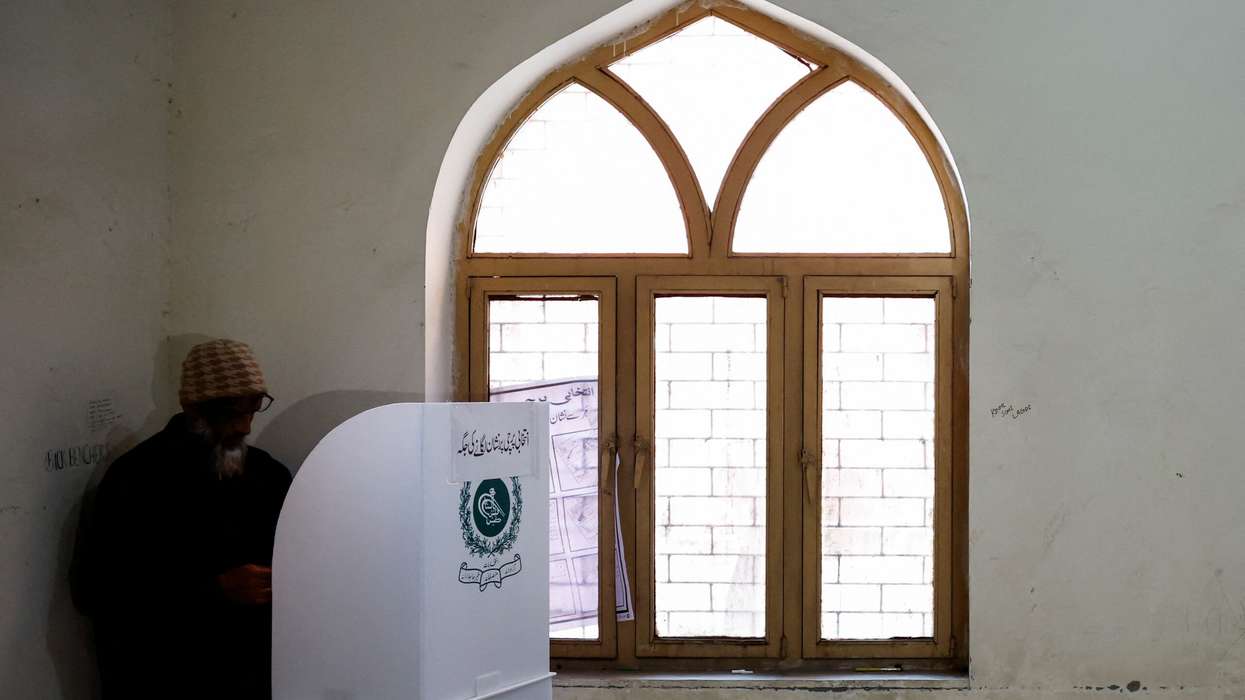
Meanwhile, voters across Pakistan on Thursday began voting in the general elections to elect a new government to rule the cash-strapped country. The polling started at 8.00 AM and will continue without any break till 5.00 PM.
A countrywide public holiday has been declared to enable a total of 128,585,760 registered voters to cast their votes, almost half of whom are under the age of 35. More than 5,000 candidates - of whom just 313 are women - are contesting the 266 directly-elected seats in the 336-member National Assembly.
Thousands of troops were deployed on the streets and at polling stations across the country and borders with Iran and Afghanistan were temporarily closed.
Mobile services have been suspended across the country and the Election Commission of Pakistan's (ECP) 8300 SMS service has also been affected, ARY News reported. Reports showed that phone services were affected in some cities including Karachi and Peshawar.
Chief Election Commissioner Sikandar Sultan Raja, commenting on the suspension of the internet and cellular services, said the ECP would not ask the ministry for the revival of the services.
Raja on Wednesday talked to the chief secretaries and inspectors general of police (IGPs) of the four provinces and directed them to keep security on high alert to ensure the security of voters.
This comes as the Pakistan Telecommunication Authority (PTA) on Wednesday evening said internet services would remain functional on Thursday. The PTA in a statement said it had not yet received any instructions from the government to shut internet and that services would work without any interruption on Thursday.
Caretaker Interior Minister Gohar Ejaz had on Tuesday hinted at the possible suspension of internet services in case of security issues in any area on election day.
Amid recent terrorist attacks plaguing the nation and claiming numerous lives, the government temporarily suspended mobile services across the country as a proactive measure to maintain peace and order amidst potential threats.
The decision to suspend mobile services was announced on Thursday by the Interior Ministry, highlighting the gravity of the situation and the necessity for stringent security measures.
"This step aims to disrupt any potential communication channels utilised by terrorist elements, thereby aiding law enforcement agencies in their efforts to thwart any planned attacks and safeguard innocent lives," Samaa TV quoted a ministry spokesperson as saying.
However, many voters in Lahore told the BBC that the internet blackout meant it was not possible to book taxis to go and vote, while others said they couldn't chat with other family members to coordinate when to head to polling stations.
Many non-governmental organisations, including Amnesty International, had called for uninterrupted internet access across the country during the polling process.
In an open letter, Amnesty International urged the authorities to guarantee uninterrupted access to the internet and digital communication platforms for everyone across Pakistan throughout the polling process.
“We, the undersigned organisations and members of the #KeepItOn coalition - a global network of over 300 organisations from 105 countries working to end internet shutdowns - appeal to you, Prime Minister Anwaarul Haq Kakar and Chief Election Commissioner Sikandar Sultan Raja, to publicly commit to ensuring that the people of Pakistan have unfettered access to the internet, social media platforms, and all other communication channels throughout the upcoming general election on February 8, 2024,” the London-based NGO said.
It noted as people prepared to vote, the authorities must adopt and prioritise measures that advanced rights by enabling unrestricted access to information and avenues for freedom of expression, assembly, and association - both offline and online.
In a related development, the Sindh High Court on Tuesday, yet again, directed the federal authorities concerned to ensure the provision of smooth, uninterrupted internet service and access to social media platforms unless the relevant laws were invoked till February 21. (Agencies)