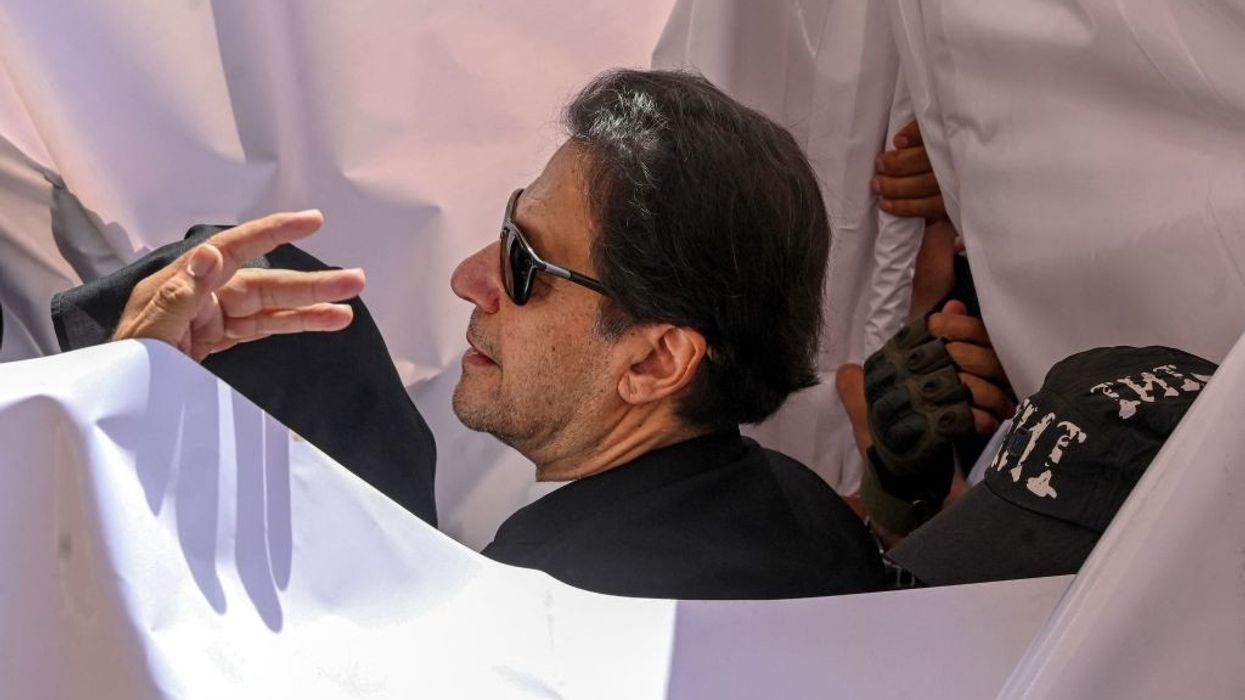

A Pakistan high court on Tuesday (16) extended bail for former prime minister Imran Khan in two cases relating to inciting violence and sedition until June 8.
A single bench of the Islamabad High Court (IHC) heard the pleas in cases pertaining to allegations against top officers of state institutions and the assault of Pakistan Muslim League-Nawaz (PML-N) leader Mohsin Ranjha by Khan's supporters.
The previous day, on Monday (15), a court in Lahore granted bail until May 23 to Khan's wife in a graft case, a lawyer in their legal team said.
Khan was arrested by Pakistan’s anti-graft agency last week in the same case, prompting violent protests across the country.
He was later released and received bail from a court in Islamabad for two weeks.
Khan's wife, Bushra Bibi, was co-accused along with Khan in the case, which pertained to the alleged receiving of financial help from a land developer in the setting-up of Al Qadir University of which the former prime minister and his spouse are trustees.
"We had requested for a protective bail for Bushra Bibi in Al Qadir Trust Case and a two-judge bench of LHC has granted the bail till May 23," Bibi's lawyer, Intizar Hussain Panjutha, told Reuters.
Khan, who accompanied his wife to the Lahore High Court, had earlier on Monday expressed fears that the government was planning to arrest his wife as part of what he says is a campaign against him.
"The plan is now to humiliate me by putting Bushra Begum in jail," he said in a post on Twitter.
Information Minister Marriyum Aurangzeb did not immediately respond to a request for comment.
The government denies being behind the case and says the anti-graft agency, the National Accountability Bureau, is working independently.
The case is one of more than 100 registered against the embattled Khan since he was ousted from power last year in a parliamentary vote having served fewer than four of his five-year term.
He has since campaigned across the country for fresh elections and blames the military for cracking down on him and his party - a charge the military denies.
(Agencies)