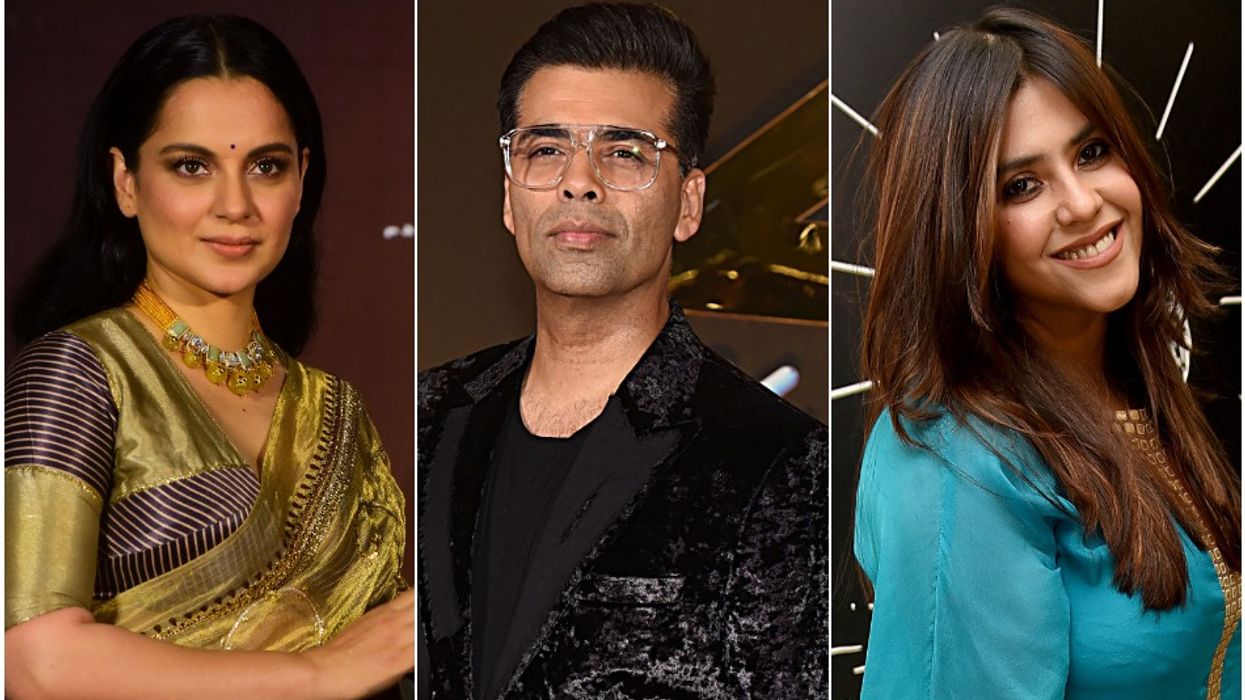

In January 2020, it was announced that Kangana Ranaut, Karan Johar and Ekta Kapoor will be honoured with Padma Shri award, the fourth-highest civilian award of the Republic of India.
However, due to the pandemic, the award ceremony was delayed, and took place on Monday (8) at Rashtrapati Bhawan, New Delhi, India. Ranaut, Johar and Kapoor received their respective Padma Shri awards at the ceremony.
Johar’s Dharma Productions tweeted the video of the filmmaker receiving the award and wrote, “A moment of pride and honour for us all! Heartiest congratulations to our @karanjohar on receiving the prestigious Padma Shri Award presented by the President of India Shri Ram Nath Kovind.”
Kapoor’s Balaji Motion Pictures also tweeted the video of her receiving the award, and wrote, “Congratulations to our boss lady @ektarkapoor as she has been honoured with the prestigious Padma Shri award. #ShobhaKapoor @RuchikaaKapoor #BalajiMotionPictures #PadmaAwards2020 #Padmashri.”
ANI tweeted Ranaut’s pictures and wrote, “Actor Kangana Ranaut receives the Padma Shri Award 2020.”
Singer Adnan Sami also received Padma Shri, and while talking to ANI, he said, “Sometimes you don't have words to express yourself. Thankful to Govt. Thankful to people, nothing is possible without them. I dedicate this to my father-mother. It's not only an honour but also a responsibility, which I'll try to carry out well.”