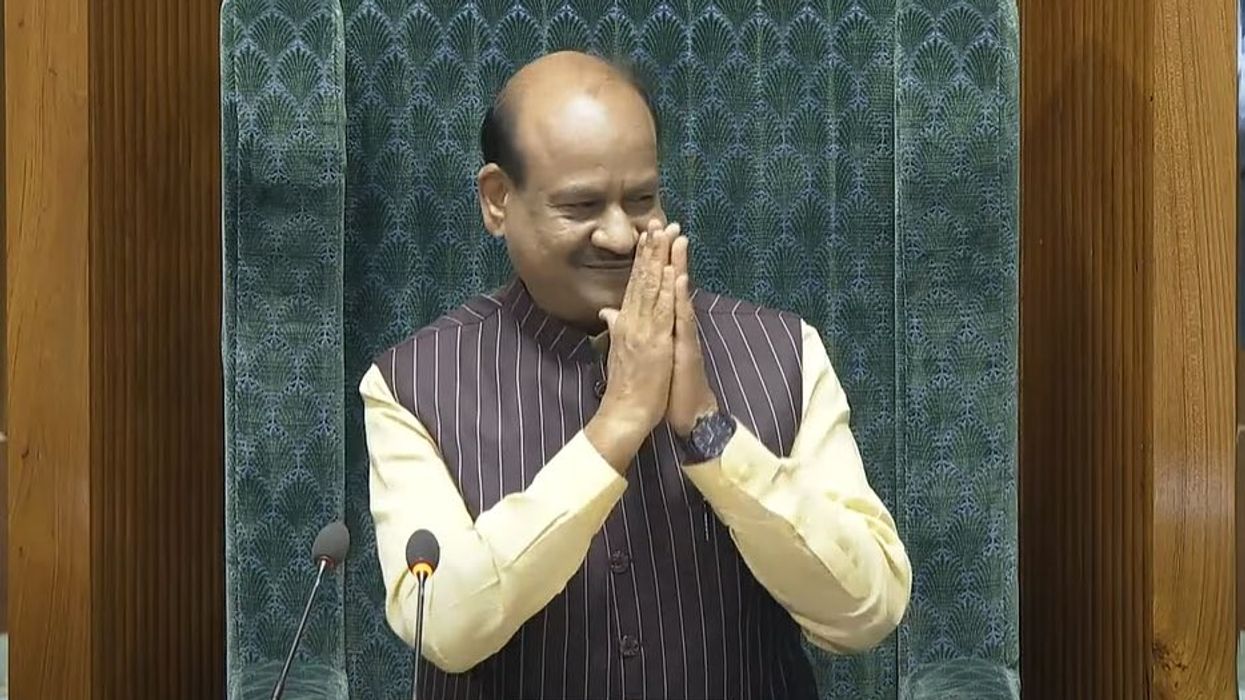

Indian prime minister Narendra Modi faced a significant political test in his third term on Wednesday. A candidate from his ruling Bharatiya Janata Party (BJP) was elected speaker of the lower house of parliament, defeating an opposition lawmaker by a voice vote.
Om Birla, from Modi's BJP and the incumbent speaker, retained his position, overcoming K Suresh, an eight-time MP from the opposition Congress party.
Congress leader Rahul Gandhi, appointed as the leader of the opposition late on Tuesday by his party, joined Modi in congratulating Birla on his re-election.
This marks Gandhi's first constitutional role in parliament at the age of 54, as a significant figure from the Nehru-Gandhi family.
"It is crucial that the opposition's voice is represented in this house," Gandhi stated during his remarks congratulating Birla.
Traditionally, the speaker of the Lok Sabha, the lower house, is a member from the largest party and is usually elected unopposed through consensus among parties.
The BJP-led National Democratic Alliance (NDA) holds 293 seats in the lower house, surpassing the required majority of 272 by 21 seats.
Modi, who was sworn in for a third term as prime minister on June 9, will seek support from regional parties to govern, following his party's loss of an outright majority in parliament.
The speaker, responsible for overseeing proceedings and business in the lower house, plays a pivotal role in the legislative process.
(With inputs from Reuters)