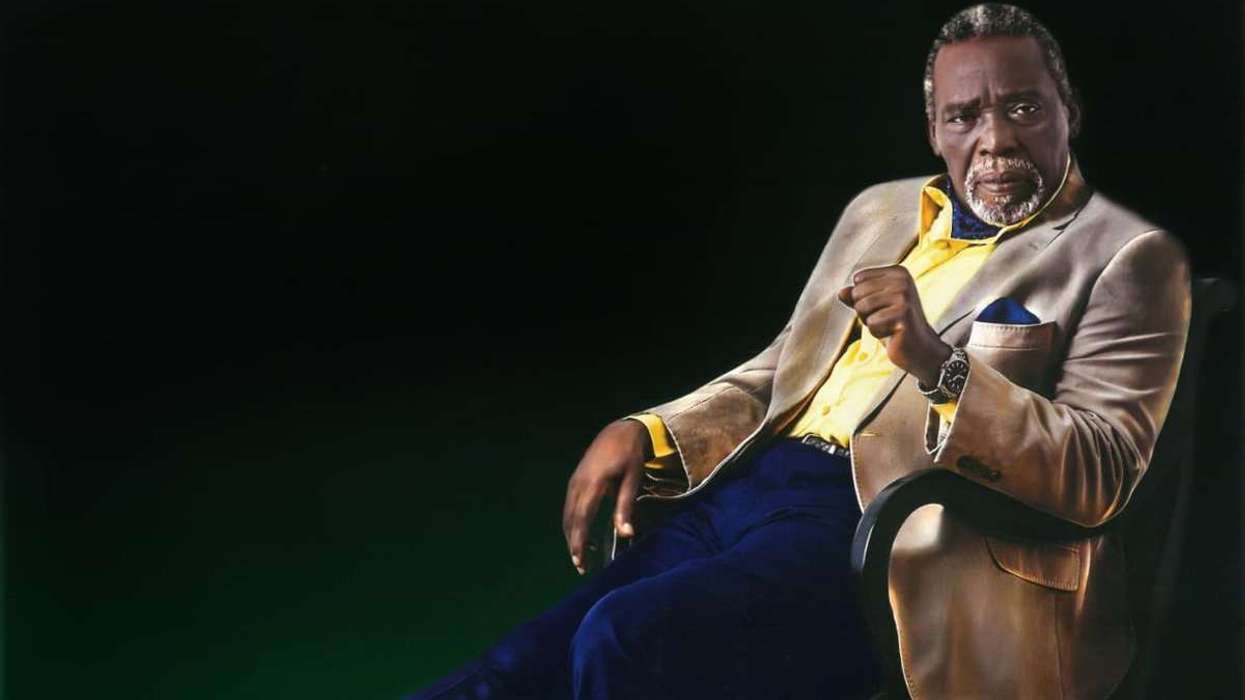

Olu Jacobs has died at the age of 84. His son, Olusoji Jacobs, confirmed the news on Instagram on Wednesday, September 16, writing on behalf of the family: "It is with gratitude to God for a life well lived and fought, that we announce the passing of our dear husband, father, grandfather and uncle. The Lion of Lufodo." The family gave his dates simply — Oludotun Baiyewu Jacobs (MFR), 11/07/1942–16/09/2026 — and asked bloggers and social media users to respect their privacy while they mourn.
There's a bitter irony in that request. For years, Jacobs' family had to keep publicly insisting he was still alive, as false death rumours did the rounds online again and again. This time, there was nothing left to deny.
Who He Was
Oludotun Baiyewu Jacobs was born on July 11, 1942, in Abeokuta, Ogun State, though he grew up in Kano. He was a Nigerian actor and film executive, a dual Nigerian-British national, and — alongside his wife of over three decades, fellow theatre veteran Joke Silva — one half of Nollywood's most enduring power couple. Ask anyone in the industry who Nollywood's godfather was, and the answer came without hesitation.
The Spark, In Kano
Jacobs' path to acting wasn't inevitable. He attended Holy Trinity School in Kano, where he threw himself into the debating and drama societies rather than anything more academic. The real turning point came when he watched one of Chief Hubert Ogunde's touring concert parties at Kano's Colonial Hotel — a night that convinced him this was the only thing worth doing with his life. He got himself a visa not long after and left for England.
The London Years
This is the part of Jacobs' story that tends to get flattened into a single line — "trained at RADA" — when it's really the foundation everything else was built on.Jacobs arrived in Britain in 1964 to study at the Royal Academy of Dramatic Arts in London. Once he'd graduated, he didn't head straight for the cameras; he spent years working his way through Britain and Ireland's repertory theatre circuit, the traditional (and unglamorous) way British actors earned their craft. One of his earliest credited stage roles was The Boy in A Taste of Honey at Sheffield's newly opened Crucible Theatre in 1972 — the same year he appeared in Richard's Cork Leg at the Royal Court. Two years later he was at the Gate Theatre in Black Man's Country, playing Father Zachary Azuka.
By 1977, he'd reached the National Theatre itself, appearing in a production of Julius Caesar directed by John Schlesinger — genuine A-list company for a Nigerian actor barely a decade off the boat. The following year brought his highest-profile London stage credit: President Mageeba in the Phoenix Theatre's premiere of Tom Stoppard's Night and Day, produced by Michael Codron.Alongside the stage work, British television kept him busy and visible throughout the 1970s. Jacobs appeared in The Goodies, Till Death Us Do Part, Barlow at Large, The Venturers, Angels, 1990, The Tomorrow People and The Professionals — a genuine cross-section of British TV's biggest shows of the decade. He also picked up early film credits, including a role as Commissioner Batak in 1979's Ashanti alongside Michael Caine and Omar Sharif.
By the time he returned to Nigeria, Jacobs wasn't a Nigerian who'd studied abroad. He was a working British theatre and television actor who happened to be Nigerian — and that distinction mattered enormously for what came next.
Coming Home
Jacobs went home in the early 1980s, just as Nigeria's home-video film movement was starting to take shape into what would become Nollywood. He landed a role in the TV series Third Eye, and his first film credit came with Vigilante, produced by AA Productions.
What he brought back with him was almost unheard of at the time: proper conservatory training, a decade of repertory stagecraft, and real screen experience on British television. Nigerian film in the early '80s had energy and hunger, but very little of that technical grounding. Jacobs supplied it.
Over the following decades he built a filmography of more than 200 movies, alongside over 100 stage productions and 30-plus Nigerian television credits — among them Pirates, Eagle's Bride, 21 Days With Christ, Burning Kingdom, Mirror of Beauty and The Return of Ogidi. Colleagues consistently described him the same way: the bridge between Nollywood's founding generation and everyone who came after, and — alongside Pete Edochie — one of the two most influential actors African cinema has produced.
Joke Silva And Lufodo
Jacobs met Joke Silva in 1981 at the National Theatre in Lagos, during the 21st Independence anniversary celebrations, and married her in 1989. Beyond the marriage, the two built something structural: the Lufodo Group, a media company spanning film production and distribution, plus the Lufodo Academy of Performing Arts, founded in 2012 — a way of formalising, for a new generation, exactly the kind of training Jacobs had once had to travel to London to get.
Awards
- 2007 — African Movie Academy Award (AMAA), Best Actor in a Leading Role, for Dancing Heart
- 2011 — Member of the Order of the Federal Republic (MFR), one of Nigeria's national honours
- 2013 — Industry Merit Award, Africa Magic Viewers' Choice Awards (AMVCA)
- 2016 — Lifetime Achievement Award, AMAA
When Jacobs turned 80 in 2022, Nigeria's presidency sent a formal congratulatory message — a rare gesture that said as much about his standing as any award did.
The Final Years
In his final years, Jacobs faced ongoing health challenges, and Joke Silva spoke publicly about the toll of caring for him, including his diagnosis with dementia with Lewy bodies. Rumours of his death circulated online repeatedly over the past five years — in 2020, 2021, 2022 and beyond — each time swiftly and firmly denied by Silva, the Actors Guild of Nigeria, and colleagues including Kate Henshaw and Lala Akindoju. The affection behind those denials said as much as the rumours themselves ever did: birthday tributes from Omotola Jalade, Sola Sobowale and Shaffy Bello routinely described him not just as a colleague but as a mentor and father figure to the entire industry.
Why He Mattered
Take away the awards and the honorifics, and what's left is simple: Nollywood didn't have to develop the technical seriousness it eventually did, and Jacobs is one of the specific reasons it did anyway. He carried a London theatre education home and spent the rest of his career putting it to use. Nigerian cinema's foundations have his name on them, and they will for as long as the industry exists.
Frequently Asked Questions
- How did Olu Jacobs die?
The family's announcement, shared by his son Olusoji Jacobs on September 16, 2026, did not state a cause of death. Jacobs had faced ongoing health challenges in his final years, including a diagnosis with dementia with Lewy bodies, which his wife Joke Silva had spoken about publicly.
- What is Olu Jacobs' connection to London?
Jacobs trained at the Royal Academy of Dramatic Arts (RADA) in London from 1964, then spent years performing in British repertory theatre — including the Royal Court, the Gate Theatre and the National Theatre — before moving into British television in the 1970s.
- Who is Olu Jacobs' wife?
He was married to veteran Nigerian actress Joke Silva, whom he met in 1981 and wed in 1989. Together they founded the Lufodo Group and the Lufodo Academy of Performing Arts.
- What awards did Olu Jacobs win?
He won the AMAA Best Actor award (2007), Nigeria's Member of the Order of the Federal Republic honour (2011), an AMVCA Industry Merit Award (2013), and a Lifetime Achievement Award from AMAA (2016).