Skip to content
Search

Latest Stories

Submit Guest Post

Now pay more to see Taj Mahal

Those hoping to visit the Taj Mahal and enjoy its beauty will have to shell out more money, as the tourism department has increased ticket prices from Rs 40 to Rs 50.

New tickets will be valid for only three hours, Minister of State for Culture and Tourism Mahesh Sharma said.


“We need to preserve Taj Mahal for the generations to come; new ‘barcoded’ tickets would cost Rs 50 from the earlier Rs 40 and it would be valid only for three hours,” said Sharma. “All our monuments and the area around them would be polythene-free,” he added.

“Separate ticket of Rs. 200 will be needed to enter into the main mausoleum at Taj Mahal to ensure the protection of the built fabric and better crowd management,” the minister said.
The Taj Mahal, which is one of the seven wonders of the world, is currently undergoing major renovation works. The restoration is expected to finish later this year.

The structure is currently covered in scaffolding and the monument is expected to get a mud-pack treatment to brighten the marble exterior. The mud-pack treatment is a first for Taj Mahal

"In all likelihood, the entire dome will be obscured by iron scaffolding and during the actual cleaning process, portions of the white marble facade will be covered in mud and sheets for two to three days at a time. This process will be carried out in sections and the work on the dome is expected to last a year," Grand Rapids, Mich.-based A&S Signature Journeys said.


The Taj Mahal was commissioned in 1632 by the Mughal emperor Shah Jahan to house the tomb of his wife, Mumtaz Mahal. The structure was designated a UNESCO World Heritage Site in 1983 for being “the jewel of Muslim art in India and one of the universally admired masterpieces of the world’s heritage.”
Add EasternEye As Your Trusted Source
preferred source on google news

More For You

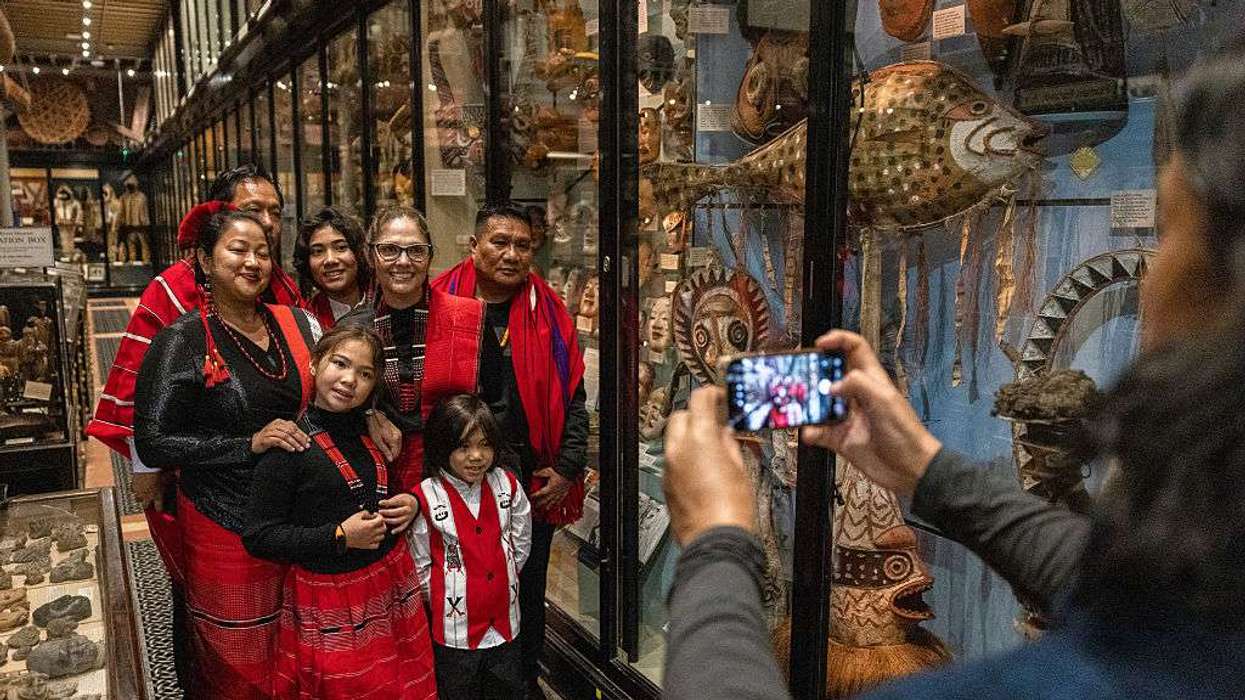
Oxford-museum-nagaland

Members of a Naga delegation pose for a photo in the museum following a ceremony at Oxford University's Pitt Rivers Museum in Oxford on November 9, 2026, to mark the return of the remains of 39 people taken during Britain's colonial era to the Naga community in northeast India.

(Photo by Brook Mitchell / AFP via Getty Images)

Oxford museum returns 39 ancestral remains to India's Naga community

Highlights

  • Oxford's Pitt Rivers Museum returned 39 ancestral human remains to the Naga community.
  • The remains were brought to Britain between 1910 and 1940, during colonial rule.
  • Naga leaders plan to bury them together under a memorial in Nagaland.
  • The museum holds more than 6,000 objects representing Naga culture.

AN OXFORD UNIVERSITY museum on Monday (9) returned the remains of 39 people taken during Britain's colonial rule in India to members of its Naga community.

Keep ReadingShow less