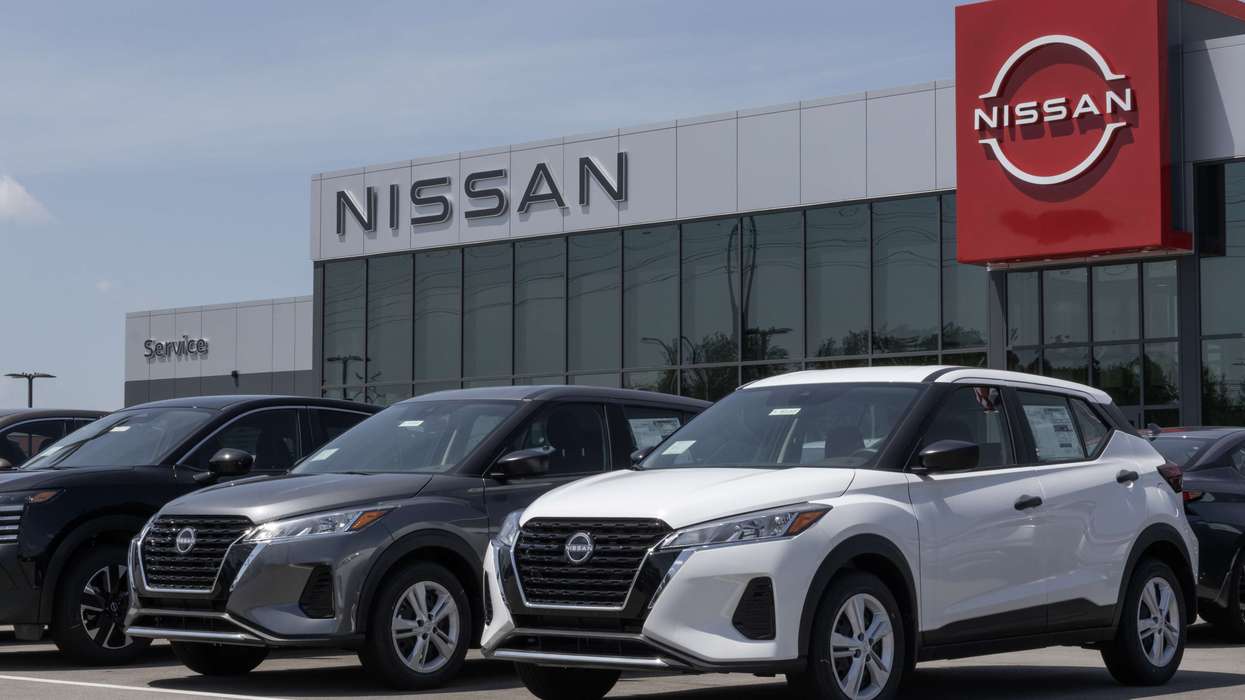

- Nissan plans to cut around 900 jobs across Europe.
- Sunderland’s two production lines will be merged into one.
- Talks are under way with Chinese carmaker Chery over spare factory capacity.
Nissan is restructuring its European operations as the company grapples with slowing demand, rising competition and growing pressure in the electric vehicle market. The carmaker has announced plans to cut around 900 jobs across Europe while also consolidating production at its major Sunderland plant in the UK.
The move forms part of Nissan’s wider RE:Nissan recovery plan, which the company says is aimed at creating a “leaner” and more resilient business capable of adapting more quickly to changing market conditions, reportedly said in a statement.
At the centre of the changes is the Sunderland factory, one of Britain’s largest car manufacturing sites. Nissan confirmed it will merge its two production lines into a single line that will continue building the Leaf, Juke and Qashqai models. The company insists the line consolidation itself will not lead to job losses at the plant, which employs around 6,000 people.
However, the broader European cuts will include a small number of UK-based office roles.
A factory reshaped for a changing market
The Sunderland plant has long been a key part of Nissan’s European operations, but it is currently operating below full capacity. By moving production onto one line, the company effectively frees up space for another manufacturer to potentially begin building vehicles at the site.
That possibility has fuelled growing speculation around Chinese automakers expanding into Britain through existing European factories rather than building entirely new sites from scratch.
Nissan is understood to have held discussions with several firms, including Chery, the Chinese automotive giant behind the Omoda and Jaecoo brands. Chery has been rapidly increasing its presence in the UK market since late 2024 and is already preparing to assemble vehicles at a former Nissan facility in Barcelona.
The company has not confirmed any agreement regarding Sunderland, but its UK head Victor Zhang had previously said Chery was evaluating the possibility of establishing manufacturing operations in Britain, as quoted in a news report.
Industry insiders suggest there is no certainty that a deal will materialise, though discussions are believed to be ongoing and an announcement could emerge in the coming months.
Also read: Will UK-built cars lose appeal in Europe overnight? | EasternEye
Chinese competition reshapes the EV race
The developments come at a time when Chinese carmakers are rapidly gaining ground across Europe and the UK, particularly in the electric vehicle sector.
Brands such as Jaecoo and Omoda have expanded quickly, helped by competitively priced models and aggressive market entry strategies. The Jaecoo 7 became Britain’s best-selling car model in March, marking the first time a Chinese-branded vehicle had taken the top position in the UK market since MG achieved the feat in 2023.
Jaecoo only entered the UK market in February 2025, but sales reportedly surged by around 570 per cent year-on-year in March. The company sold more than 12,700 vehicles during the month, placing it close to established European brands and ahead of Tesla in UK sales.
For Western carmakers such as Nissan, the rapid rise of Chinese manufacturers is adding another layer of pressure to an already difficult transition towards electric vehicles.
The Sunderland restructuring appears to reflect that broader reality. Rather than shutting down operations, Nissan seems to be recalibrating how the factory is used while keeping future partnership options open.
The company says discussions with staff are ongoing as it works through the restructuring process across Europe.