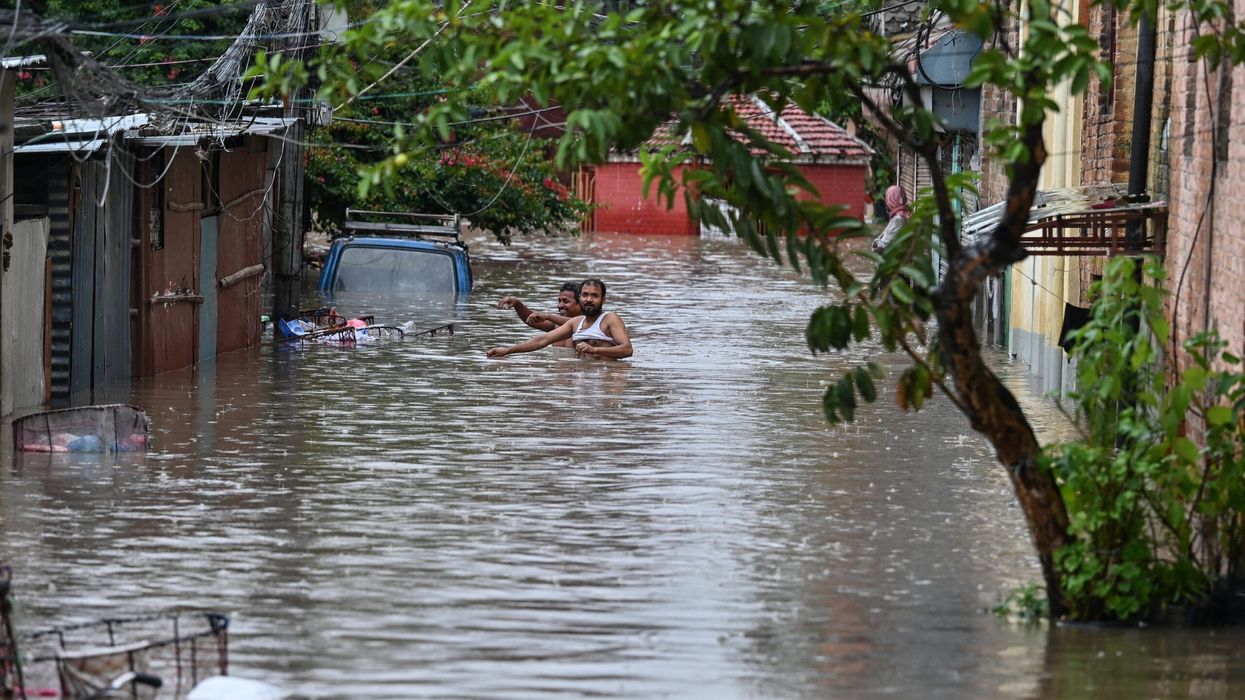

RESIDENTS in Nepal’s flood-affected capital returned on Sunday to find their homes covered in mud after severe floods that have killed at least 104 people across the country.
Floods and landslides during the monsoon season from June to September are common in South Asia, but experts say climate change is increasing their occurrence and impact.
Entire neighborhoods in Kathmandu were submerged over the weekend, with flash floods reported in rivers running through the capital. Highways connecting the city with the rest of Nepal also sustained significant damage.
Kumar Tamang, a resident of a slum near a riverbank, said he and his family had to flee their home after midnight on Saturday as the water surged.
“We came back this morning, and everything is different,” the 40-year-old told AFP. “We couldn’t even open the doors because they were blocked by mud. Yesterday we feared the water might kill us, but today we don’t have any water to clean up.”
Nepal’s home ministry confirmed that 104 people had died nationwide, with 64 still missing.
Ministry spokesperson Rishi Ram Tiwari said bulldozers were being used to clear several blocked highways, which had cut Kathmandu off from the rest of the country.
“More than 3,000 people have been rescued,” he said.
Among the victims, at least 14 were passengers on two buses buried by a landslide that hit a highway south of Kathmandu, Dhading district chief Rajendra Dev Pandey told AFP.
In the 24 hours leading up to Saturday morning, Kathmandu valley recorded 240 millimeters (9.4 inches) of rain, according to Nepal’s weather bureau, making it the heaviest rainfall recorded in the capital since at least 1970, the Kathmandu Post reported.
The Bagmati river and its tributaries, which flow through Kathmandu, overflowed, flooding nearby homes and cars. Residents waded through chest-deep water to reach safety.
More than 3,000 security personnel, equipped with helicopters and motorboats, were deployed for rescue efforts. Teams also used rafts to transport survivors to safer locations.
Flights in and out of Kathmandu resumed by Sunday morning after being grounded since Friday evening due to the weather, which caused more than 150 departures to be canceled.
Monsoon rains account for 70-80 percent of South Asia’s annual rainfall and are known to cause widespread damage. Experts point to climate change as a factor in the increasing frequency and severity of floods and landslides.
In July, a landslide in Chitwan district sent two buses carrying 59 passengers into a river. While three people survived, authorities have only recovered 20 bodies, with ongoing floods hampering the search.
So far this year, over 260 people have lost their lives in rain-related disasters across Nepal.
(With inputs from AFP)