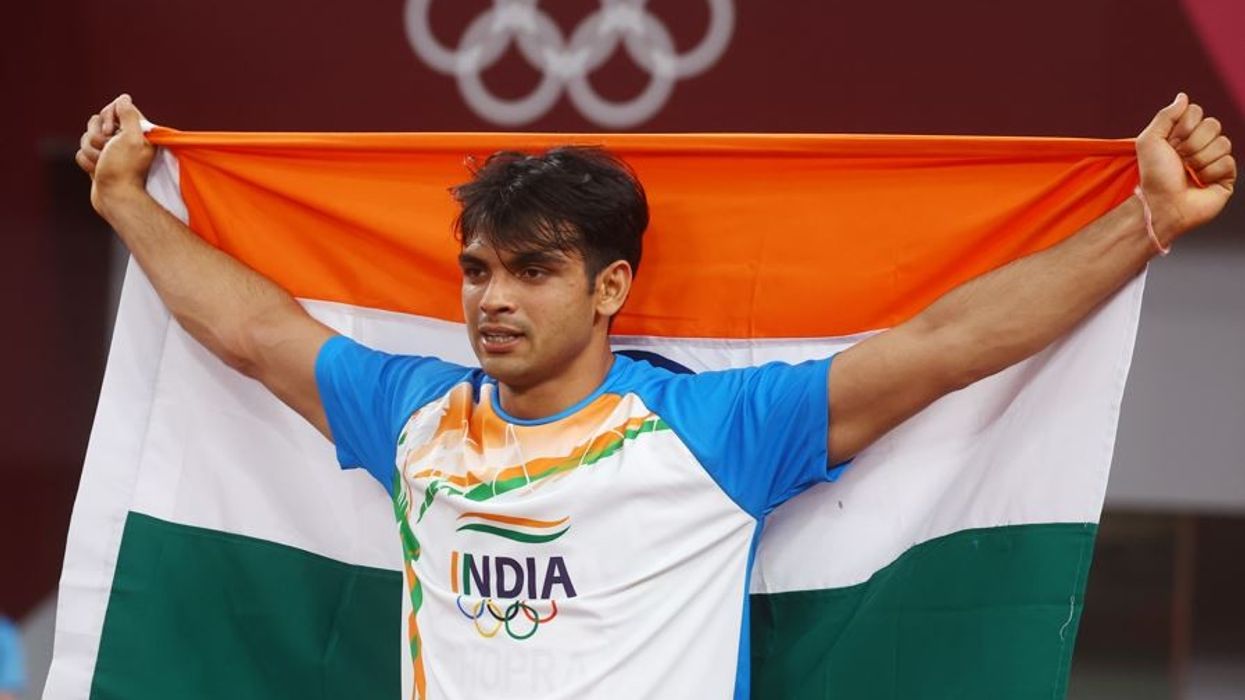

NEERAJ CHOPRA won the men's javelin on Saturday (7) with a best throw of 87.58 metres to claim a historic first Olympic athletics gold medal for India.
The Czech Republic's Jakub Vadlejch won silver with 86.67 metres and Vitezslav Vesely claimed the bronze with 85.44.
Chopra, the 2018 Commonwealth champion, seized the lead with a throw of 87.03 on his first attempt, a distance no other competitor achieved during the final, winning India's first gold of the Tokyo Games as his overjoyed team mates and coaches watched from the stands.
With medals assured, Vadlejch and Vesely attempted to reach the top of the podium on their final throws but each fouled.
Chopra became only the second Indian to win an individual Olympic gold medal after Abhinav Bindra won the 10-metre air rifle event at the 2008 Games.
"Your performance has further elevated what has been evident throughout the Games - that our athletes are not only capable of going toe to toe with the best, but are firmly establishing ourselves as the favorites," Bindra wrote on Twitter.
"Our first individual Gold might have taken over a century to come, but the comparatively miniscule time taken for your to bring home the second is a solid indication that we, as a sporting nation, are on the rise."
The evening was a disappointment for Germany's Johannes Vetter, a favourite for the podium as the only competitor in the final to have thrown over 90 metres, who finished ninth.
(Reuters)