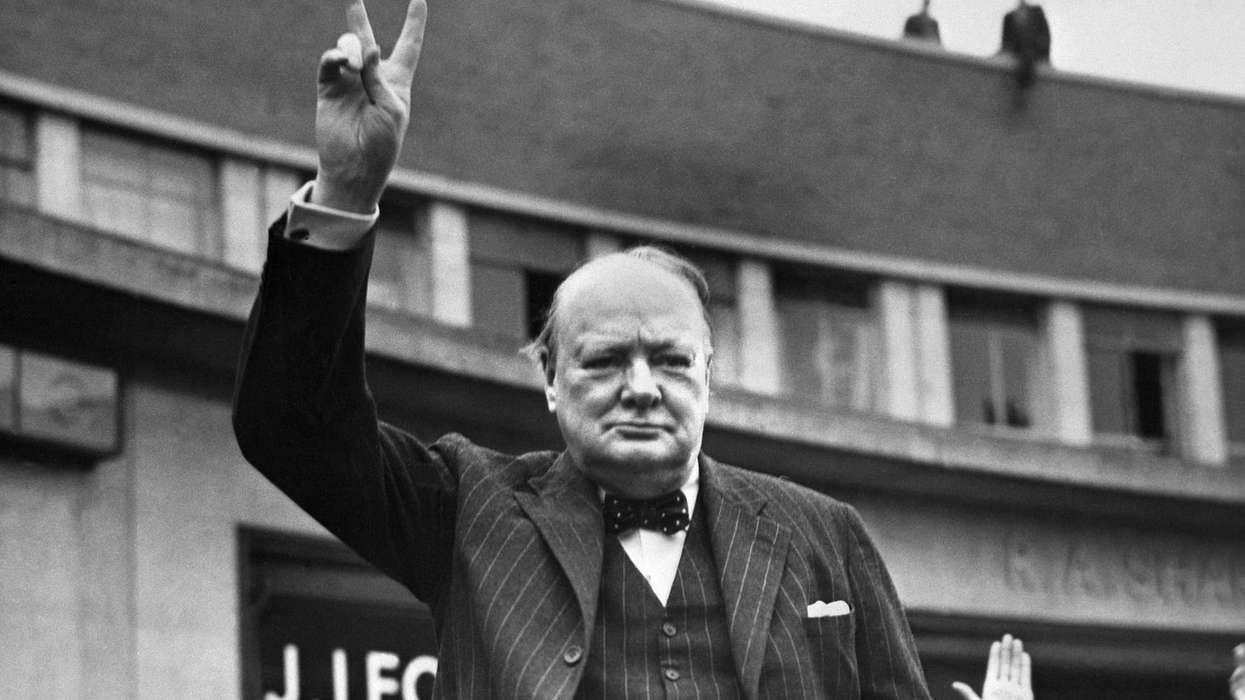

A VIDEO installation at the National Portrait Gallery has been withdrawn following a dispute over its references to Sir Winston Churchill's role in the 1943 Bengal famine.
The 40-minute work, Persistence, by Turner Prize-winning artist Helen Cammock described the famine as involving the "wilful starvation of the Indian population by Winston Churchill".
The installation had been on temporary display for 10 months and was due to end in August as part of the exhibition Artists First: Contemporary Perspectives on Portraiture.
The work prompted an open letter from Lord Roberts of Belgravia, a Churchill biographer, signed by more than 50 peers, including Churchill's grandson Sir Nicholas Soames. The letter said the claim was incorrect and described the installation as an "ideologically motivated rant", the BBC reported.
An estimated three million people died in the Bengal famine. Lord Roberts said the famine was caused by a typhoon and that Churchill instructed his war cabinet to make every effort to help those affected by seeking grain from international leaders. Others argue Churchill's policies contributed to the famine.
The National Portrait Gallery told the BBC that Cammock had decided to remove the film from display. It said the work was presented as an artistic piece, not a documentary, and that the views expressed did not necessarily reflect those of the gallery.
Cammock said the work was not a documentary and urged people to "hear it out". She said her work was grounded in academia and "asks us to think about who is honoured and valorised and who is not; whose stories are told and whose are not".
She added: "Nina Simone once said 'An artist's duty, as far as I'm concerned, is to reflect the times' and sometimes this means revisiting, enquiry and challenge."