
Highlights
- Mayor insists London is "fairer, safer, greener and more prosperous" than a decade ago despite criticism over crime.
- Backs Andy Burnham's early premiership and calls for greater devolution across England.
- He says a decision on a fourth term will be made next year after discussions with his family.
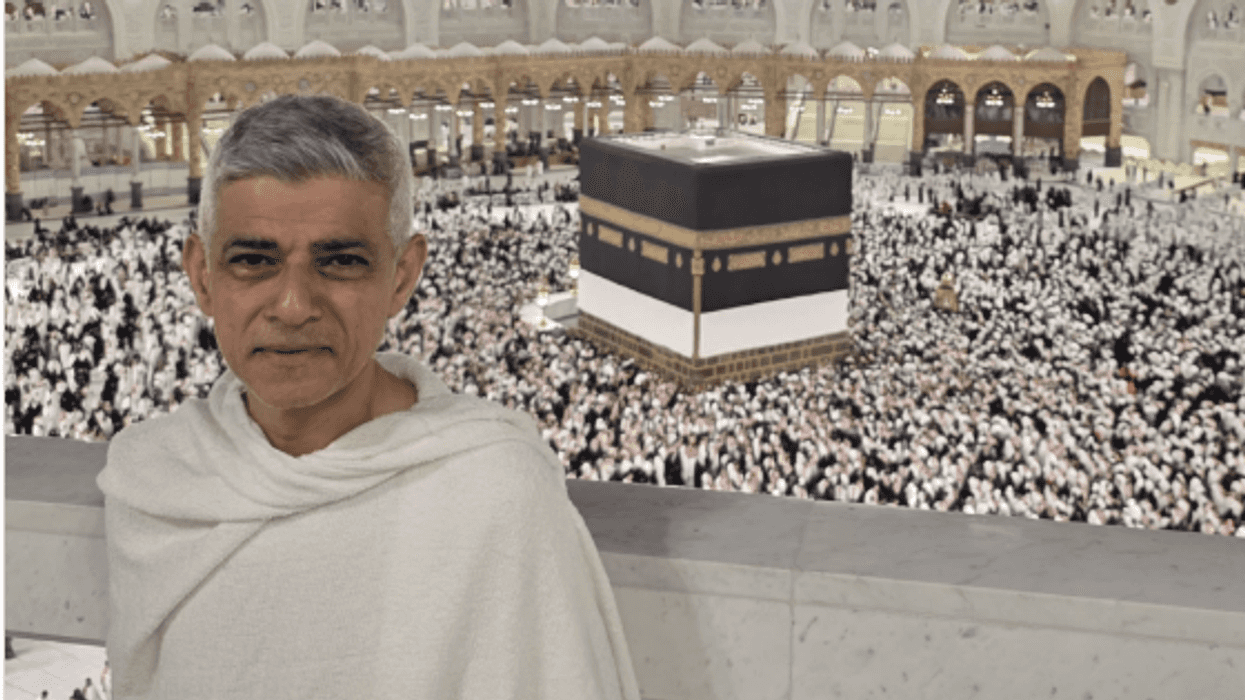
LONDON mayor Sir Sadiq Khan has said his pilgrimage to Mecca has strengthened rather than diminished his commitment to public service, adding that he hopes his work as mayor will earn him "blessings" in this world and the hereafter.
In an interview with The Telegraph, Khan said completing Hajj in May had been a "profoundly life-changing" experience that prompted him to reflect on faith, family and public duty.
"You realise the diversity of the people who follow my faith," he said, describing Mecca as "probably the most diverse place in the world" outside London. Seeing millions of pilgrims dressed identically was "humbling", he said, because "despite all these titles and status, you're equal".
Rather than prompting him to slow down, Khan said the pilgrimage reinforced his determination to continue serving London.
He said, "The idea is that life is an exam. If you pass the exam, you go to heaven... It doesn't mean working less... but to try to carry on doing good."
Khan was also keen to stress that he was not trying to promote religion through politics.
"It's not an act of domination," he said. "I'm not trying to persuade you or Telegraph readers to become Muslims or take over the country."
Trafalgar Square iftar controversy
Addressing criticism of Muslim events such as the open-air iftar held in Trafalgar Square earlier this year, Khan said he did not understand attempts to portray them as divisive.
"I understand at the moment that when it comes to the hierarchy of people who are trodden upon, Muslims are at the bottom," he said, arguing that such rhetoric risked making Muslims feel like "second-class citizens" and could fuel radicalisation.
Reflecting on a decade in office, Khan defended his record despite continued criticism over crime and transport policies.
"I don't play that game," he said when asked to identify his weakest area. "London is fairer, safer, greener and more prosperous than it was 10 years ago."
He pointed to cleaner air, lower homicide rates and falling crime, while acknowledging that public perceptions also mattered.
"Perception is reality," he said. "The substance is bringing crime down, but if you don't feel safe, that's a problem for me."
Khan also defended the expansion of the Ultra Low Emission Zone (ULEZ), one of the most controversial policies of his mayoralty.
"Nobody talks about Ulez now," he said. "There is no reward without risk. The best decisions I've made over the past 10 years are those that were difficult to do."
He argued that the "silent majority" had backed the policy and noted that no serious mayoral candidate was now campaigning to reverse it.
Khan praises Burnham
Turning to national politics, Khan praised prime minister Andy Burnham's start in Downing Street, describing his first weeks in office as energetic and purposeful.
"I think even the harshest critic would recognise that he has had a great first two weeks," Khan said, adding that Burnham appeared to have "a north star" guiding his government.
He also renewed his call for deeper devolution, arguing that councils and regional mayors understand local challenges better than Whitehall.
"We are the most centralised democracy in the western world," he said, adding that genuine devolution would mean dispersing power rather than concentrating it in central government.
Khan confirmed that he has yet to decide whether to stand for a fourth term as mayor in 2028.
"After discussing it with my wife and family, I'll make a decision next year," he said. "My tank is full, I'm still fizzing with ideas."
However, he acknowledged concerns about remaining in office for too long, saying he genuinely questioned whether it would be good for London for one person to lead the city for 16 years.

 Raageshwari LoombaMahesh Liloriya
 Raageshwari LoombaMahesh Liloriya
 WinnersMahesh Liloriya