
Highlights:
- King Charles said the UK and US remain united in defence of democracy.
- He called for continued support for Ukraine.
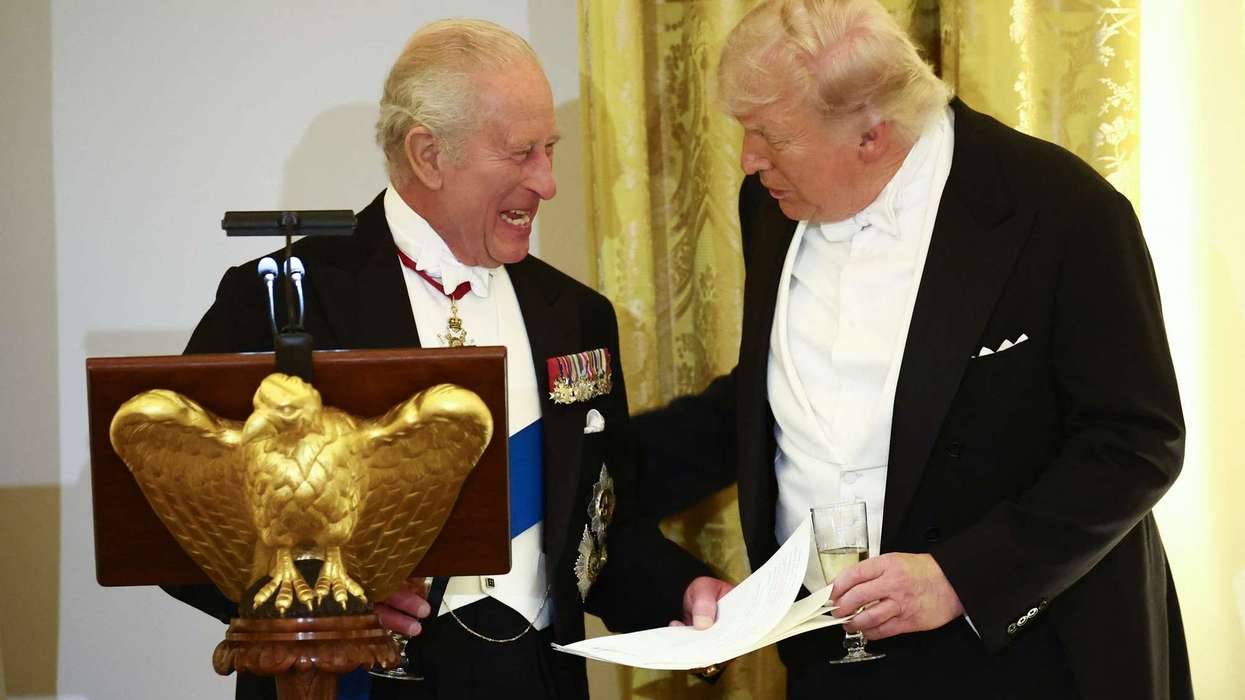
- Trump praised Charles’ speech and hosted a state dinner at the White House.
- Charles also met leading US technology executives during the visit.
KING CHARLES told the US Congress on Tuesday that the United Kingdom and the United States remain allies despite divisions over the war with Iran and wider conflicts in Europe and West Asia.
Addressing a joint meeting of the Senate and House of Representatives, he said the two countries would continue to work together in defence of democracy.
"Whatever our differences, whatever disagreements we may have, we stand united in our commitment to uphold democracy, to protect all our people from harm, and to salute the courage of those who daily risk their lives in the service of our countries," Charles told lawmakers after entering with Queen Camilla to a standing ovation.
In remarks delivered during a rare address, Charles referred to NATO, the need for continued US support for Ukraine in its war with Russia, and warned against isolationism. He also spoke about safeguarding nature.
ALSO READ: Donald Trump hosts King Charles at White House
US president Donald Trump has criticised NATO and European allies, including over their stance on the US-Israeli war against Iran, and has questioned continued US aid to Ukraine.
Call for support for Ukraine
Charles referred to the September 11, 2001 attacks, saying, "we answered the call together, as our people have done so for more than a century, shoulder to shoulder through two world wars, the Cold War, Afghanistan and moments that have defined our shared security today. Mr Speaker, that same unyielding resolve is needed for the defense of Ukraine, and her most courageous people."
In what appeared to refer to Trump’s “America First” agenda, Charles added, "I pray with all my heart that our lands will continue to defend our shared values with our partners in Europe and the Commonwealth, and across the world, and that we ignore the clarion calls to become ever more inward-looking."
He was the second British sovereign to address the US Congress. Queen Elizabeth II addressed both houses in 1991.
Later, at a White House state dinner, Trump said Charles did not want Iran to have a nuclear weapon, a comment the king did not address.
"We're doing a little Middle East work right now and we're doing very well," Trump said. "We have militarily defeated that particular opponent, and we're never going to let that opponent ever -- Charles agrees with me even more than I do -- we're never going to let that opponent have a nuclear weapon."
Charles did not speak about Iran in his own remarks at the dinner. The king is not a spokesman for the UK government. Downing Street and Buckingham Palace did not immediately respond to questions about Trump’s comments.
Meetings with technology leaders
During the visit, Charles also met US technology leaders including Jeff Bezos, Tim Cook, Jensen Huang, Lisa Su, Marc Benioff and Ruth Porat to discuss early-stage startups and the UK’s position as a destination for technology firms.
His speech came on the second day of a four-day state visit as relations between the two countries remain under strain. Trump has criticised UK prime minister Keir Starmer over what he says is a lack of support in the Iran war.
As monarch, Charles’ speech was written on the advice of the UK government, but he included a reference to nature, an issue he has spoken about for many years.
"As we look toward the next 250 years, we must also reflect on our shared responsibility to safeguard nature, our most precious and irreplaceable asset," he said.
The White House shared a photo of Trump and Charles with the caption "TWO KINGS." Trump and his allies have objected to “No Kings” protests, saying he is not a king.
At a reception, Trump said, "It was a really good meeting. He’s a fantastic person. They’re incredible people and it’s a real honor."
Falklands and Epstein issues raised
Amid tensions linked to the US-Israeli offensive against Iran, an internal Pentagon email suggested Washington could review support for Britain’s claim to the Falkland Islands.
One issue not addressed during the visit was the Jeffrey Epstein case. Charles’ brother, Prince Andrew, is facing police inquiries over his links to Jeffrey Epstein and has denied wrongdoing.
Royal sources said it was not possible for the king to meet victims during the visit to avoid affecting potential cases.
Representative Ro Khanna said the king declined an invitation to meet survivors.
"I thought the king owed that to the survivors, given his brother's serious allegations of abuse ... He unfortunately declined that request," Khanna said.
At the state dinner, Charles and Trump exchanged remarks reflecting the relationship between the two countries.
"You recently commented, Mr President, that if it were not for the United States, European countries would be speaking German. Dare I say that, if it wasn't for us, you'd be speaking French," Charles said.
He also referred to changes at the White House, saying he noticed the "readjustments" to the East Wing.
"I am sorry to say that we British, of course, made our own attempt at real estate redevelopment of the White House in 1814," he said.
Charles added that the dinner was "a very considerable improvement on the Boston Tea Party."
Trump said, "I want to congratulate Charles on having made a fantastic speech today at Congress. He got the Democrats to stand -- I've never been able to do that."
The king presented Trump with a bell from the British submarine HMS Trump, launched in 1944.
"May it stand as a testimony to our nations' shared history and shining future. And should you ever need to get hold of us, well, just give us a ring," he said.
(With inputs from agencies)