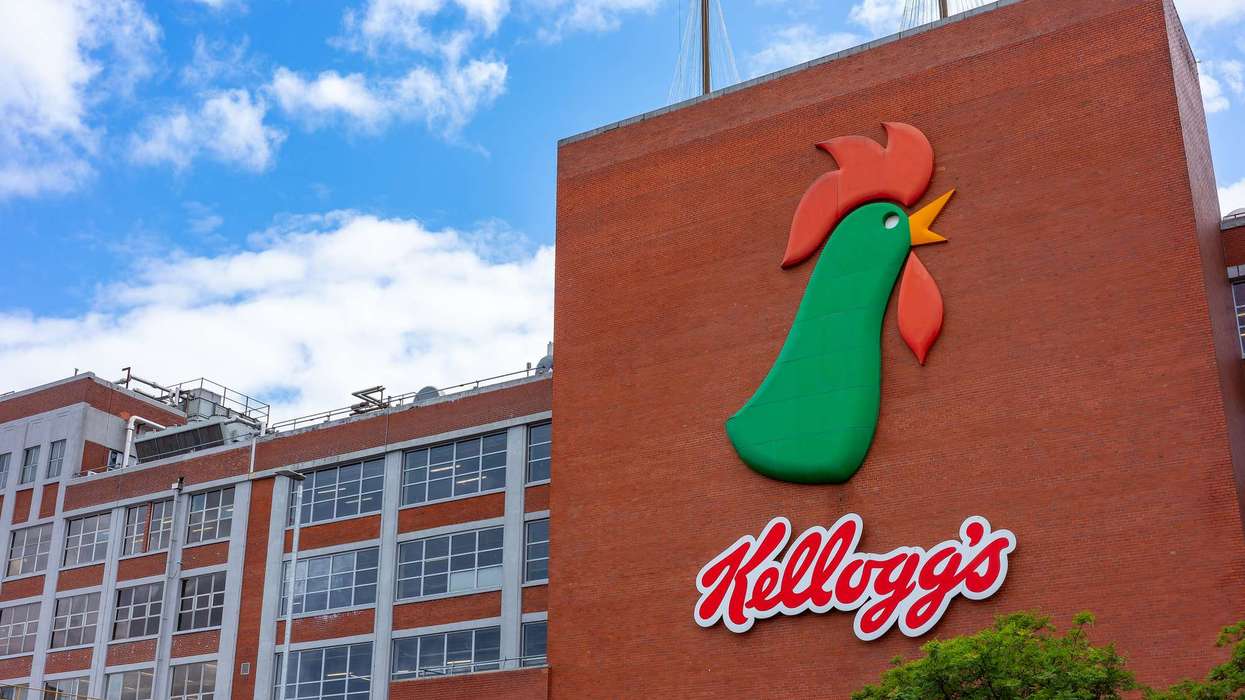

- Kellogg’s has ended production at its Trafford Park factory after 88 years, with 360 jobs affected.
- The site once produced up to one million boxes of cereal a day, including Corn Flakes, Rice Krispies and Coco Pops.
- Production has moved to Wrexham as the company argues the ageing 1930s factory is no longer suited to modern manufacturing.
The end of production at Kellogg’s Trafford Park factory is more than the closure of another manufacturing site. It marks the end of a piece of Manchester’s industrial history that has been part of British life for generations.
Production and packing at the factory have now stopped, ending 88 years of cereal making at the Trafford Park site. The factory itself will remain open until the end of 2026 as the closure process is completed, while production has moved to Wrexham in North Wales.
For decades, the site was one of Europe’s largest cereal factories. At its peak, it could produce around one million boxes a day, including some of the most recognisable names on British breakfast tables such as Corn Flakes, Rice Krispies and Coco Pops.
That scale is what makes the closure particularly striking. A factory that once operated as a major engine of mass food production is now being wound down because the building itself has become a problem.
A factory built for another era
Kellanova, Kellogg’s parent company, announced the closure in 2024, saying there was no long-term future for the site. The explanation was less about a lack of demand for cereal and more about the economics of keeping an old factory running.
The Trafford Park plant was laid out in a way that made sense when it was built in 1938. But the site no longer uses all of its available space, with the company saying only about half of it is currently being used. Modernising the factory would require significant investment, which Kellanova concluded was not commercially viable.
The decision highlights a broader challenge facing older manufacturing sites across Britain: being historically important does not necessarily make a factory economically sustainable.
Chris Silcock, Kellanova’s UK managing director, said the company had reached the point where investing to maintain the Trafford Park facility no longer made sense.
For the workers, however, the closure represents a much more personal change. Around 360 jobs are being lost, although staff willing to relocate have been offered support to move to Wrexham.
What Trafford Park loses with Kellogg’s
The factory became deeply connected with Trafford Park and the wider Greater Manchester economy. Thousands of local residents worked there over the decades, making its closure significant well beyond the people directly employed at the site.
Greater Manchester mayor Andy Burnham described the closure as a “huge blow” to Trafford and the wider regional economy, while Trafford council leader Tom Ross said the factory had been a cornerstone of the area for more than 80 years.
The loss is also being treated as a piece of local heritage. Kellanova is supporting an archive exhibition at Trafford Local Studies Centre, preserving part of the factory’s history even as its manufacturing life comes to an end.
The wider Kellogg’s operation in the UK is not disappearing. Around 500 jobs remain at the company’s MediaCity headquarters, while its St Helens distribution centre also continues to employ around 500 people. But the Trafford Park factory, once capable of putting a million cereal boxes into the supply chain every day, has reached its final chapter.
For a site that began producing cereal in 1938, its significance is difficult to measure simply in jobs or output. It was a place where generations of workers made products that became part of everyday British life.
Now the cereal production has moved elsewhere, leaving behind a factory that tells a very different story about British manufacturing: how a site can become part of a community’s identity, yet eventually become too old, too inefficient and too expensive to keep running.