
Highlights
- Vijay commands the screen in what is billed as his final film before entering politics.
- Jana Nayagan blends action, emotion and political messaging with plenty of crowd-pleasing moments.
- While the story loses focus at times, the star's presence keeps the film firmly on track.
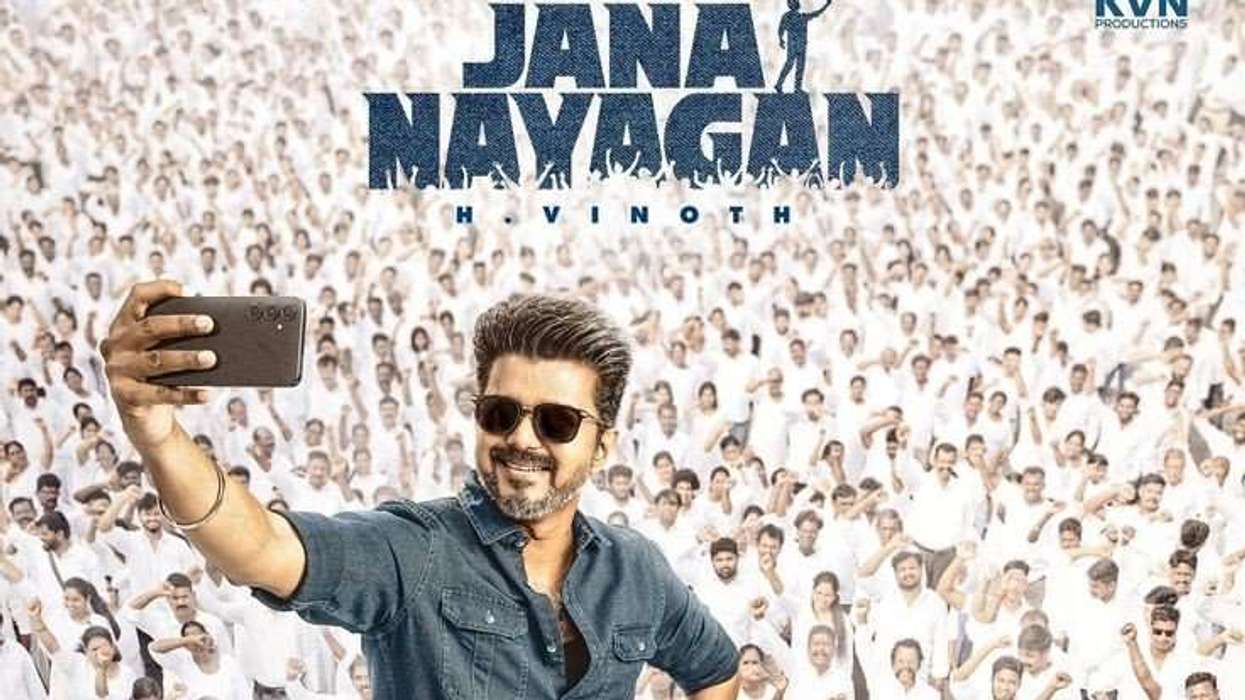
Vijay's farewell to cinema is designed as much for his fans as it is for the big screen. Directed by H. Vinoth, Jana Nayagan places the actor at the centre of a politically charged action drama that celebrates his larger-than-life image while drawing clear parallels with his public persona. Packed with punch dialogues, action sequences and references to Tamil Nadu's political landscape, the film rarely shifts its attention away from its leading man.
Vijay's Vetri drives the story
The film introduces Vetri (Vijay), a prisoner in Madurai serving time for an undisclosed crime. Although behind bars, he is portrayed as a man who commands authority, with fellow inmates and prison officials recognising his influence. His reputation is summed up early when a prison officer remarks that it is not Vetri who is under protection, but those guarding him.
The emotional core of the story begins when prison warden Srikanth (Gautham Vasudev Menon) helps Vetri visit his dying mother (Revathi), a decision that costs him his job. After Vetri's release during an Independence Day pardon, fate brings him closer to Srikanth's daughter Viji (Mamitha Baiju). Following the warden's death, Vetri becomes her guardian and takes it upon himself to fulfil Srikanth's dream of seeing Viji join the military.
Journalist Kayal (Pooja Hegde) enters their lives as Vetri's journey becomes increasingly intertwined with protecting Viji and confronting larger threats.
Politics and action take centre stage
Running alongside Vetri's personal story is the rise of John Himmler (Bobby Deol), a ruthless criminal operating from the fictional African nation of Swasnia. Himmler manipulates governments, orchestrates arms smuggling and seeks to spread fear through political influence and violence.
As the narrative progresses, Vetri's battle expands beyond protecting those closest to him. He is positioned as a champion for justice, women's empowerment and the people of Tamil Nadu, with the screenplay weaving in references to Tamil Nadu politics, former chief minister M.G. Ramachandran, Vijay's political journey and nods to Bhagavath Kesari, the film on which Jana Nayagan is based.
The political messaging gradually outweighs the storytelling, leaving several supporting characters with limited development despite an ensemble cast.
Vijay delivers the moments fans came for
The film leaves little doubt about its priorities. Every major set piece is built around Vijay, whether through action, dance or punch dialogues, many of which echo lines from his public speeches. Several action sequences also reference memorable moments from his earlier films, ensuring longtime fans have plenty to cheer.
Bobby Deol makes an effective antagonist, bringing restraint and menace to John Himmler, while Mamitha Baiju stands out with a more substantial role than Pooja Hegde. The supporting cast includes Prakash Raj, Nasser, Priyamani, Narain, Sunil, Gautham Vasudev Menon, Revathi, Nizhalgal Ravi and Madan Gowri, with a few surprise cameo appearances adding to the entertainment.
Anirudh Ravichander's songs were already popular ahead of release, and his background score adds impact to several key moments. Sathyan Sooryan's cinematography complements the film's scale, while Pradeep E. Raghav's editing keeps the action flowing, although the three-hour runtime could have benefited from tighter pacing.
Verdict
Jana Nayagan is unapologetically built around Vijay and his star power. The film occasionally struggles to balance its political ambitions with its narrative, but its crowd-pleasing moments, emotional beats and energetic performances ensure it delivers what fans expect. As Vijay's farewell to cinema before embarking on his political career, it functions less as a conventional action drama and more as a celebration of the man at its centre.