
- Italy has approved a 30 per cent cap on pupils with inadequate Italian in classes
- Burqas and niqabs will be banned in schools, with fines of up to €1,000 (£860)
- Parents of children struggling to integrate may have to attend free Italian lessons
- Critics say the measures risk creating divisions among pupils
ITALY's government has approved a package of measures that will limit the number of pupils with poor Italian-language skills in classrooms and ban burqas and niqabs in schools.
Prime minister Giorgia Meloni’s cabinet approved the decree on Thursday (24), as immigration and integration remain major political issues in Italy ahead of next year’s general election.
Meloni said the measures would help schools integrate pupils while preventing what she described as “ghetto classrooms”.
“A 30 per cent cap on the number of students per class who do not have an adequate command of Italian, more tools for learning our language, and a ban on the burqa and niqab in schools,” she wrote on social media.
She described the measures as “common-sense” steps designed to give pupils equal opportunities.
Who will be affected?
The 30 per cent limit is aimed at pupils who are not Italian citizens and have limited Italian-language skills, rather than simply applying to every child from a foreign background.
The rules are particularly aimed at new arrivals. Children born in Italy or those who have already attended kindergarten will generally be outside the scope of the measure in primary schools.
Education minister Giuseppe Valditara said about 34,000 classes currently have more than 30 per cent foreign pupils, but the government says most will not be affected because the new criteria are based on language ability and educational background.
The government argues that inadequate Italian can make it harder for children to keep up with lessons and integrate with their classmates.
The decree also introduces a requirement for some parents to attend free Italian-language courses. Where a child is considered to have serious difficulties integrating at school because of language problems, social services can be involved, and parents may be required to attend the courses.
Failure to comply can result in a fine of between €200 and €1,000, according to the decree.
Valditara said parental involvement in a child’s education was “fundamental for academic success”.
Burqa and niqab ban
The decree also prohibits the wearing of face coverings that prevent identification, including burqas and niqabs, during school activities and school-family meetings, except in specified health or security circumstances.
People breaching the restriction can face fines of up to €1,000 (£860). Where the person wearing the covering is a minor, the penalty can fall on the parents, according to the draft provisions.
Meloni defended the measure as a security issue.
“When a woman - or worse, a young girl - is forced to cover her face, she is being denied fundamental rights and the very integration that is so often loudly championed,” she said in a television interview after the cabinet meeting.
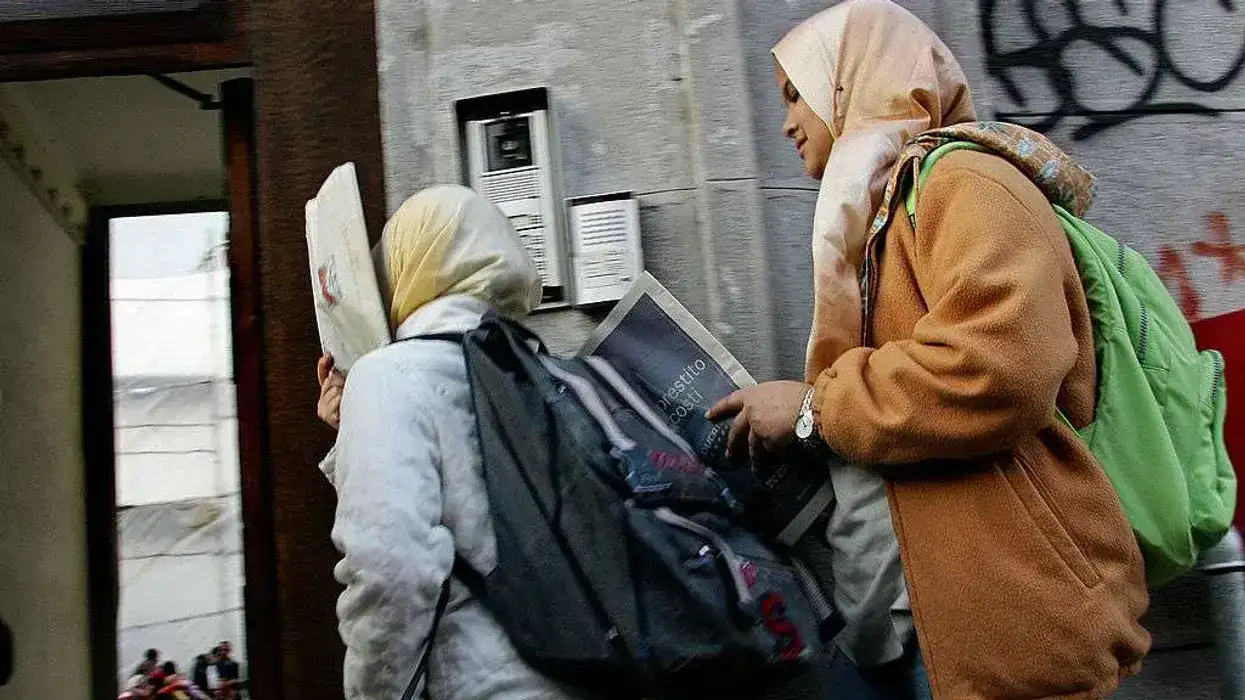
The ban does not apply to the hijab, which leaves the face visible.
Critics warn of divisions
The measures have drawn criticism from opposition parties and child welfare groups.
Save the Children warned that forcing children to change schools or study separately from their peers because of nationality or limited Italian could create “first-class” and “second-class” students.
Opposition leader Elly Schlein accused the government of launching “a new witch hunt at the expense of children”.
The debate comes as Italy continues to grapple with migration and integration, with the government presenting language proficiency as central to helping newly arrived children participate fully in education.
Meloni has argued that the new rules will avoid segregated classrooms while providing greater support for pupils who need help learning Italian.
The decree now enters the parliamentary process, where it will need to be converted into law within the constitutional timeframe.