- Free Soul recorded £42 million in sales in the year to April 2026.
- The mother-and-son founders struggled to convince investors that women’s wellness was a viable market.
- The business is now targeting £100 million in sales by 2028.
When Rohini Sofat went looking for supplements to support her energy and wellbeing, she found plenty of products aimed at men and plenty of women's products focused on weight loss and appearance. What she could not find was something designed around how women actually felt.
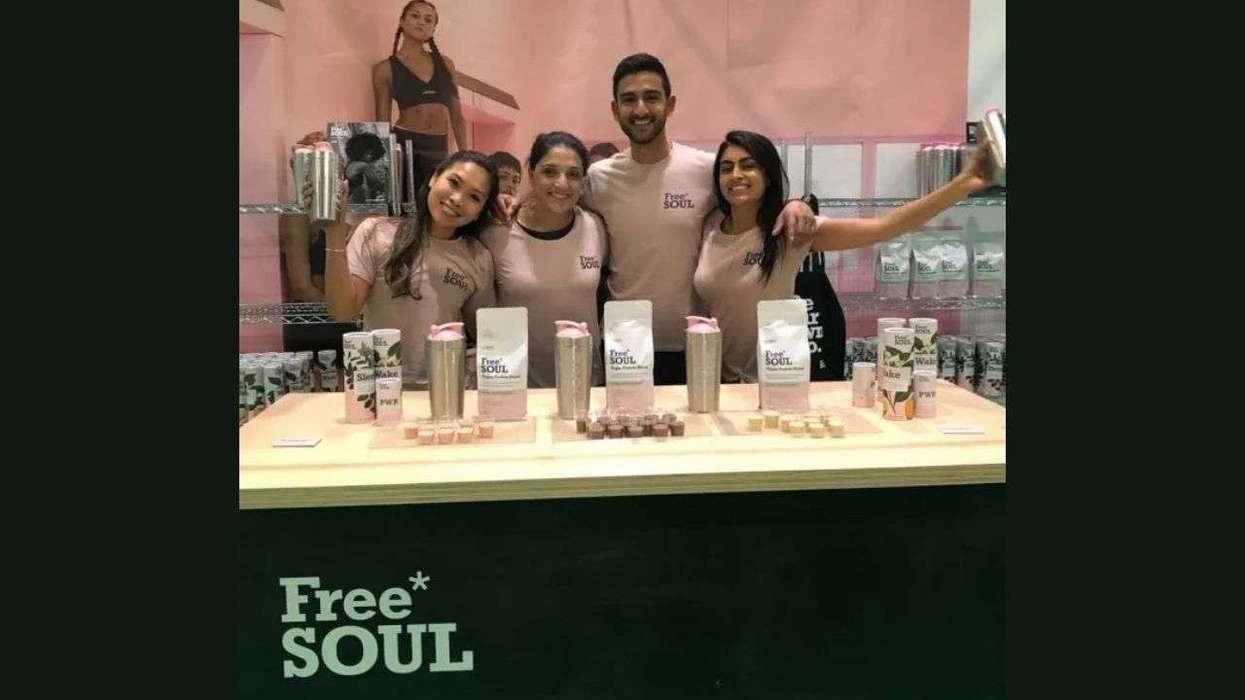
That gap eventually became the foundation for Free Soul, the London-based women’s wellness and nutrition business she built with her son, Arjun Sofat. The company has since grown into a £42 million business, despite facing scepticism from investors who initially saw women's wellness as too niche.
Free Soul recorded sales of £42 million in the year to April 2026 and is now targeting £100 million by 2028. Its products are stocked by retailers including Boots, Tesco, Holland & Barrett and Superdrug, and the business ranked tenth in the latest Sunday Times 100 fastest-growing private companies list.
From a kitchen full of supplements to a business idea
The idea began during a difficult period for the family after Rohini's husband, and Arjun's father, became seriously ill. Rohini, then looking for ways to cope with the stress, turned to exercise and a long list of supplements.
"I was going to every gym class you can imagine, just to deal with all the stress," Rohini, 57, said. She was eating well and exercising intensely but still felt weak and drained. Her search for something that could support her energy and mood came up short.
When Arjun returned home from Nottingham University after studying economics, he found the family's kitchen filled with supplements. The pair began asking why there was no product that brought together the nutritional support women were looking for.
Rohini said the market was largely male-dominated, while products aimed at women were often centred on losing weight, looking good or reaching a particular size. The pair believed there was room for a different kind of business.
Arjun, now 32, had spent nearly three years working as an analyst at Barclays Investment Bank. He left in 2017 to build the company, with the name Free Soul reflecting his desire for greater freedom.
"Ultimately, health gives you freedom as a first point of call," he said.
The first challenge was developing a product that women would actually want to use. The pair cold-called nutritionists until they found one willing to help formulate their first product, a vegan protein powder combining several of the micronutrients Rohini had been taking separately.
They went through multiple versions before settling on the taste. Rohini believed that making the product enjoyable was just as important as its nutritional content because customers would need to use it consistently.
But developing the product was easier than paying for it.
They could not afford their own first production run
Manufacturers wanted minimum orders worth more than £100,000 for the bespoke blend. The Sofats did not have that kind of money, so they looked for another route.
They eventually found a manufacturer online willing to produce a smaller batch, but the price increased after the manufacturer saw how much the founders wanted the product.
To raise the money, Arjun and Rohini started a construction business on the side. Arjun also took gardening jobs, while the family refurbished flats around London's Baker Street. The proceeds eventually helped them buy their first pallet of Free Soul stock.
Neither had experience running an online consumer brand, so they taught themselves. Their evenings were spent watching YouTube tutorials on website building and social media advertising, while mornings were used to put those lessons into practice.
When the first order finally arrived after three weeks, Arjun remembers celebrating the moment intensely.
The early marketing was equally hands-on. The pair regularly woke at 4am to travel to gyms around London, hand out samples and ask people what they thought.
They also faced plenty of scepticism.
Rohini said people laughed at them and questioned what they were trying to create for women. But the criticism did not change their approach.
"You become rhino-skinned," she said.
Free Soul eventually secured a retail launch with Superdrug in 2019. But scaling the business brought another problem: cash was tied up in stock, leaving little money for transport and other operating costs. Friends helped move pallets between the manufacturer and warehouse.
At one point, an urgent retail order left the company scrambling. The family and their friends spent two days hand-packing 10,000 tea blends so they could deliver ten pallets by Monday.
Arjun later realised that running out of stock was not a sign of success if the company could not replenish it quickly. For a young consumer business, lost availability could mean lost momentum.
Free Soul's launch with Holland & Barrett in March 2020 brought another unexpected setback, arriving just before the UK entered its first Covid-19 lockdown. Physical retail suffered, but demand for health and wellness products increased, giving the company another route forward.
The business strengthened its ecommerce operations, expanded on Amazon and invested more heavily in social media advertising.
By 2021, the company was ready to make its first hire. Angel investor Sonny Arora, who invests in European health start-ups, also backed the business as it entered a faster phase of growth. Free Soul has raised more than £500,000 in total and has since bought back part of that funding.
It now employs around 50 people and sells wholesale in South Africa, France, the Middle East and the Netherlands.
The next target is bigger again. The company is looking closely at international markets, including the US, as it works towards its £100 million sales ambition.
For Rohini, the business has also become closely connected to her own understanding of women's health. Around six years ago, she was diagnosed with endometrial cancer after her mother had experienced a breast cancer scare. She underwent a successful operation, but the experience changed how she viewed health.
"In spite of being so good with your eating and being healthy and ticking all the boxes, you never know," she said. "You have to pay more attention to your health."
What began with a kitchen full of supplements has therefore become something considerably bigger: a business built around a gap the founders believed the market had overlooked, and one they had to convince customers, rather than investors, was worth filling.