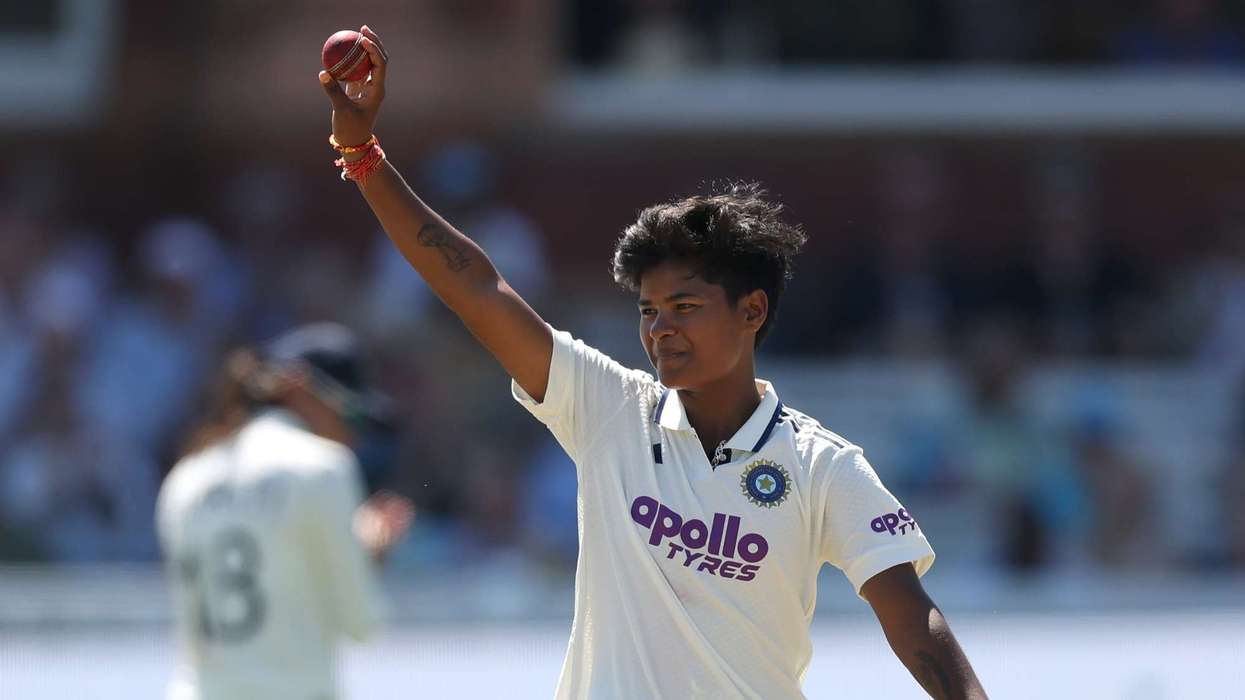

The names of two Indian women cricketers – Kranti Gaud and Yastika Bhatia – are set to go up on the honours board at Lord’s after India beat England in the first women’s Test held at what is considered the hallowed home of cricket.
Gaud, 22, took five wickets in an innings, while Bhatia, 25, scored a century, qualifying both players for an inscription on the honours board.
There will not be a separate board for women – the names of Gaud and Bhatia will come after 142 years of men.
The process of putting their names on the board was explained to Eastern Eye by Neil Robinson, head of heritage & collections at the Marylebone Cricket Club. Robinson, who looks after the museum at Lord’s, said: “The usual process is that our signwriter comes in a few days after the match to inscribe the names formally. There is no separate board for women, so the players for this match will join all the men and have their names inscribed in exactly the same format.”
Gaud comes from Ghuwara, a small town in central India, and her mother once pawned her jewellery to buy one of her first cricket kits. Bhatia is from Vadodara in Gujarat.
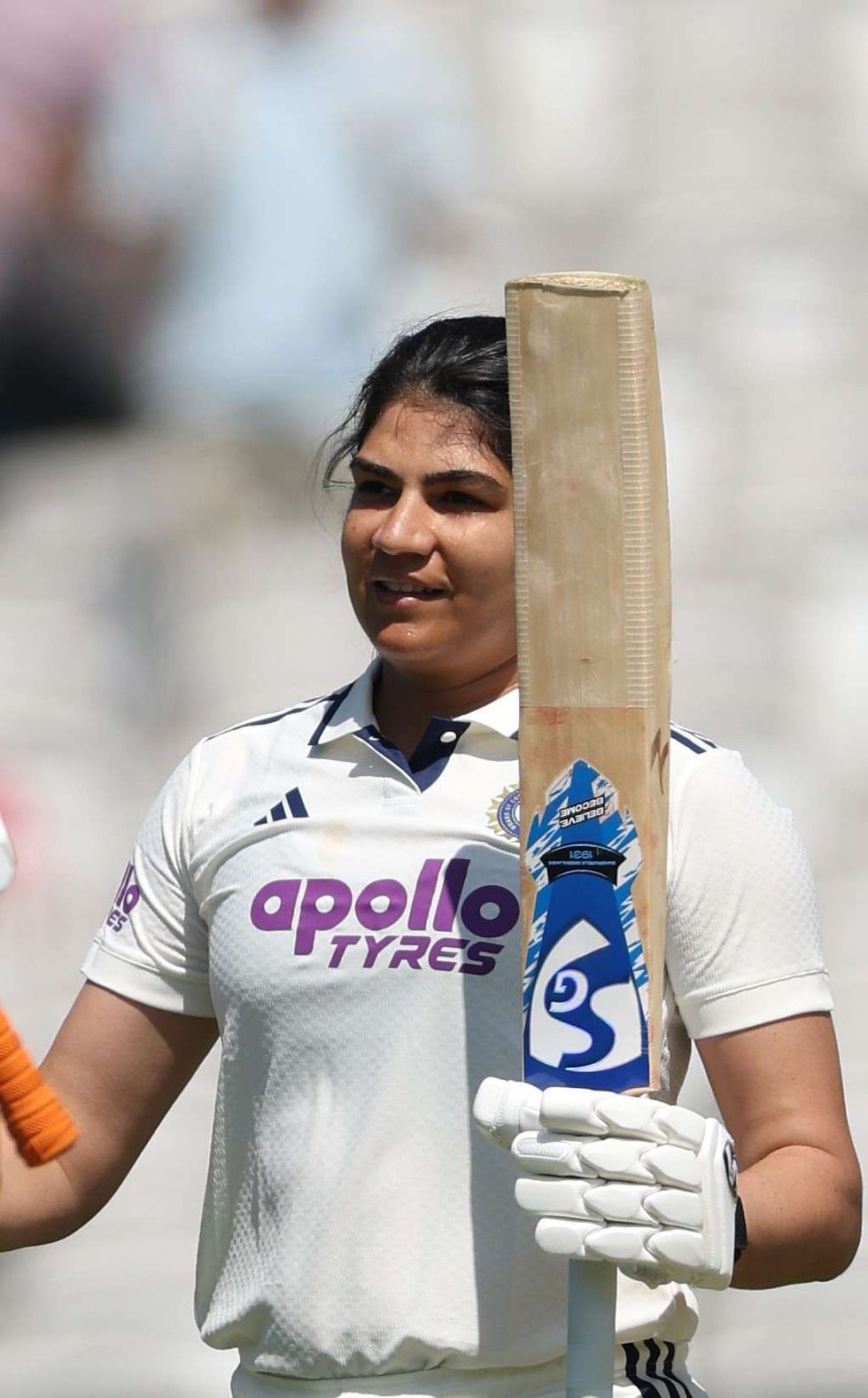 Yastika Bhatia marks her century last Sunday (12)Stu Forster/Getty Images
England’s Sophie Ecclestone will join Gaud and Bhatia on the honours board for taking five wickets in India’s second innings.
For the Indian women, it was an emphatic victory since they beat England by 270 runs.
Indian captain Harmanpreet Kaur said: “Playing at Lord’s is always special. I really want to thank the people who brought a Test match here. These kinds of matches bring a lot of happiness and excitement. Hopefully, we’ll keep getting more Test matches and keep performing the way we are doing.”
She added: “Our seniors have always supported us immensely. No matter how difficult the phases in our lives have been, they have always stood by us. It is because of their support that we have been able to grow so much over the years.”
The Indian women made cricketing history, but theirs was more than a sporting triumph.
For decades, they were condescendingly dismissed as ‘Eves’ and merited barely a paragraph or two in the sports pages of Indian newspapers.
Their victory will not only encourage parents to consider a cricketing future for their daughters, but also, in many ways, alter the status of women in India.
Sachin Tendulkar, born in 1973, was only 10 when Kapil Dev’s side won the World Cup at Lord’s in 1983. He was inspired by Sunil Gavaskar, a member of Kapil’s team.
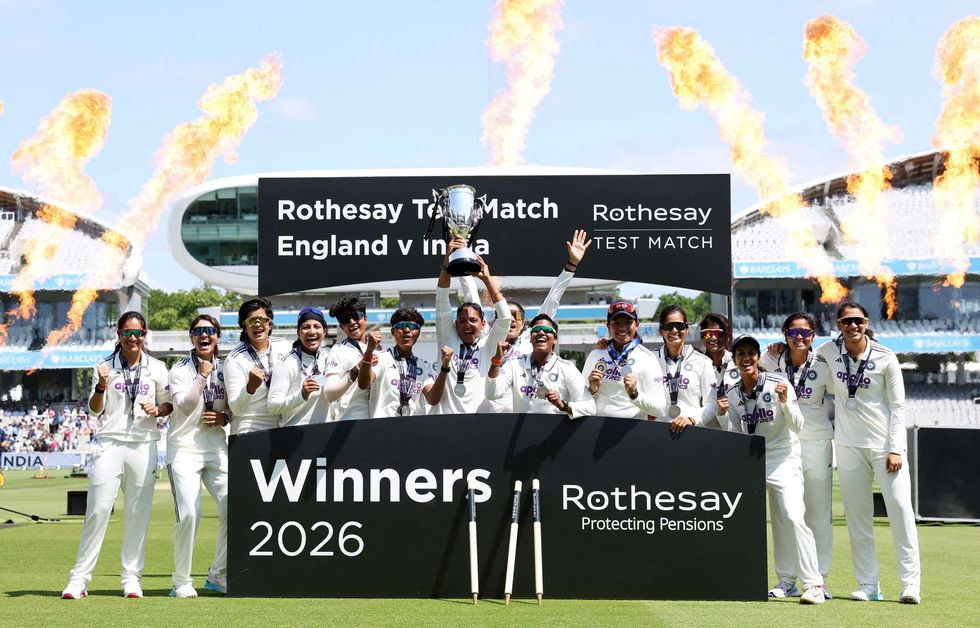 India’s players celebrate with the trophy after their one-off Test victory over England at Lord’sAgencies
In time, Tendulkar gave way, in cricketing terms, to Virat Kohli, who may soon be succeeded as India’s icon by Vaibhav Sooryavanshi, a prodigy who is not yet 16.
Kabir Khan made the film 83 about the 1983 World Cup victory, which some saw as India’s greatest sporting moment since independence in 1947.
That is probably an exaggeration, but cricket has the ability to bring about pro found social change in India.
Top cricketers, both men and women, are emerging even from small towns across the country. Perhaps Bollywood will now wonder which actresses could play Gaud and Bhatia.
Gaud took five wickets for 37 runs in England’s first innings, followed by 2-54 in the second. She was named player of the match (rather than “Man of the Match”). Bhatia scored 113 in India’s second innings.
Gaud said after the game: “I never thought about it, but on the day the match started, I wanted to get my name on the honours board. My plan was to bowl my lines and lengths and focus on what the coaches were telling me, and that is what I tried to do.
“I feel very proud, as does my family. I wanted to thank everyone who has supported me. (On the souvenir stump she grabbed) I have a small museum room at my home, and this will go there.”
Bhatia looked back at those who made her success possible: “I think they (the pioneers of women’s cricket in India) have done an invaluable contribution because Test cricket (has been going on for) 50 years. Their contribution has inspired us to take up cricket and to perform the way we are doing today, so their role is very crucial and they have laid the foundation.”
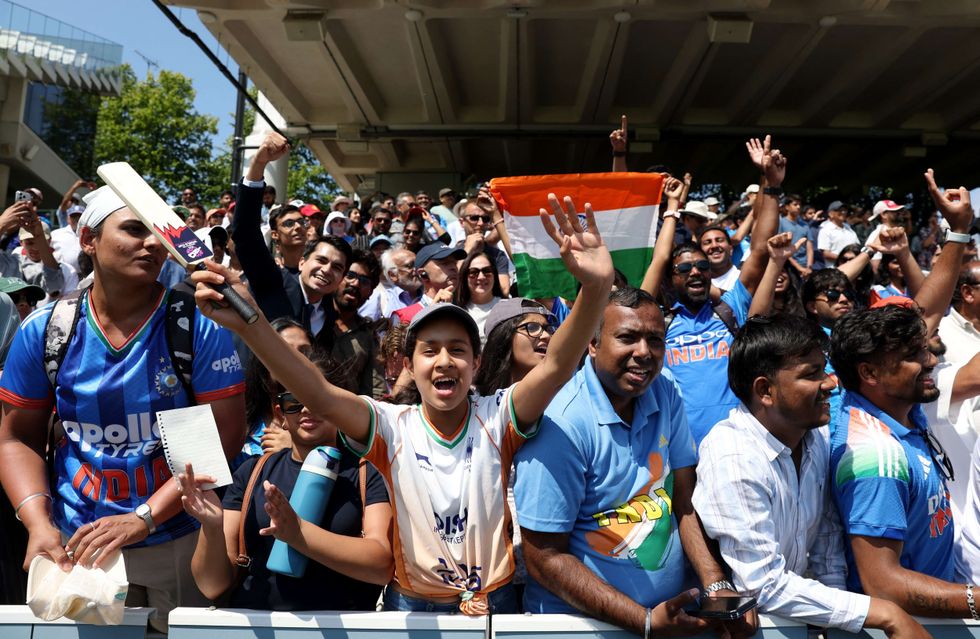 Fans mark the historic triumphAgencies
She added that the pioneers of women’s cricket in India had not received the recognition they deserved. “So we should now take a moment to thank them for their contribution and what they have done for Indian cricket, for world cricket, and inspired so many young cricketers.”
Tendulkar was at Lord’s on Monday, first to give the Indian women a pep talk before the start of play and later to con gratulate them on making history.
According to Sky Sports, Tendulkar’s visit was unplanned, but he made the most of the opportunity to spend time with the Indian women as they stood on the brink of history.
His message will be read by millions of Indians, not just in India, but across the diaspora: “Every cricketer carries the dream of playing at Lord’s. Over the past four days, a new generation lived that dream as women’s Test cricket arrived at the Home of Cricket for the very first time. Congratulations to the Indian team on a wonderful victory. Smriti’s (Mandhana) composure, Yastika’s brilliant century and NEW DAWN: India’s players celebrate with the trophy after their one-off Test victory over England at Lord’s; (below left) fans mark the historic triumph; and Sachin Tendulkar chats with Smriti Mandhana and Harmanpreet Kaur Kranti’s five-wicket haul made this occasion even more special. The journey of women’s cricket has been remarkable, and this was another beautiful step forward.”
The president of the Board of Control for Cricket in India (BCCI), Mithun Manhas, hailed India’s win as “one of the finest moments in the history of Indi an women’s cricket. To win a Test match at Lord’s is incredibly special and is a re flection of the courage, discipline and belief this team has shown throughout the contest. On behalf of the BCCI, I con gratulate Harmanpreet Kaur, the players, coaches and support staff on a truly unforgettable achievement.”
BCCI secretary Devajit Saikia said: “This historic victory is the result of years of sustained investment and belief in women’s cricket. The achievement at Lord’s is a proud reflection of those efforts and, above all, the extraordinary dedication and hard work of our players and support staff.”
The England-India Test came 50 years after the first international women’s match at Lord’s. That was a one-day international between England and Australia in 1976.
Like many organisations in Britain, the MCC has bowed to the winds of change.
Once, women were not even allowed into the Long Room at Lord’s.
A note from Lord’s set out the historical background: “For the first 211 years of its existence, MCC operated as a male only Club. The idea of admitting women as Members was discussed by the Committee in 1967, but it would be another three decades before sufficient support among existing Members could be generated.
“By 1998, however, the mood had changed. The Women’s Cricket Association had merged into the new England and Wales Cricket Board, headquartered at Lord’s. Still more crucially, the Club’s application to the Sports Council’s Lottery Sports Fund to help pay for a new Grand Stand had been rejected on the specific grounds that the Club did not admit women as Members.
“An energetic new president, Colin In gleby-Mackenzie, determined that the time had come. He put the question to the Membership once more. At the first attempt, in February, the motion was carried, but by too slender a majority to change the Club’s rules. A second vote was held in September, and this time the two-thirds threshold was passed. The rules were changed to make it absolutely clear that either men or women could ap ply to become Members of MCC, and a few months later a group of 10 women were granted Honorary Life Membership.”
To coincide with the England-India Test, the MCC staged an exhibition charting the development of women’s cricket.
The space beneath the Warner Stand was transformed for the exhibition, with the MCC inviting the women’s and girls’ cricket community to help write the next chapter of the game by submitting photographs capturing what cricket means to them.
Clubs and individuals from across England submitted images of the game as it is lived: players, parents, volunteers and coaches sharing the joy of cricket with their communities.
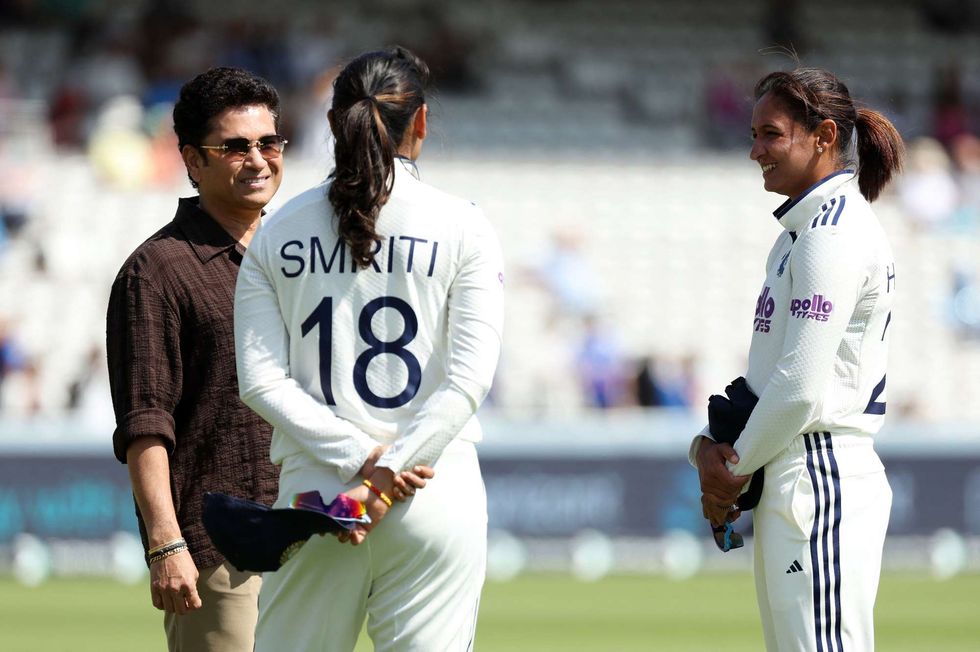 Sachin Tendulkar chats with Smriti Mandhana and Harmanpreet KaurAgencies
Saturday morning fixtures feature alongside winning celebrations, overseas tours and lifelong friendships. The exhibition offers a rare glimpse of scenes that seldom make it beyond the clubhouse, now on display at the Home of Cricket.
Katie Maier, chief marketing officer at MCC, said: “Lord’s is the Home of Crick et, and for us that means supporting women’s and girls’ cricket at every level, from the first overs on a Saturday morning to a historic Test at Lord’s.
“This is a landmark year for the women’s game, and we wanted this exhibition to tell that story properly, not just through the players walking out for England and India this week, but through the parents driving kids to nets in the rain, the coach es giving up their weekends, and the girls falling in love with the game for the first time. Every photograph here is a remind er of why we do this.”
To put cricketing history into perspective, one of the great names on the honours board is Vinoo Mankad, who scored 184 in the 1952 Test. He also took 5-196 in England’s first innings, a feat that has not been repeated.
Other Indians on the honours board for scoring Test centuries at Lord’s in clude Gundappa Vishwanath, Dilip Vengsarkar (1979, 1982 and 1986), Ravi Shastri, Mohammad Azharuddin, Sourav Ganguly, Ajit Agarkar, Rahul Dravid, Ajinkya Rahane and KL Rahul (2021 and 2025). Tendulkar is a notable omission, although he did score 125 at the venue in 1998 for a Rest of the World XI against the MCC in the Princess of Wales Memorial Match, which was not a Test.
Mohammad Nissar was the first Indian bowler to take a five-wicket haul at Lord’s, claiming 5-93 on India’s Test debut in 1932. Apart from Mankad, the others are Amar Singh, Lala Amarnath, Ramakant Desai, Bhagwat Chandrasekhar, Bishan Singh Bedi, Kapil Dev, Chetan Sharma, Venkatesh Prasad, RP Singh, Praveen Ku mar, Bhuvneshwar Kumar, Ishant Shar ma and Jasprit Bumrah.
The names of Kranti Gaud and Yastika Bhatia will remain there for as long as cricket is played at Lord’s.





 The September 11 Memorial and Museum stands on the site of the former World Trade Centre in New York, where the twin towers were destroyed in the 2001 attacks Spencer Platt/Getty Images