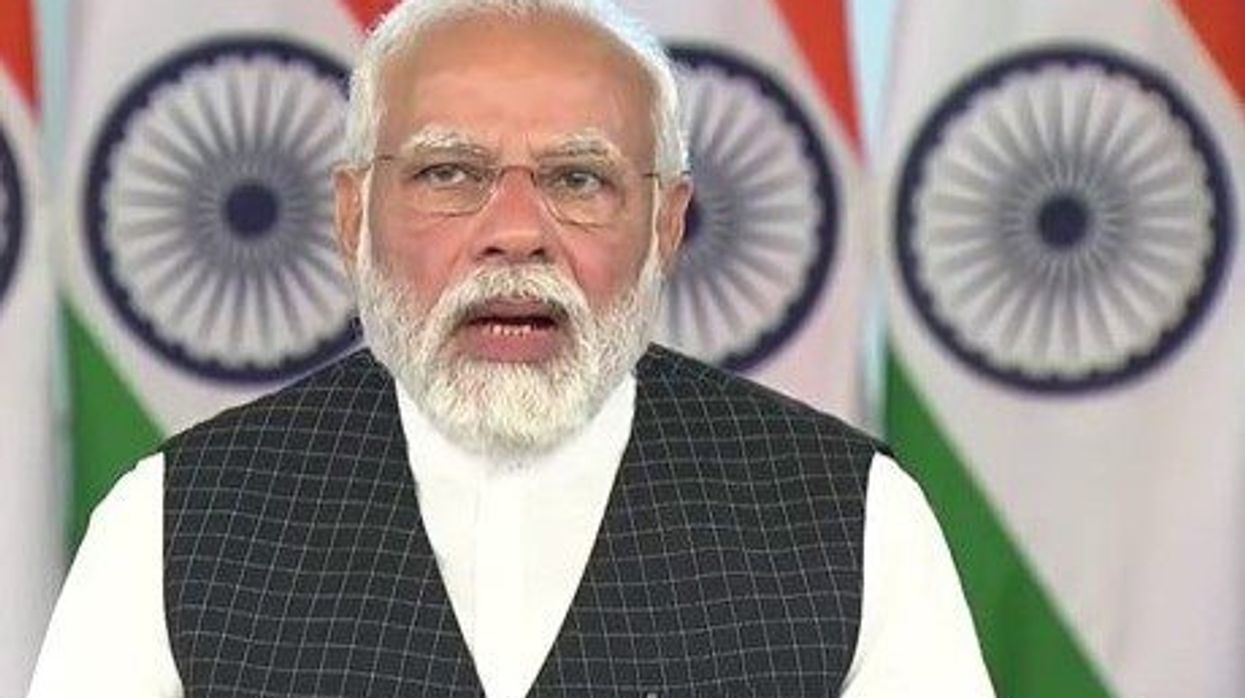

IN his monthly Mann ki Baat radio broadcast, Indian prime minister Narendra Modi said that the number of unicorns in India reached 100-mark.
Noting that the number of unicorns in India has reached the 100-mark this month, Modi on Sunday (29) said that even in the phase of the Covid pandemic, Indian startups have been creating wealth and value with entrepreneurs emerging from smaller cities and towns as well.
Modi added that on 5 May the number of unicorns in India reached the 100-mark.
Valuation and annual growth rate of Indian unicorns
"The total valuation of these unicorns is more than $330 billion (£261bn). Certainly, this is a matter of pride for every Indian," he said.
"You will also be surprised to know that out of our total unicorns, 44 came up last year. Not only that, 14 more unicorns were formed anew in 3-4 months this year. This means that even in this phase of the global pandemic, our startups have been creating wealth and value."
Modi also pointed out that the average annual growth rate of Indian unicorns is more than those of the US, UK and many other countries. “Analysts also say that in the coming years there will be a sharp spike in these numbers,” he added.
Noting that the unicorns are diversifying, Modi said they are operating in many fields like E-commerce, Fin-Tech, Ed-Tech and Bio-Tech.
"Another thing which I consider more important is that the world of startups is reflecting the spirit of New India. Today, India's startup ecosystem is not limited to just big cities; entrepreneurs are emerging from smaller cities and towns as well. This shows that in India, the one who has an innovative idea, can create wealth," he said.
Modi also stressed the importance of mentoring when it comes to the world of startups. "A good mentor can take a startup to a new height and can guide the founders in every way toward the right decision," he said.
"It is a matter of great happiness for us that today a complete support system is evolving in the country for startups. I am sure that in the times to come, we will get to see a new flight of progress in the startup world of India," he said.
Modi also said that India is a rich treasure house of many languages, scripts and dialects. “Varied attire, cuisine and culture in different regions is our hallmark. As a nation this diversity strengthens us and keeps us united,” he said.
(PTI)






 Curator Emma Slocombe with ikat robes and arabachi coats in the Peter the Great Room in Blickling Hall Amit Roy
 View of the entrance to Blickling Hall on a rainy autumn dayAmit Roy
 Kente cloth from Ghana in the Long Gallery in Blickling Hall
 Decoration in the Great Hall at Blickling Hall Amit Roy
 Palampore fragment made in coastal south-east India in the Brown Room in Blickling Hall Amit Roy
 Bed valance dating from early 1700s in the Italian Print Room at Blickling Hall Amit Roy
 Indian inspired fabric draped on sofas in the South Drawing Room in Blickling Hall Amit Roy
 Indian inspired fabric draped on sofas in the South Drawing Room with Indian carpet in Blickling Hall Amit Roy
 Karun Thakar has picked out the geometric patterns in the bookcase and the Kente cloth in the Long Gallery in Blickling Hall Amit Roy
 Large tapestry depicting Peter the Great defeating the Swedish army at the Battle of Poltava in 1709 Amit Roy
 ikat robes and arabachi coats in the Peter the Great Room in Blickling Hall Amit Roy
 Baghs and kanthas made by women provide contrast to the men only portraits in the Great Hall at Blickling Hall Amit Roy
 Baghs and kanthas in the entrance Great Hall at Blickling Hall Amit Roy
 Baghs and Kanthas in the Great Hall in harmony with stained glass window at Blickling Hall Amit Roy
 Kimonos reflect Japanese influence in Upper Ante Room in Blickling Hall Amit Roy
 Kimono in Upper Ante Room in Blickling Hall
 A view of the Palace and fort at Agra shows romantic side of India Amit Roy
 Blickling Hall Amit Roy
 Table carpet, European 1670-1680 Amit Roy
 Unfinished 17th century Italian embroidery in the Print Room at Blickling Hall Amit Roy
 Picture of Kashmir shows a romantic view of India Amit Roy
 A panel of Ashburnham bed hangings made in Gujarat for sale in Europe in the Brown Room in Blickling Hall Amit Roy
 Colcha made in the 1600s by women in Bengal for the Portuguese market in the Long Gallery at Blickling Hall Amit Roy




