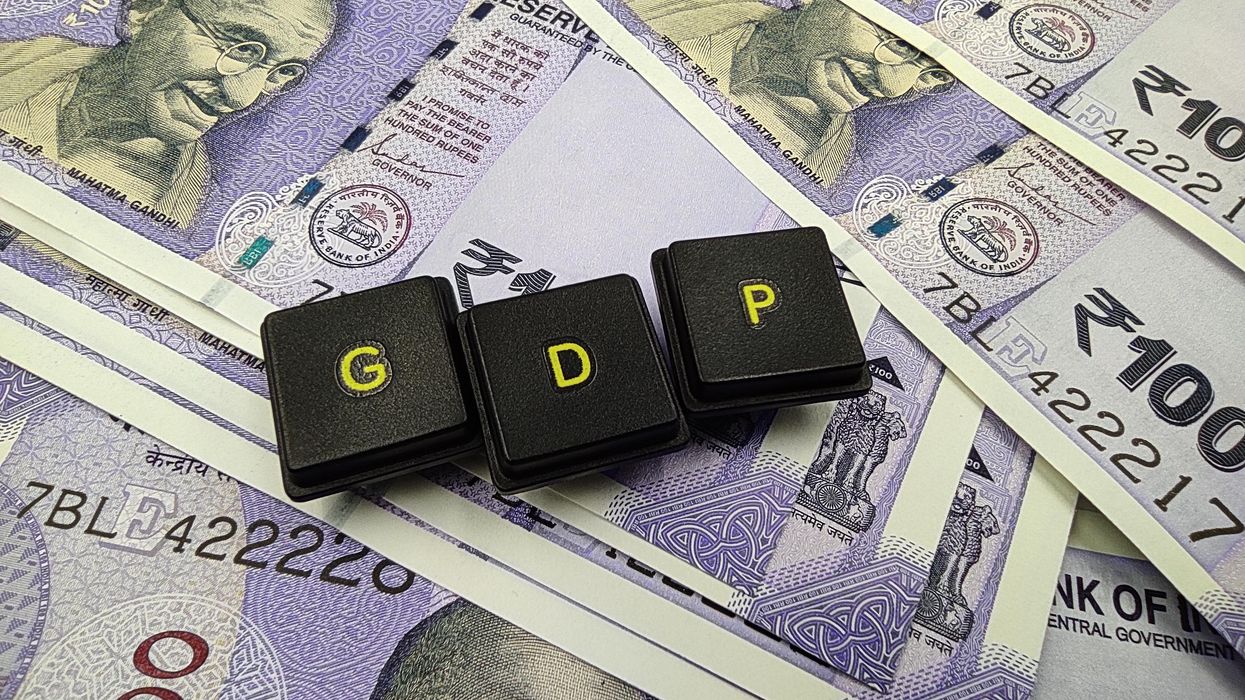

The Indian economy is likely to face slight weakening in 2025, according to International Monetary Fund (IMF) managing director Kristalina Georgieva.
Speaking at her annual media roundtable on Friday, Georgieva noted that global growth is expected to remain steady but with regional variations.
“The US is doing quite a bit better than we expected before, the EU is somewhat stalling, (and) India a little weaker," she said.
Georgieva did not elaborate further on the Indian economy but indicated that the upcoming World Economic Outlook update would provide more details.
Georgieva highlighted uncertainty in global economic policies, particularly regarding the United States. She pointed out that interest in the policy direction of the incoming US administration, led by Donald Trump, is high. Trump's plans include imposing additional tariffs on countries like China, Canada, and Mexico, which he has emphasised as a significant policy tool.
“There is keen interest globally in the policy directions of the incoming administration, in particular on tariffs, taxes, deregulation and government efficiency,” Georgieva said.
On inflation, Georgieva said global disinflation is expected to continue. She stated, "The higher interest rates that were necessary to fight inflation did not push the world economy into recession. They have delivered the desired results. Headline inflation is converging back to target sooner in advanced economies than in emerging markets."
Other regions, including Brazil, face rising inflation, while China, the world’s second-largest economy, is dealing with deflationary pressures and challenges in domestic demand. Low-income countries remain vulnerable to external shocks despite their ongoing efforts, Georgieva said.
Uncertainty around trade policy, particularly in countries integrated into global supply chains, is adding to global economic challenges. Georgieva also noted the impact of higher long-term interest rates despite a decrease in short-term rates.
(With inputs from PTI)