
Skip to content
Search

Latest Stories

Submit Guest Post

India's ruling party elects youngest-ever president

Nitin Nabin, 45, takes over from outgoing president J.P. Nadda

Nitin Nabin

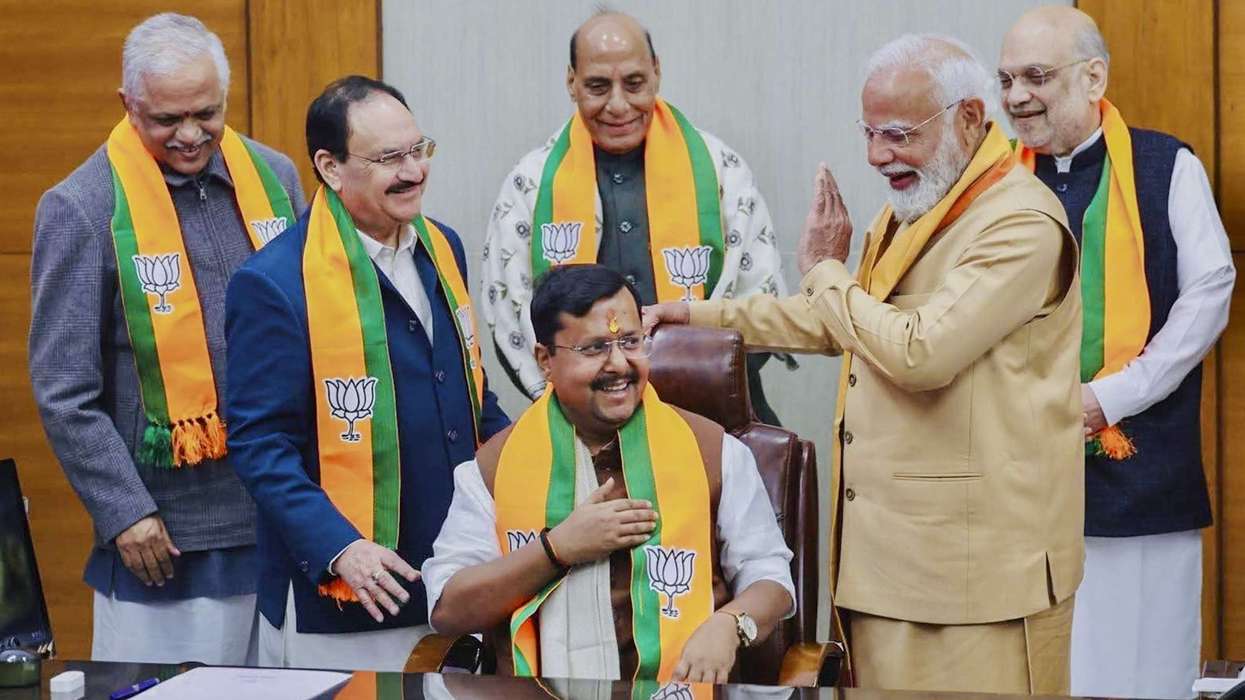
In this image posted on Jan. 20, 2026, prime minister Narendra Modi, second right, with ministers Amit Shah, Rajnath Singh, JP Nadda and BJP National general secretary (Org) BL Santosh, meets the newly elected BJP president Nitin Nabin, in New Delhi. (@khushsundar/X via PTI Photo)

(@khushsundar/X via PTI Photo)

PRIME MINISTER Narendra Modi's Bharatiya Janata Party (BJP) chose a little-known legislator from India's poorest state as the party's youngest president on Tuesday (20), a generational shift in the effort to retain young voters.

Nitin Nabin, 45, takes over from outgoing president J.P. Nadda, 65, months before key state elections, one of them in the eastern state of West Bengal, which the BJP has never won and is strongly focused on.


A five-time lawmaker from the eastern state of Bihar, Nabin was elected unopposed as the party's 12th president after Modi and other leaders proposed him.

Hundreds of workers watched at party headquarters in New Delhi as Nabin, his forehead smeared with a vermillion mark and his shoulders wrapped in a scarf with the party symbol, took the oath of office before Modi and four past presidents.

"When it comes to the party, I am a worker and he is my boss," Modi, 75, said in his remarks, pointing to Nabin, who will serve a three-year term.

In his speech, Nabin repeatedly praised Modi as a generational leader and urged young people to take an active part in politics.

More than 40 per cent of India's one billion voters are aged between 18 and 39, the Election Commission and analysts estimate.

The BJP suffered a shock setback in the 2024 general election as Modi lost his majority after 10 years in power and had to rely on regional allies to form a government.

But it has since regained ground, winning critical state and civic body elections. The party and its allies govern 19 of India's 28 states.

(Reuters)

Add EasternEye As Your Trusted Source
preferred source on google news

More For You

UK Air Conditioning rules

Rising temperatures are fuelling debate over whether climate planning rules are keeping pace with Britain's changing summers

iStock

Why some UK homeowners are being asked to remove air conditioning

  • Britons have reportedly been ordered to remove air conditioning units over local planning policies linked to climate goals.
  • Some councils say air conditioning should only be used after all natural cooling methods have been exhausted.
  • The issue has resurfaced as the UK faces extreme heat, with temperatures forecast to reach 40C in some areas.

UK air conditioning rules are coming under renewed scrutiny after some homeowners were ordered to remove cooling units from their properties under local planning policies designed to support climate targets.

While planning permission for air conditioning is not normally required for most homes, there are important exceptions. Properties in conservation areas, flats, leasehold homes and shared buildings can fall under different planning rules. In some cases, residents have reportedly installed air conditioning believing it was permitted, only to later face enforcement action from local councils.

Keep ReadingShow less