India has stepped up as a leader in the fight against coronavirus, an influential American lawmaker said on Thursday (30) applauding, New Delhi for providing the US with vital supplies such as mass quantities of Hydroxychloroquine.
"The Republic of India is one of America's closest and most important allies, and our relationship has always enjoyed bipartisan support in Washington, DC. I am thankful that India has stepped up as a leader in the fight against coronavirus, and am glad that our special partnership remains strong during this pandemic," congressman George Holding, the co-chair of the Congressional Caucus on India and Indian-Americans, said.
In a statement, the influential Republican lawmaker from North Carolina also appreciated the role being played by Indian-American non-profit organizations and community organizations in the pandemic relied work in the US.
"On the US soil, Sewa International (an India-based service organization) has been working tirelessly to donate masks, provide meals to first responders, and ensure vulnerable populations have access to food and medicine throughout the country," Holding said.
Sewa has also provided support systems by hosting informative conference calls, while Indo-American hoteliers have stepped up and donated temporary housing to Indian international students in the United States, he added.
Holding said the Indian government has been hard at work both in their country and in the United States to help the international community fight COVID-19. "It’s amazing to see how one of our closest and most important partners can have such an impact in our country from nearly ten thousand miles away," he said.
Together, the Indian and US governments have been able to identify measures necessary to propel us forward in the fight against this pandemic, Holding said.
India has shown that they are committed to keeping key supply and logistics chains open for pharmaceutical and medical products – benefitting both the United States and India''s own regional neighbors, he added.
"In early April, prime minister (Narendra) Modi and president Trump worked together to overcome the challenges that international trade faces amidst national lockdowns. Since then, India has provided the United States with vital supplies such as mass quantities of Hydroxychloroquine," said the Republican lawmaker.
Observing that the US-India partnership has also directly impacted the lives of many Americans, he said as of April 16th, more than 1,500 American citizens have returned home to the United States from India thanks to the facilitation of Indian authorities.
"It prides me to see that the sense of community supersedes borders and cultures during a time of international crisis," Holding said.




 FOSSAE LaunchEastern Eye
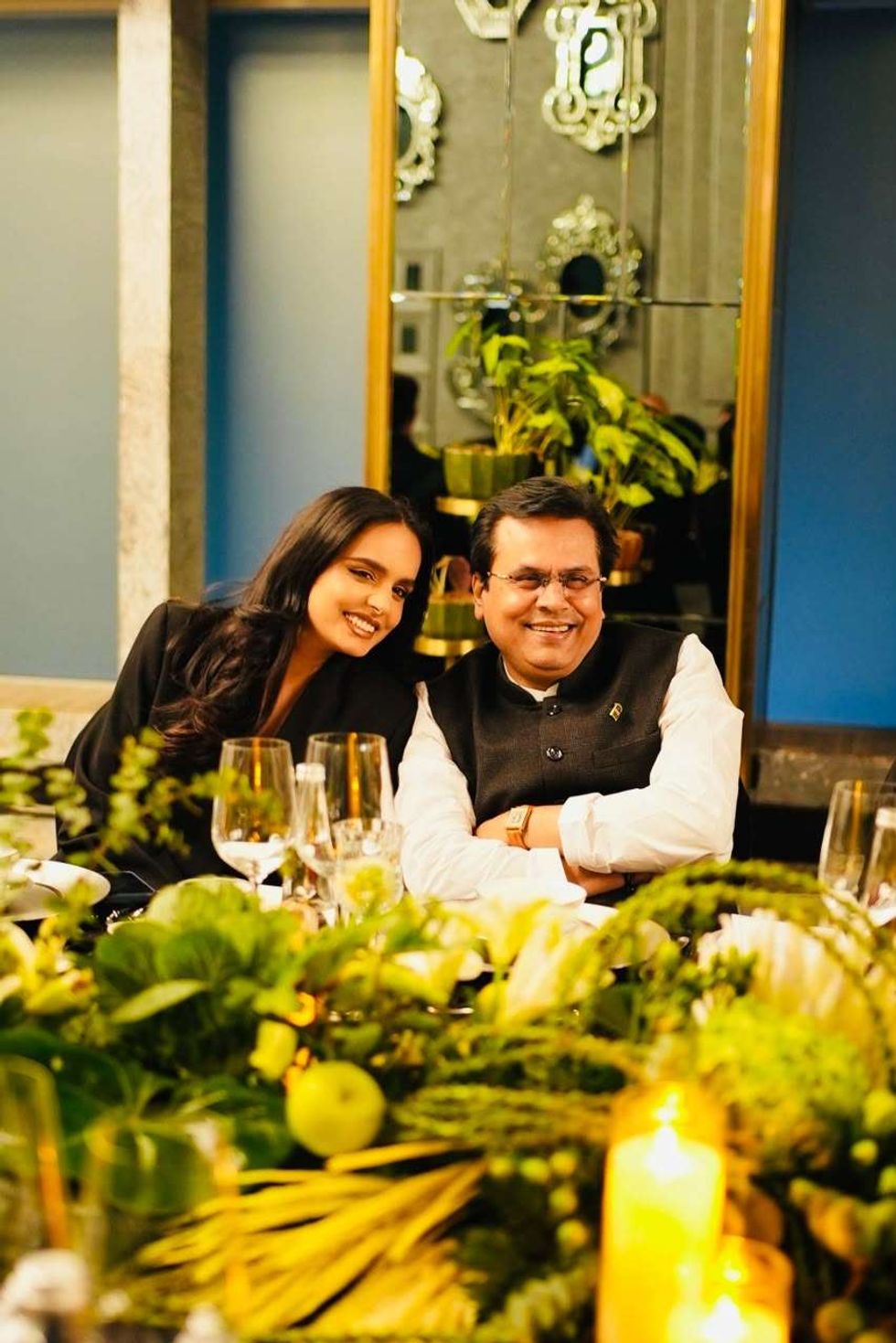 Unnati with father Rakesh K ShuklaEastern Eye
 FOSSAE LaunchEastern Eye
 FOSSAE LaunchEastern Eye