by LAUREN CODLING
A MOTHER-OF-TWO has spoken of her experience suffering from a brain haemorrhage in her 30s, as she revealed the difficulties of her recuperation.
Kavita Basi, 43, was diagnosed with a life-threatening subarachnoid haemorrhage – a sudden
bleed around the brain – in 2015. The survival rate for sufferers of the condition is only 50 per cent. It can also cause brain damage, as well as the inability to walk and partial paralysis. Due to the catastrophic physical and mental impact it can cause, Basi’s life was changed forever.
Prior to the brain trauma, Basi worked in a senior position in a global fashion company. She led a busy lifestyle, regularly travelling abroad for work assignments. However, she was conscious of her health and made efforts to practise yoga and eat well. People who usually suffer from the condition are typically heavy smokers, alcoholics, overweight or have high blood pressure.
Basi was none of that.
When she returned home from work on the evening of March 17, 2015 with a headache, Basi admitted that she thought it was nothing of concern. It was her daughter’s 15th birthday the following day and she was due to fly to Ireland for work, so Basi busied herself wrapping gifts and preparing for her trip.
“Even though I wasn’t feeling well, I was still doing my everyday thing,” she told Eastern Eye. “I took painkillers and got on with it.”
It was only when she went to bed that horror struck – Basi awoke around midnight with a
“horrendous” pain in her head. She shook her husband Deepak awake, telling him that something was wrong. “It felt as though a sledgehammer had gone through my head,”
Basi said.
She began to run desperately around the bedroom, before collapsing to the floor. She had a seizure and began to foam from the mouth. Basi was taken to the local hospital before being transferred to Salford Royal Hospital, where she was formally diagnosed with a subarachnoid haemorrhage.
Thereafter, she spent seven weeks in hospital. The memory of her time in hospital and the night in question is blurry. “I lost my memory a few weeks before the haemorrhage and around five weeks on my time in hospital,” she recalled. “While I was in hospital, I used to wake up every morning and not remember what had happened.”
Even after leaving hospital, her two-year recovery process was gruelling. Basi was unable to do anything independently and relied on her husband for support. She could not walk, watch television, listen to music, use her phone or care for her family. “When I did start moving around, I would still struggle. I would be sitting at the dining table for dinner and I’d be vomiting five or six times while we were eating,” she recalled. “It wasn’t pleasant for my kids to see me like that.”
Basi’s two children – Jasmine and Jay – have taken her brain injury differently. Jay was too young to understand, but Jasmine saw first-hand what had happened to her mother. The teenager suffered from nightmares for weeks after the injury. Now 19, Jasmine still struggles to speak about her mother’s condition, Basi said. “When I speak at public events regarding my experiences, she doesn’t want to attend as she finds it hard to relive those moments. It has impacted her more than it did my son.
Despite the challenges, six months after she left hospital Basi returned to work part-time before changing to a full-time schedule. However, in March, Basi decided to leave her job after 25 years. Her injury meant she experienced short-term memory loss, got tired
easily and had to pace herself. “It was so difficult, (but) I’m in the middle of starting my own
business now, which is an innovative sustainable fashion company, which I’m looking to launch this year,” she said. “I have to work around my own body clock now, and I didn’t have that flexibility in my old corporate world.”
Her personality has changed too – for instance, she has realised she is much blunter than she was before suffering the haemorrhage. Personality changes are a common side effect for a person who has suffered from a brain injury. “The more people I speak to – who have suffered similar trauma – the more they say the same thing,” Basi said. “It has been nice to
relate to other sufferers and find out that I’m not alone and they have had similar experiences.”
Although she is mostly recovered today, Basi has an annual brain scan, as well as neuropsychology sessions every month. The doctors have warned her that she could suffer from a haemorrhage in the future. “I’ve just got to be vigilant in noticing the signs and get myself to a hospital straight away (if anything happens),” she said.
Basi, who grew up in Newcastle, but is based in Cheshire, now wants to share her story with the world. After leaving hospital, she sought to find out more about her condition, but found few resources. To raise awareness, she decided to upload videos of her recovery process on YouTube. Encouraged by the positive reaction, as well as a diary she compiled during her recovery (when she experienced memory loss), Basi proceeded to write a book.
It took 10 months to complete Room 23: Surviving a Brain Hemorrhage. Basi is now an ambassador for a number of charities (Brain & Spine Foundation UK, The Bee Foundation Philadelphia USA and Same You Org).
She also speaks publicly on her experiences and has just finished her second book. “I didn’t want others to feel alone in their journey of recovery,” she said.
Room 23: Surviving a Brain Hemorrhage is available now from all good booksellers, including Waterstones and Amazon



 Bonnie Greer, Zawe Ashton, Gemma Cairney and guest at the "Character Breakdown" by Zawe Ashton book launch at Wild By Tart on April 03, 2019 in London, England. Photo by Joe Maher/Getty Images
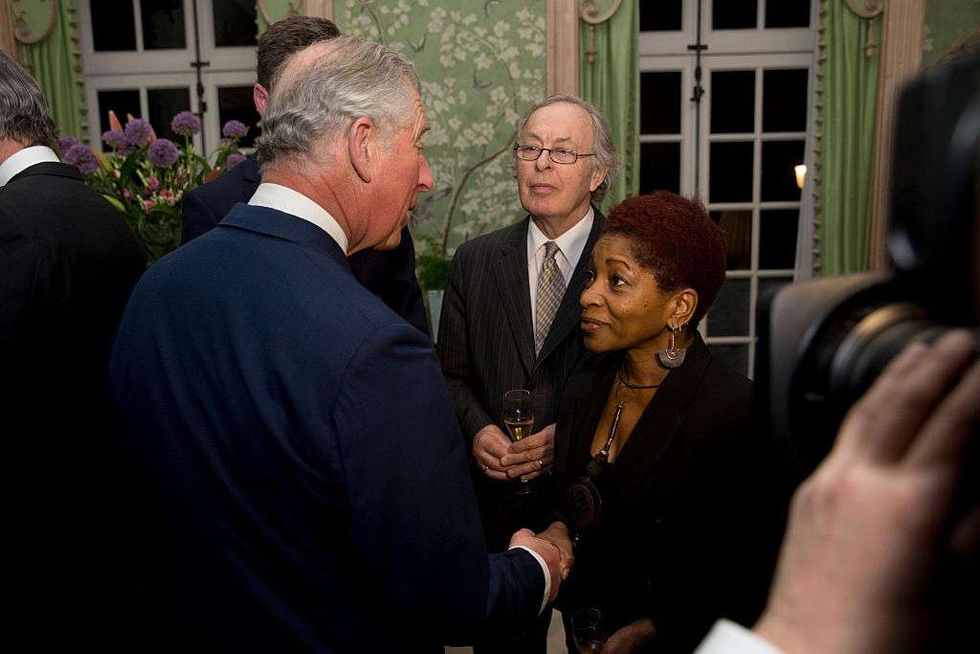 Prince Charles, Prince of Wales meets American-British playwright, novelist and critic Bonnie Greer, right, during a reception for Americans living and working in the UK, at the official residence of the U.S. Ambassador to Britain, Winfield House on March 9, 2015 in London, United Kingdom. The reception was held Monday evening ahead of Prince Charles and his wife Camilla visiting the U.S. next week. Photo by Matt Dunham - WPA Pool/Getty Images
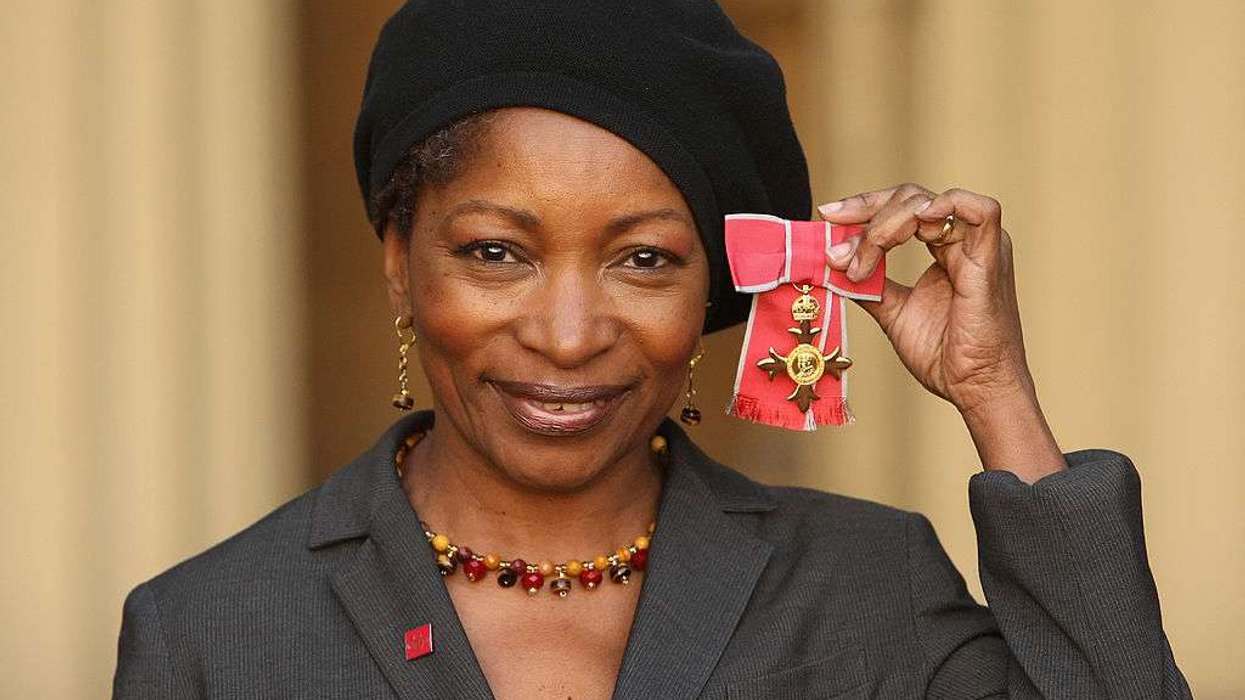
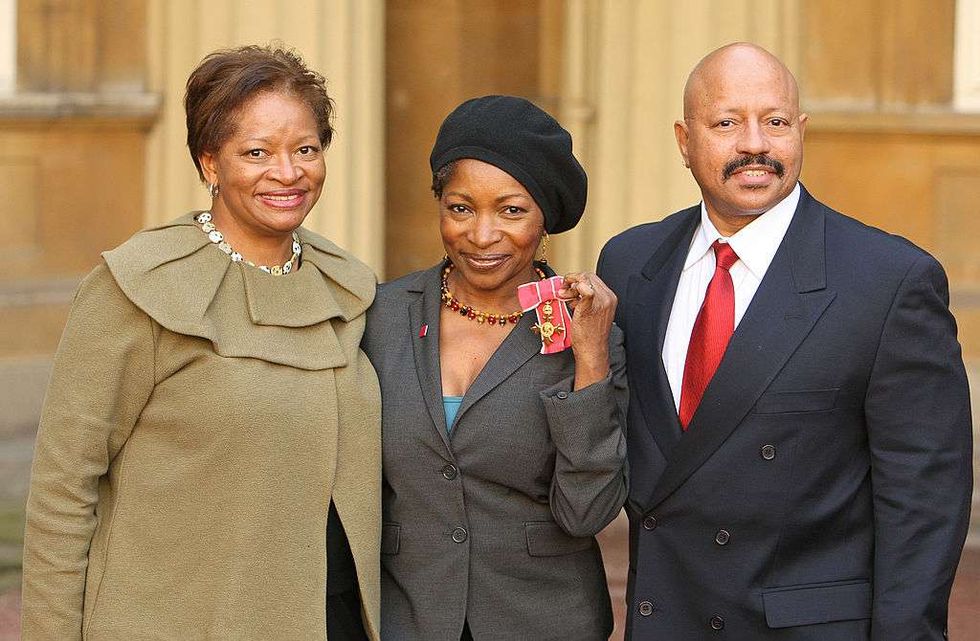 Playwright Bonnie Greer, (C) poses with her sister Regina Greer-Smith, and brother-in-law Theron Smith, after she was awarded her Officer of the British Empire (OBE) medal from the Prince of Wales, at an investiture ceremony at Buckingham Palace, November 19, 2010 in London. Dominic Lipinski - WPA Pool/Getty Images