
Highlights
- Peter Cullen's Hollywood legacy goes far beyond Optimus Prime.
- One of his most famous performances was almost impossible to separate from the character itself.
- Despite decades of iconic voice work, Cullen's recognition came surprisingly late.
- His career highlights a bigger problem with how Hollywood treats voice actors.
Peter Cullen spent decades giving Hollywood something it could not manufacture: a voice audiences could recognise within seconds.
As Optimus Prime, his deep, measured delivery became one of the defining sounds of Transformers. As Eeyore, he could make a few weary words carry an entire character's personality. He supplied the vocal menace for the creature in Predator, played KARR in Knight Rider and lent his voice to a long list of animated characters across television and film.
Yet when Cullen died aged 85 on 26 August, the scale of his contribution was once again being measured through the characters he played rather than the actor who created them.
That may be the clearest example of the strange way Hollywood has historically treated voice performers. The audience remembers the voice. The character becomes iconic. The franchise becomes a major property. But the performer can remain almost invisible.
Hollywood always needed his voice
Cullen's relationship with Optimus Prime began in 1984, long before the character became a live-action blockbuster fixture. He returned for The Transformers: The Movie in 1986 and eventually followed the franchise into Michael Bay's live-action films, beginning with Transformers in 2007.
The remarkable part is not simply that Cullen kept getting the role. It is that Hollywood repeatedly understood that his voice was part of the character's identity.
When Transformers moved from animation to enormous live-action productions, Cullen was brought back rather than replaced by a more recognisable film star. His performance survived the transition between mediums because Optimus Prime was not merely a robot who needed dialogue. He had a specific authority, warmth and restraint, and Cullen had established that sound decades earlier.
The story was similar with Eeyore.
The gloomy donkey could easily have become a one-note comic character. Cullen instead gave him an unmistakable sadness without turning him into a caricature. His voice made Eeyore feel weary, vulnerable and oddly lovable.
That range was one of Cullen's greatest strengths. He could make a heroic leader sound reassuring and a depressed donkey sound heartbreaking, often with relatively little material to work with.
The man behind the voice was easier to overlook
Cullen's career makes the industry's hierarchy around celebrity particularly revealing.
Film audiences knew the faces of the actors surrounding Optimus Prime. They knew the directors, producers and stars attached to the Transformers films. Cullen, meanwhile, could deliver one of the franchise's most recognisable performances without appearing on screen at all.
That invisibility was not a reflection of his importance.
Voice acting demands a different kind of performance because the actor cannot rely on facial expressions, costumes or physical presence to communicate character. Cullen had to create personality through rhythm, tone, breath and timing. His voice had to do the work that an entire visual performance normally would.
And yet voice performers have traditionally occupied a strange space in Hollywood. Their work can be enormously familiar while their names remain comparatively obscure.
Cullen's career is a particularly powerful example because his work crossed generations. Children who first heard Optimus Prime in the 1980s could encounter the same voice again decades later in a modern blockbuster.
The franchise changed. The technology changed. The scale of the films changed.
Cullen's voice remained.
Recognition came remarkably late
It is telling that one of Cullen's major honours arrived near the end of his career.
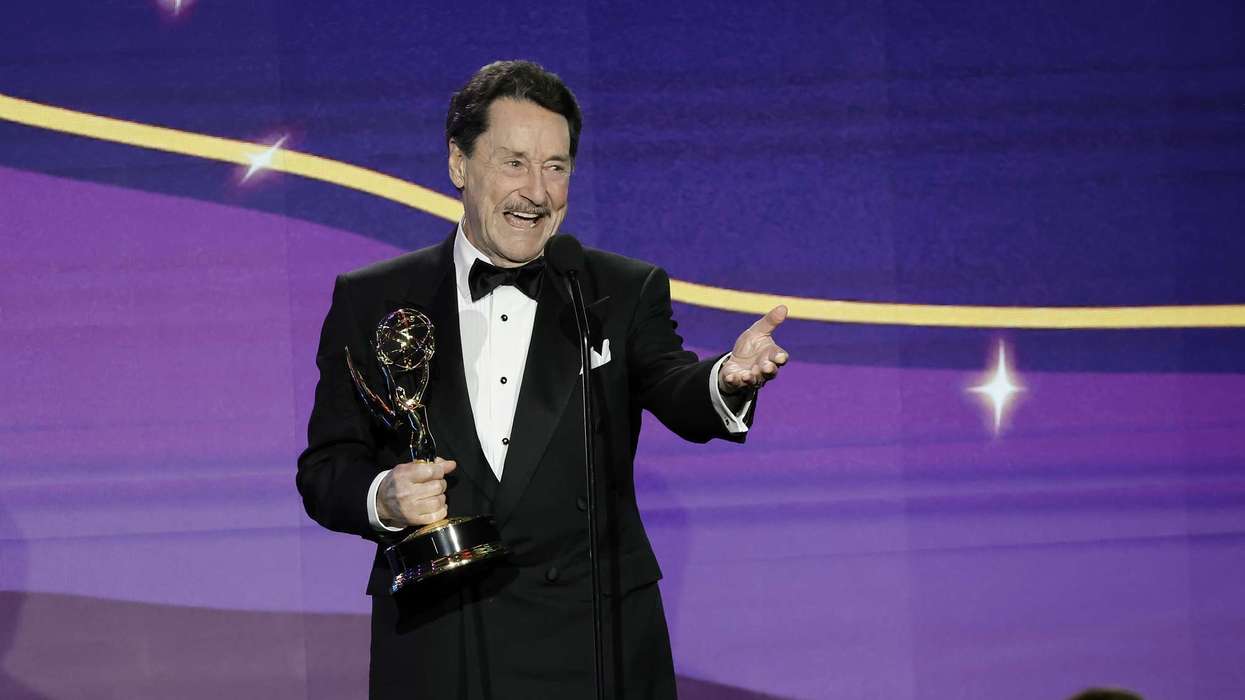
He received a Lifetime Achievement Award at the Children's & Family Emmy Awards in 2023, almost four decades after he first became Optimus Prime. He had also received a Daytime Emmy nomination in 2011 for his performance as Optimus Prime in Transformers: Prime.
That recognition matters, but its timing also says something about the industry's relationship with performers like Cullen.
By 2023, there was little left to prove. He had already created characters that had become part of popular culture. He had continued to voice Optimus Prime through multiple generations of Transformers storytelling and had built an enormous body of work beyond that single role.
The award was deserved. The question is why it took so long for the breadth of that contribution to receive the kind of formal recognition routinely associated with more visible Hollywood performers.
Cullen himself seemed to understand the importance of what happened away from the camera. His approach to Optimus Prime was inspired by his older brother, a US Marine and Vietnam War veteran, who encouraged him to play the character as “a real hero, don't be a Hollywood hero”. Cullen said that advice helped him discover the strength and gentleness that became central to his performance.
That philosophy became inseparable from the character.
Peter Cullen's legacy is bigger than Optimus Prime
It would be easy to reduce Cullen's career to Optimus Prime because the role is so culturally significant.
But doing so would repeat the same mistake in another form.
His voice work stretched across animated series, films, television and games. He voiced Eeyore in The New Adventures of Winnie the Pooh and related projects, KARR in Knight Rider, and supplied the creature's vocal effects in Predator. He also appeared in productions including Spider-Man, DuckTales, G.I. Joe, My Little Pony, Dungeons & Dragons and Chip 'n Dale Rescue Rangers.
The breadth of that work makes his passing more than the loss of the voice of one beloved robot.
It is the loss of a performer whose work demonstrates just how much personality can exist without a face on screen.
Hollywood did eventually honour Peter Cullen. But perhaps the more uncomfortable truth is that it took decades for the industry to fully acknowledge the person behind voices that audiences had already treasured for generations.
Cullen did not need Optimus Prime to make his career important. Hollywood simply needed to recognise that it was important sooner.