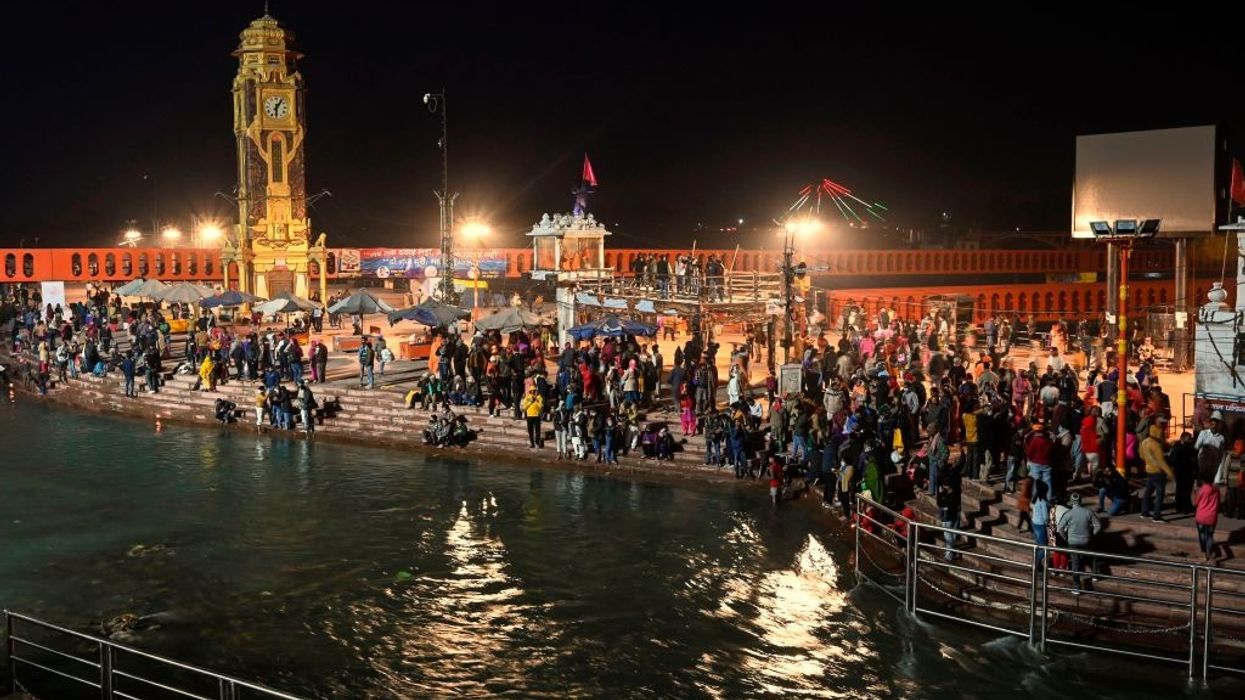

HINDU PILGRIMS flocked to the Ganges river in India on Wednesday(13), shrugging off the risk of coronavirus a day before the start of the Kumbh Mela -- a religious festival that attracts millions each time it is held.
Despite India having the second most coronavirus infections in the world -- and more than 150,000 deaths -- the virus has not stopped devout Hindus from making the pilgrimage.
"The pandemic is a bit of a worry, but we are taking all precautions," said organiser Siddharth Chakrapani, who expected between 800,000 to a million people to attend on Thursday(14) alone.
"I'm sure Maa Ganga will take care of their safety," he added, referring to the river considered holy by the faithful.
According to Hindu mythology, gods and demons fought a war over a sacred pitcher containing the nectar of immortality. Drops fell at four different locations, which now alternate as hosts for the immense gatherings.
Recognised as a cultural heritage by UNESCO in 2017, the last Kumbh Mela in Allahabad in 2019 attracted around 55 million people over 48 days.
This year, beginning Thursday, Haridwar in northern India is the host, and several million people were expected to throng the holy city in Uttarakhand state over the coming seven weeks.
Taking a dip in the Ganges is considered a sacred rite by Hindus, who come from across India and beyond its borders.
Holy men known as sadhus -- boasting outrageous dreadlocks and smoking cannabis -- are a regular feature at the Kumbh Mela, camping by the river and offering blessings to those who come for the holy immersion.
On Wednesday, its banks teemed with pilgrims and vendors while families laid out plastic sheeting for picnics.
Most were oblivious to the threat of coronavirus.
"India is not like Europe... when it comes to immunity we are better," said 50-year-old pilgrim Sanjay Sharma.
"It's really sad to see people not gathering at Kumbh in the same numbers as they would earlier -- just because of a sneeze or a cough.
This week sees several other religious festivals in India, including the Gangasagar in Kolkata where officials expect around 15,000 people.
Madurai in the southern state of Tamil Nadu is due to host a bull-chasing carnival known as Jallikattu when revellers grab hold of the beasts' horns as they run through crowds of people.



