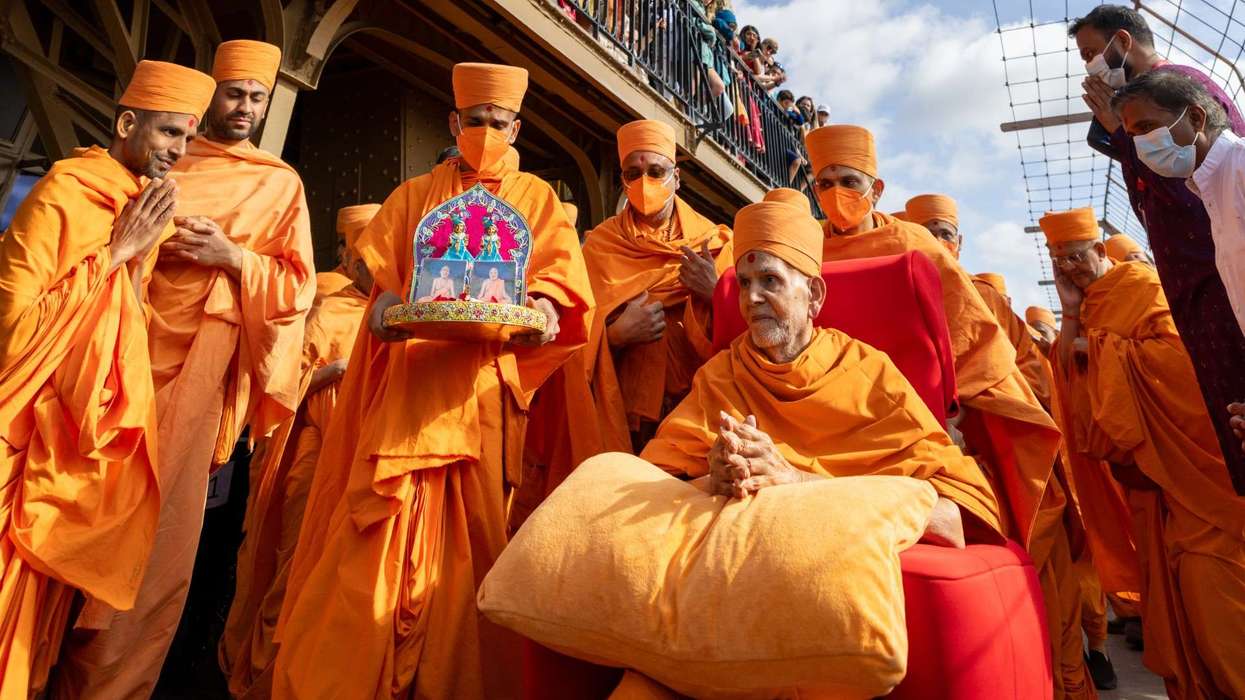

THE FAMILY of Harshita Brella, the woman found murdered in east London, held a prayer meeting in her memory on Sunday as they brought their campaign for justice to the UK.
The body of the 24-year-old was found inside the boot of a car in Ilford in November 2024. Her husband, Pankaj Lamba, who has been charged with her murder, remains on the run.
Harshita’s father, Satbir Singh Brella, mother, Sudesh Kumari, and sister, Sonia Dabas, travelled to Corby, Northamptonshire, where she is believed to have been strangled before her body was discovered four days later in London.
“It has been a heartbreaking visit for us because it felt like Harshita was somewhere around watching us and would suddenly appear with her warm smile to welcome us,” Dabas told PTI.
“We wanted to pay our tributes to her at the spot where she breathed her last. I would not wish such pain and grief upon anyone. We are here to seek justice for Harshita at all costs.
“Many mistakes have already been made, but it is time to fix those errors and ensure no other young girl suffers a similar tragedy due to a failure of the rules and regulations. My sister's murderer must be arrested soon and brought to justice,” she said.
The family’s UK visit is being supported by women’s rights group Indian Ladies in UK (ILUK) and the Northamptonshire Rights and Equality Council (NREC).
“Abuse of migrant Indian women like Harshita Brella is endemic in the UK, as evident from the hundreds of such victims that ILUK has worked with over the years,” said Poonam Joshi, founder of ILUK.
“These victims become completely isolated when they travel to the UK and have little or no access to the support that Harshita, for example, tragically needed,” she said.
The couple married in India in August 2023 and Brella moved to Corby, in England’s East Midlands, to join her husband in April 2024.
Within months, she reported domestic abuse to authorities. Her body was discovered six weeks after a month-long Domestic Violence Protection Order (DVPO), issued by Northamptonshire Police against Pankaj Lamba, had expired.
A review by the Independent Office for Police Conduct (IOPC) found that four officers from the force should face misconduct proceedings over the handling of the case.
CCTV images released by police indicate the murder took place on November 10 at Brella’s home in Corby. Her body was then driven around 145 kilometres to London before the car was abandoned and Lamba fled the country.
An inquest recorded her provisional cause of death as “manual strangulation pending toxicology and histology”.
Lamba, 23, has been charged with murder and also faces charges of rape, sexual assault, and controlling or coercive behaviour. Reports have indicated sightings of him in and around Delhi.
The family has appealed to British authorities to work with their Indian counterparts to arrest the accused and extradite him to the UK to face trial.
(With inputs from agencies)