
- Precious metals retreat sharply as markets reassess interest rate fears
- Dollar firms, stocks dip, and safe-haven rush loses some steam
- Prices still far above last year despite sudden volatility
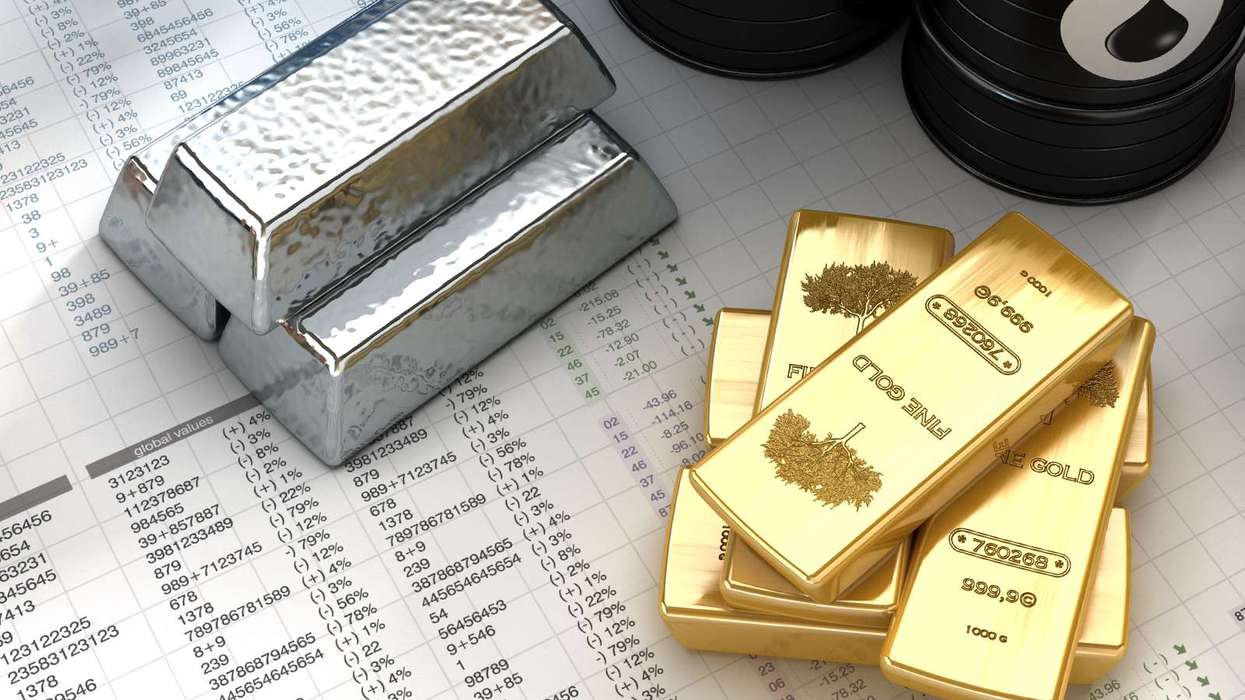
Gold and silver prices fell heavily on January 31, after a sharp reversal in market sentiment around US monetary policy and political stability.
As of 7.30 pm in London, silver was down around 26 per cent at £66 per troy ounce ($83.81), after touching record levels a day earlier. Gold dropped by almost 10 per cent to about £3,830 an ounce ($4,850), marking its biggest intraday fall since the 2008 financial crisis.
The sell-off followed reports that US President Donald Trump was preparing to nominate Kevin Warsh as chair of the Federal Reserve. Warsh is widely seen as a market-friendly figure who has previously supported higher interest rates and defended the central bank’s independence.
Markets had earlier feared Trump would choose a more compliant candidate willing to cut rates, potentially weakening the dollar and stoking inflation. That expectation had helped push precious metals to record highs.
Panic buying to rapid pullback
Gold had surged to nearly £4,420 an ounce ($5,600) on January 30, after breaking the £3,960 ($5,000) mark for the first time on January 27. Prices had already crossed £3,170 ($4,000) in October, underlining the pace of the rally.
Silver and platinum followed a similar path, rising sharply before retreating once signs of political stability in the US began to emerge. While precious metals slid, the dollar strengthened, just days after hitting a four-year low.
US stock markets also edged lower as traders reassessed the likelihood of interest rate cuts. The S&P 500 slipped 0.3 per cent, the Dow Jones Industrial Average fell 0.4 per cent, and the Nasdaq Composite declined 0.7 per cent.
Despite the drop, gold prices remain far higher than a year ago. Investors have poured money into the metal amid global political uncertainty, trade tensions and ongoing conflicts in Ukraine and Gaza.
Trump’s tariff policies have unsettled global trade and weakened confidence in the dollar. His threats of fresh tariffs, including against several European countries, and proposals involving Greenland have also weighed on investor sentiment.
Emma Wall, chief investment strategist at Hargreaves Lansdown, reportedly said gold tends to rise when the world feels unsettled, pointing to trade friction, geopolitical tensions and political uncertainty in the US.
Hamad Hussain, economist at Capital Economics, said the perception of gold as a safe investment, compared with the risks around US fiscal and foreign policy, has kept the metal “in the spotlight”, as quoted in a news report. He added that while central banks are still buying more gold than before 2022, demand may have softened in 2025.
China remains the world’s biggest gold buyer, with demand coming from both jewellery purchases and investment. In the West, investors have also channelled money into listed firms that own and trade gold. New entrants have added to demand too, including Tether, which has reportedly built gold reserves larger than those of some small countries.
Nicholas Frappell, global head of institutional markets at ABC Refinery, told the BBC that gold appeals because it is not tied to someone else’s debt. “It’s a really good diversifier in a very uncertain world,” he reportedly said.
Friday’s sharp swings, however, served as a reminder that gold’s value can fall as quickly as it rises. Even so, with tariffs, geopolitical tensions and policy uncertainty still in play, the appeal of precious metals as a safe haven has not entirely faded.