
MARKETS fell sharply on Tuesday as trade war fears resurfaced after China announced new tariffs on US imports in response to President Donald Trump's latest levies.
China said it would impose tariffs of 10 and 15 per cent on a range of US agricultural imports in retaliation.
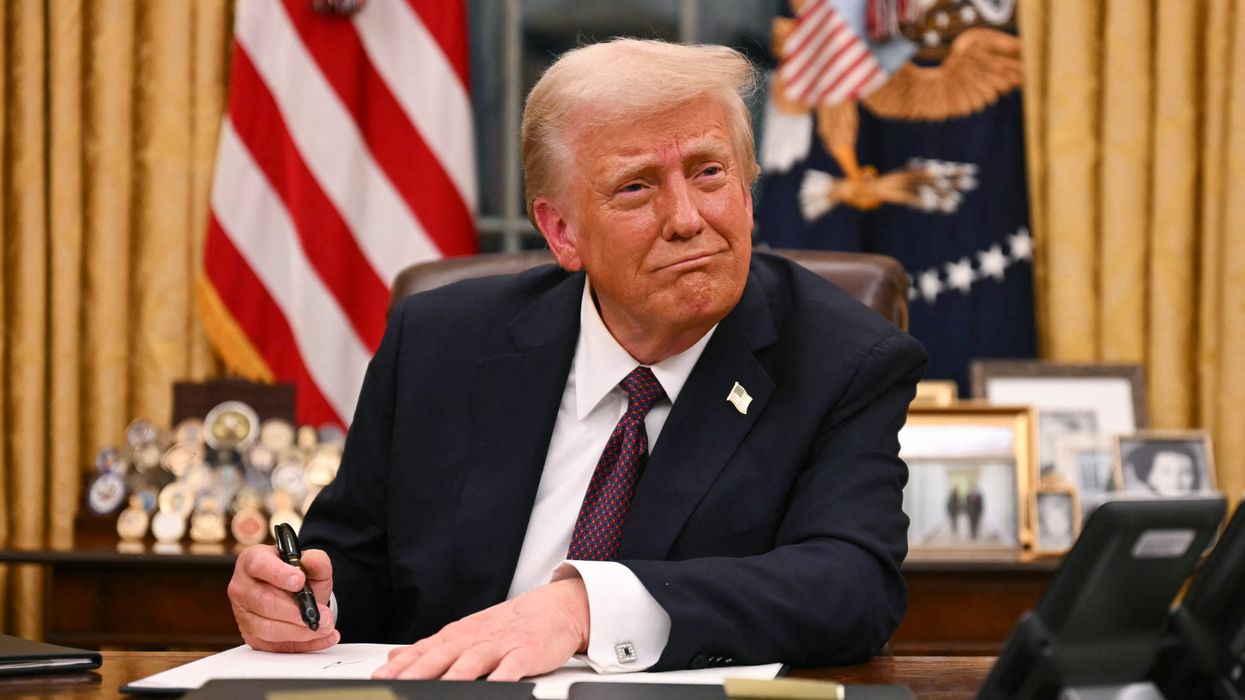
Trump signed an executive order increasing a previously imposed 10 per cent tariff on Chinese goods to 20 per cent, the White House said on Monday.
US tariffs also took effect on imports from Canada and Mexico after talks to avert the levies failed to reach a deal before the deadline.
Canada said it would impose 25 per cent tariffs on £122 billion ($155 bn) worth of US goods in response.
Trade war concerns added to market volatility, with most Asian indices trading lower. Tokyo pared some of its early losses but still ended 1.2 per cent down after China’s announcement.
Japanese automakers with supply chains linked to Mexico saw declines, with Nissan, Toyota, and Honda among the worst affected.
Hong Kong also closed lower after a volatile session, while markets in Singapore, Bangkok, Sydney, Wellington, Taipei, Jakarta, Kuala Lumpur, and Seoul declined. Shanghai and Manila were the only gainers.
European markets opened lower, with London, Paris, and Frankfurt all in the red as investors weighed the impact of an escalating trade conflict.
"The spectre of a full-blown trade war is once again looming, threatening to choke global economic growth just as investors were starting to regain confidence," said Stephen Innes of SPI Asset Management.
Investors are looking for signs of economic stimulus from China as the National People's Congress opens on Wednesday.
"In the upcoming National People's Congress, Chinese policymakers could provide more pro-growth measures, including announcing a larger budget deficit target and maintaining a five per cent growth target for this year," said MUFG Bank's Lloyd Chan.
The Mexican peso and Canadian dollar weakened against the US dollar in the past few days.
Trump accused Beijing and Tokyo of using currency devaluation as a trade strategy, a claim strongly denied by the Japanese government.
Oil prices also fell, with West Texas Intermediate crude dropping to £53.20 ($67.60) per barrel and Brent crude declining to £55.64 ($70.66) per barrel.
Bitcoin plunged nearly 10 per cent on Monday as concerns over the trade dispute led investors to seek safer assets.
Bitcoin and other digital assets had surged over the weekend after Trump suggested the creation of a national cryptocurrency reserve.
"Everything is getting sold," said Forexlive manager Adam Button. "There's a de-risking that's unfolding" among crypto investors, he added.
(With inputs from AFP)