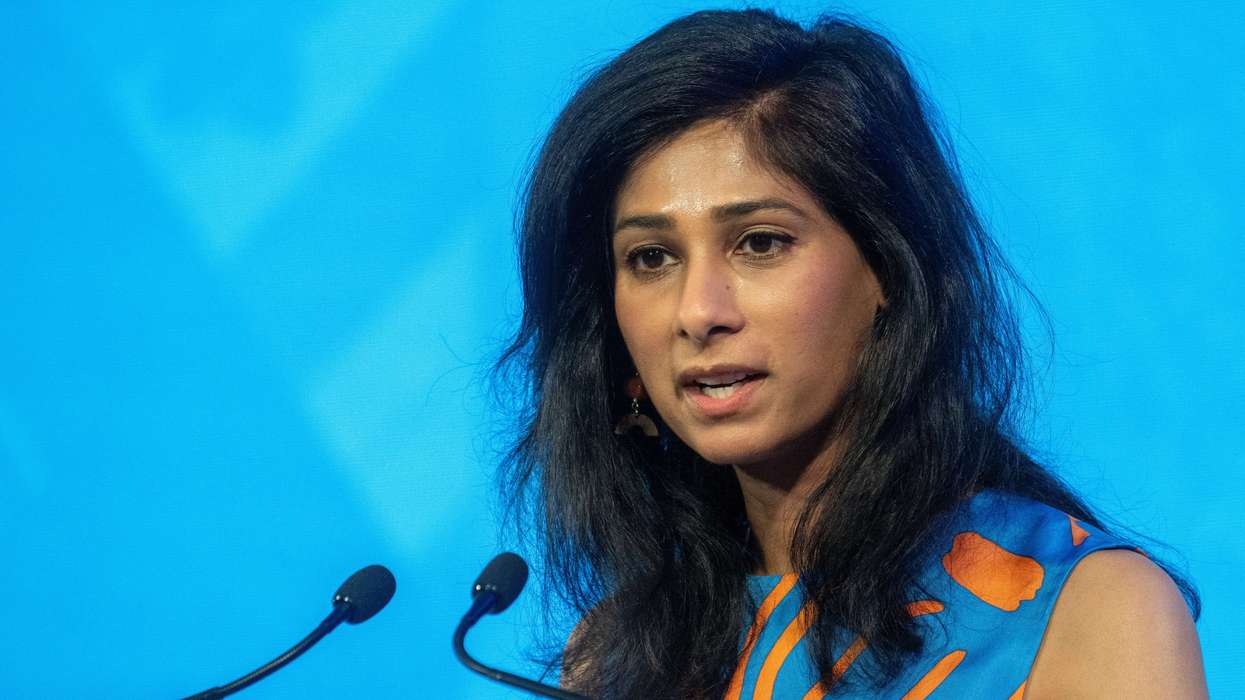

GITA GOPINATH, one of the most influential economists in the world, has spoken of the challenges that India faces because of the advent of AI.
Gopinath, who held the number two position at the International Monetary Fund, but returned to academia last year, also expressed deep concern about how the trade wars unleashed by US president Donald Trump are damaging the world economy. Gopinath was born in India and now lives in America as a US citizen; she was picked out by the Financial Times in 2021 as one of the “25 most influential women of the year”.
She is currently the Gregory and Ania Coffey professor of economics at Harvard University, where her neighbour is the Nobel Prize-winning economist Amartya Sen.
She previously served as the first deputy managing director of the IMF from January 2022 to August 2025. This was the number two position in the organisation. Before that, she also served as chief economist of the IMF between 2019 and 2022.
Her job, then as now, is to try and bring stability to the global economy.
Last week she occupied the “Lunch with the FT” slot in an interview with the paper’s US economics editor, Claire Jones.
Now that she is no longer constrained by her position at the IMF, Gopinath feels free to attack Trump’s tariff wars.
 Kenneth RogoffAlex Wong/Getty Images
“‘I joke to my former colleagues that I can now use my whole vocabulary,’ she said. ‘I can actually say ‘trade wars’ instead of ‘trade tensions’. There’s always a sense that you don’t want to trigger a crisis in a country, for sure,’ she says – though she adds that she was ‘probably way more guarded’ than she needed to be,” according to the FT.
“Now back in academia, it is clear Gopinath intends to use her newfound freedom to speak out in defence of the postwar economic order of free trade and financial integration coming under unprecedented attack from the Trump administration,” added the FT.
It said: “She is less sympathetic when it comes to President Donald Trump’s attempts to upend the economic order that she has devoted her life’s work to. But the high tariffs that have dominated Trump’s economic agenda in his second term constitute ‘straight-out protectionism in an extreme form — and it’s not just about countries you think you have some rivalry with, but towards your allies. I don’t know any economist who’d say this is a good set of policies.’”
Gopinath’s background is that she was born on December 8, 1971, in Kolkata into a Malayali family from Kannur, Kerala, and studied at Nirmala Convent School in Mysore. She received a BA from Lady Shri Ram College for Women of the University of Delhi in 1992 and an MA in economics from Delhi School of Economics in 1994. She further completed an MA at the University of Washington in 1996. She earned her PhD in economics from Princeton University in 2001 after completing a doctoral dissertation titled “Three essays on international capital flows: a search theoretic approach”, under the supervision of Ben Bernanke, Kenneth Rogoff and Pierre-Olivier Gourinchas.
She was awarded Princeton’s Woodrow Wilson Fellowship Research Award while doing her doctoral research.
The FT said: “At school in Mysore, in the south-western state of Karnataka, Gopinath was obsessed with science. But her father and some cousins convinced her to try for the Indian Administrative Service – an elite government service – and thought studying economics in Delhi would help.
“By the time Gopinath arrived in 1989 at the highly competitive Lady Shri Ram College, however, she had decided to apply for political science as a backup. When she said she would like to try out for economics too, the principal – a political scientist – became annoyed. ‘I got super nervous and said ‘sure, sure, put me down for political science.’
“A senior student – responsible for registering people for the course – intervened. ‘If it was not for her, I would have done political science. It was completely random,’ she says.”
The FT pointed out: “India’s balance of payments crisis in the early 1990s brought the IMF to the country and, for Gopinath, the dismal science to life. After a master’s at the Delhi School of Economics, she headed to the University of Washington and then to Princeton, where her doctoral advisers were Gourinchas, future Fed chair Ben Bernanke and Kenneth Rogoff. She credits Rogoff as her biggest professional mentor, saying that he was ahead of his time in doing all he could to encourage his female students. ‘The fact that there are quite a few women in international finance [shows] Ken has [had] an important role to play,’ she says.”
Gopinath retains her close India links: “While her schedule at Harvard is nowhere near as hectic as it was during her time at the IMF, Gopinath continues to travel the world – including back to India. She expects to make four trips this year to see her parents, elder sister and other family members.
“Gopinath is a US national and an overseas citizen of India. I ask her if America still feels like home. Very much so, she says. ‘It’s a great country, no doubt about that...it frees you up from a whole lot of daily worries that people have in many countries — including India. Sometimes at 2am, I’m filling gas at a gas station and I’m not worried. And that is so liberating because it frees you up to do much more exciting work. I definitely feel much safer here than, for example, if I were in Delhi, [where] I’d be careful about where I was going.’”
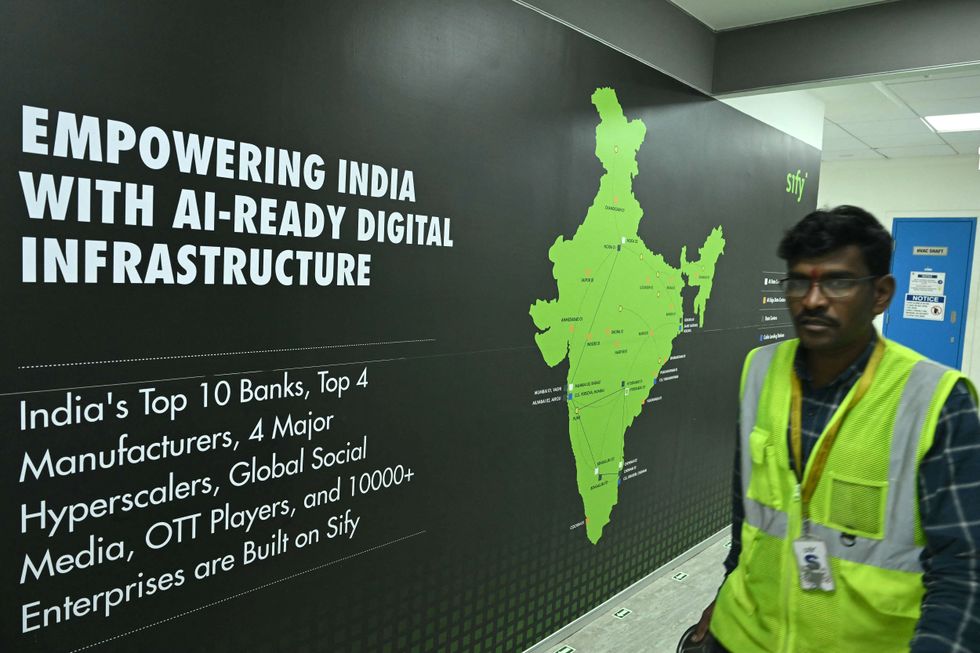 Gopinath warns technological change could pose challenges for India’s software services sector Indraneel Mukherjee/AFP via Getty Images
She outlined the harm that Trump had done to US academia: “Gopinath still believes US universities are the best places to pursue a doctorate in economics – even though there are many more private-sector opportunities in India now than when she left in 1994. However, Trump’s immigration clampdown would, she says, have made her think twice about coming here now. ‘It would [have felt] too risky, too uncertain, too unpredictable.’ She adds: ‘That’s a big mistake — what the US has been fantastic at is drawing talent from around the world. That used to be valued and praised and recognised, and now, unfortunately, we’re going in the other direction.’”
Gopinath was asked “if there are parallels between Trump’s and Indian premier Narendra Modi’s disdain for mainstream economic thought and the institutions, such as the IMF and Harvard, that practise it. Many economists, including Gopinath’s office neighbour Amartya Sen, criticised the Indian government’s shock decision in November 2016 to ban 86 per cent of cash overnight, with no warning, as part of a crackdown on the shadow economy. Modi responded to Sen by declaring that ‘hard work’ was ‘more powerful than Harvard’. Gopinath replies swiftly: ‘I never thought I’d say this, but I think the economic policies in the US are more heterodox compared to the policies in India. Quite obviously so.’”
Gopinath’s comments on India are measured: “While Gopinath lauds India for the huge economic reforms the country has made since she left, there remains a lack of jobs for young people. Many – like she once did – continue to pursue public-sector roles, spending their twenties preparing to sit exams amid a paucity of secure private-sector jobs that offer healthcare. She worries that the advent of AI will exacerbate the problems associated with India’s complex bureaucracy – especially in an economy that has relied heavily on software services for good jobs.
“‘If you’re in a country where it’s hard to start a business, it’s going to bite a lot,’ she says. ‘The US is super easy… In India it’s still complicated… If they don’t fix that ease of doing business, it’s even more consequential now than it was before AI.’”