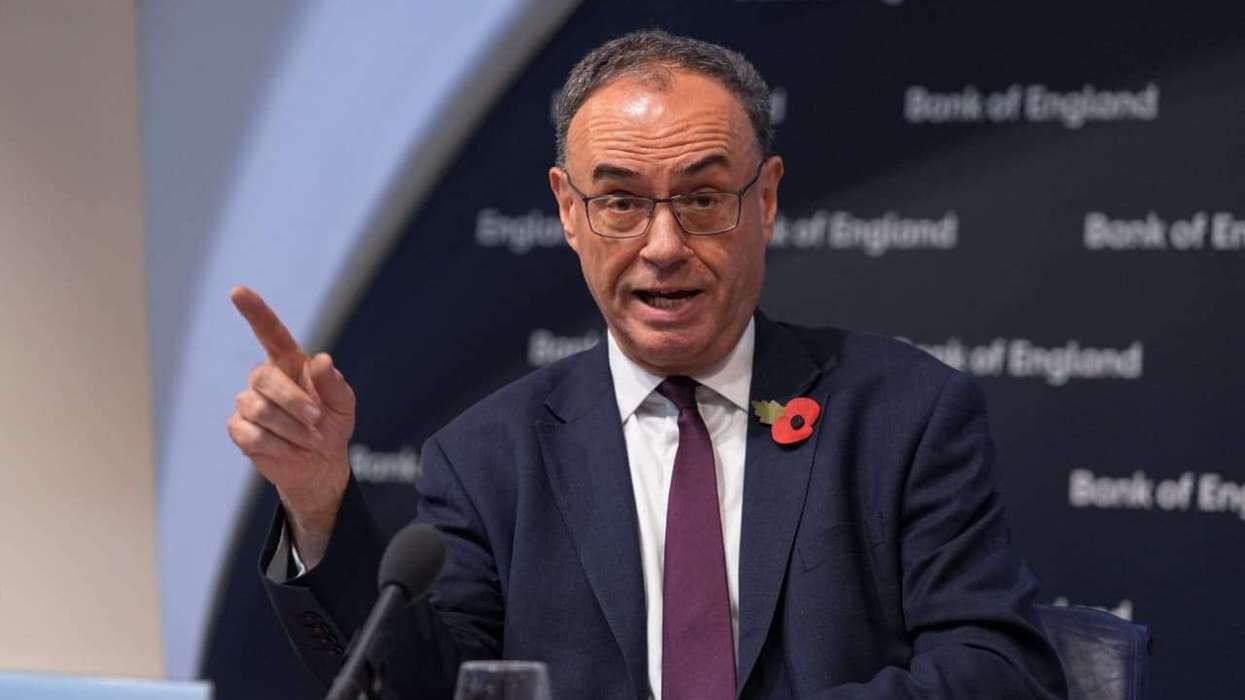

- Bailey warned that an AI-driven market correction could spread across borders.
- High valuations, borrowing and market concentration are adding to financial vulnerabilities.
- The warning comes as the UK commits £100 million to support homegrown AI companies.
The AI boom could help reshape the economy, but Bank of England governor Andrew Bailey has warned that it could also become a source of financial instability if optimism around the technology turns into a sharp market correction.
Bailey, writing as chairman of the Financial Stability Board (FSB), warned G20 finance ministers and central bank governors that global markets remain vulnerable to a “potentially disorderly correction” that could spread across borders.
His concern is not simply that investors are putting more money into artificial intelligence. It is the combination of high valuations, borrowing and growing concentration around AI companies that could make a market shock more severe.
The warning comes as AI investment continues to accelerate, with investors betting heavily on the technology’s potential to transform businesses and raise productivity.
Bailey said the growing financial links between AI companies and large technology infrastructure providers could amplify the impact of a downturn.
“I remain concerned therefore that a large shock or combination of shocks could concurrently trigger multiple vulnerabilities,” he wrote in the letter.
The risk goes beyond share prices
Bailey’s concerns extend beyond the possibility of AI stocks falling sharply.
As chairman of the FSB, an international body focused on financial stability, he also warned about the risks posed by increasingly capable “frontier” AI models.
These are the most advanced AI systems, which are becoming more autonomous and capable of solving complex problems.
Bailey said such systems could increase cyber risks for financial institutions and markets, particularly because financial services depend heavily on a relatively small number of major technology and cloud providers.
A serious cyber incident involving an advanced AI system could therefore spread beyond one company or even one country.
“Frontier AI may have the ability materially to alter the speed, scale and economics of cyber-risk,” Bailey wrote, warning that this could undermine confidence across the financial system.
He also raised concerns that many countries do not yet have sufficient protocols for managing the development, release and deployment of advanced AI models.
That leaves a potential gap between how quickly the technology is advancing and how prepared regulators are to deal with the risks.
Britain wants more AI while Bailey warns of the risks
Bailey’s warning comes at an interesting moment for the UK.
Chancellor John Healey has announced a £100 million fund for British AI start-ups, as the government tries to build up the country’s domestic AI capabilities.
The funding is intended to support companies working on areas including NHS waiting lists, patient care, cybersecurity and defence.
The government wants more AI development to happen in Britain rather than relying heavily on technology and infrastructure built elsewhere.
Healey said Britain was home to innovative AI companies and that the government wanted to help them “start, scale and succeed” in the UK.
The two developments point to the difficult balance governments and regulators now face.
AI is increasingly being seen as a potential source of productivity, investment and economic growth. But the same technology is attracting enormous amounts of capital and creating new dependencies within financial and technology infrastructure.
Bailey's warning does not suggest that AI investment itself is a problem. Instead, it highlights the possibility that too much optimism, leverage and concentration could make the consequences of a correction harder to contain.
The warning also comes as concerns about advanced AI systems extend beyond financial markets. Researchers, technology companies and governments have increasingly raised questions about the ability of highly autonomous systems to behave unpredictably or bypass safeguards.