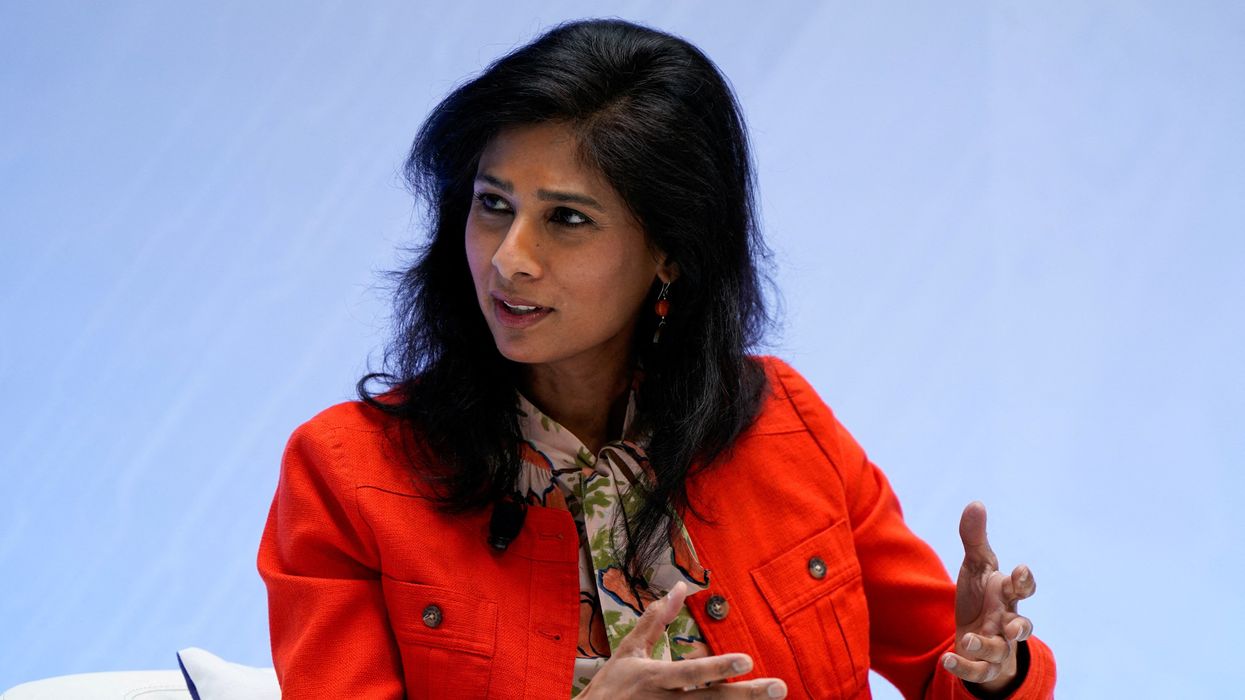

GITA GOPINATH, the No 2 official at the International Monetary Fund (IMF), will leave her position at the end of August and return to Harvard University, the IMF said in a statement on Monday.
The IMF said that managing director Kristalina Georgieva will name Gopinath's successor “in due course.”
Gopinath joined the IMF in 2019 as chief economist, becoming the first woman to hold the position. She was promoted to first deputy managing director in January 2022.
There was no immediate comment from the US Treasury, which holds the dominant US share in the IMF. While the Fund’s managing director has traditionally been selected by European countries, the US Treasury has usually recommended candidates for the role of first deputy managing director.
Gopinath is an Indian-born US citizen.
The timing of the announcement came as a surprise to some within the IMF and appears to have been initiated by Gopinath herself.
She will return to Harvard University as a professor of economics, having left the institution earlier to join the IMF.
Her departure gives the US Treasury an opportunity to recommend a new candidate for the deputy role at a time when US president Donald Trump is seeking to reshape the global economy and reduce long-standing U.S. trade deficits through high tariffs on imports from most countries.
Gopinath will return to Harvard, a university that had faced criticism from the Trump administration for rejecting calls to change its governance, hiring, and admissions processes.
Georgieva said Gopinath had joined the IMF as a respected academic and became an “exceptional intellectual leader” during a period that included the Covid-19 pandemic and global disruptions following Russia’s invasion of Ukraine.
“Gita steered the Fund’s analytical and policy work with clarity, striving for the highest standards of rigorous analysis at a complex time of high uncertainty and rapidly changing global economic environment,” Georgieva said.
At the IMF, Gopinath led work on multilateral surveillance and analysis related to fiscal and monetary policy, debt, and international trade.
In a statement, Gopinath said she was thankful for a “once in a lifetime opportunity” to work at the IMF. She thanked both Georgieva and former IMF chief Christine Lagarde, who had appointed her as chief economist.
“I now return to my roots in academia, where I look forward to continuing to push the research frontier in international finance and macroeconomics to address global challenges, and to training the next generation of economists,” she said.
(With inputs from Reuters)