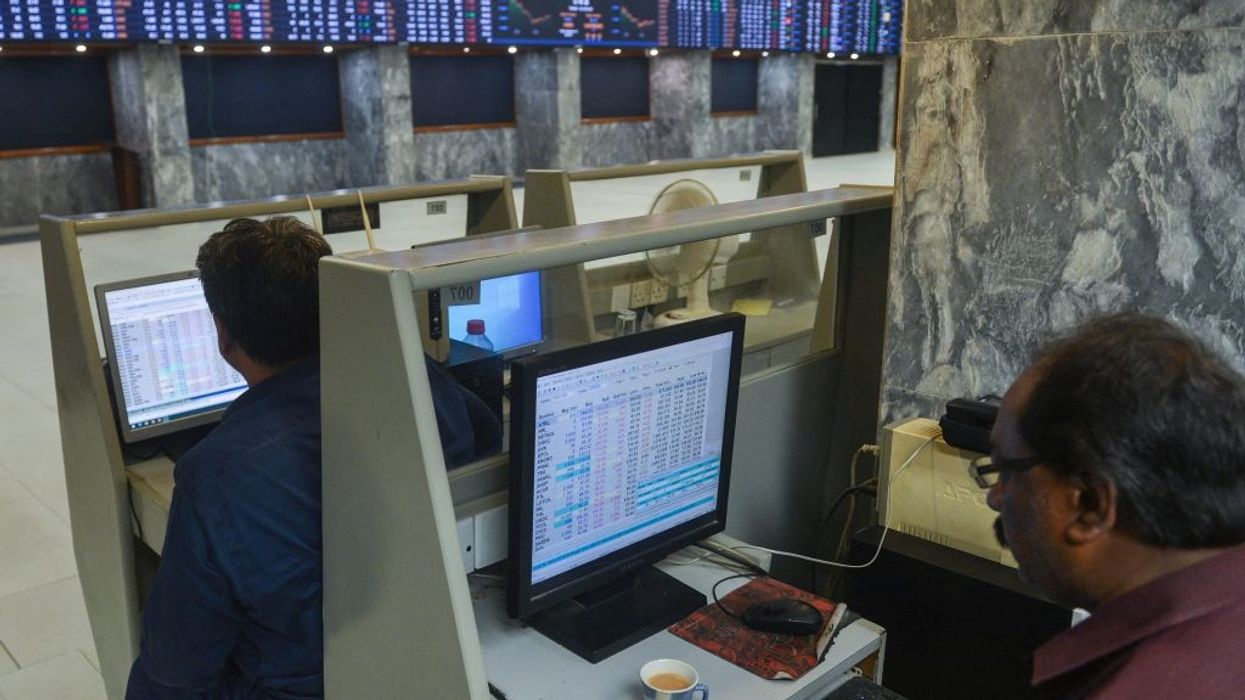

The beleaguered Pakistani economy faces substantial credit risks with "critically low levels” of foreign exchange reserves, New York-based global ratings agency Fitch said on Tuesday (14), warning that a default is a "real possibility."
Fitch downgraded Pakistan’s long-term foreign currency issuer default rating (IDR) to ‘CCC-’ from ‘CCC+’, citing further worsening in liquidity and policy risks.
The downgrade reflected a sharp deterioration in external liquidity and funding conditions, along with decline of foreign exchange (FX) reserves to “critically low levels," Fitch said.
“Falling reserves reflect large, albeit declining, current account deficits (CADs), external debt servicing and earlier FX intervention by the central bank, particularly in 4Q22, when an informal exchange-rate cap appears to have been in place.
“We expect reserves to remain at low levels, though we do forecast a modest recovery during the remainder of FY23, due to anticipated inflows and the recent removal of the exchange rate cap,” the agency said.
Fitch said it expects Pakistan to successfully conclude the ninth review of the International Monetary Fund (IMF) programme, and the downgrade is a reflection of the large risks to continued programme preformance and funding, in the run-up to this year's elections.
“Default or debt restructuring is an increasingly real possibility, in our view,” Fitch warned.
Pakistan is struggling with instability stemming from an economic crisis, last summer's devastating floods and a recent surge in terror attacks across the country.
A crucial $1.2 billion tranche of the 2019 bailout was stalled since December last year, with the IMF urging Pakistan to raise more cash.
Pakistan held intensive talks with an IMF delegation in Islamabad for ten days, but could not reach a deal.
Fitch also highlighted a challenging political context and funding contingent on the IMF programme as other factors for the rating downgrade.
The IMF and the Pakistan government resumed talks virtually on Monday (13), with Islamabad hoping that an agreement would be quickly reached that would provide a fillip to the country's ailing economy.
Pakistan's foreign exchange reserves stood at about $2.9bn on February 3, which was less than three weeks of imports, according to the country's central bank's estimates.
It was down from a peak of more than $20bn at the end of August 2021.
(PTI)