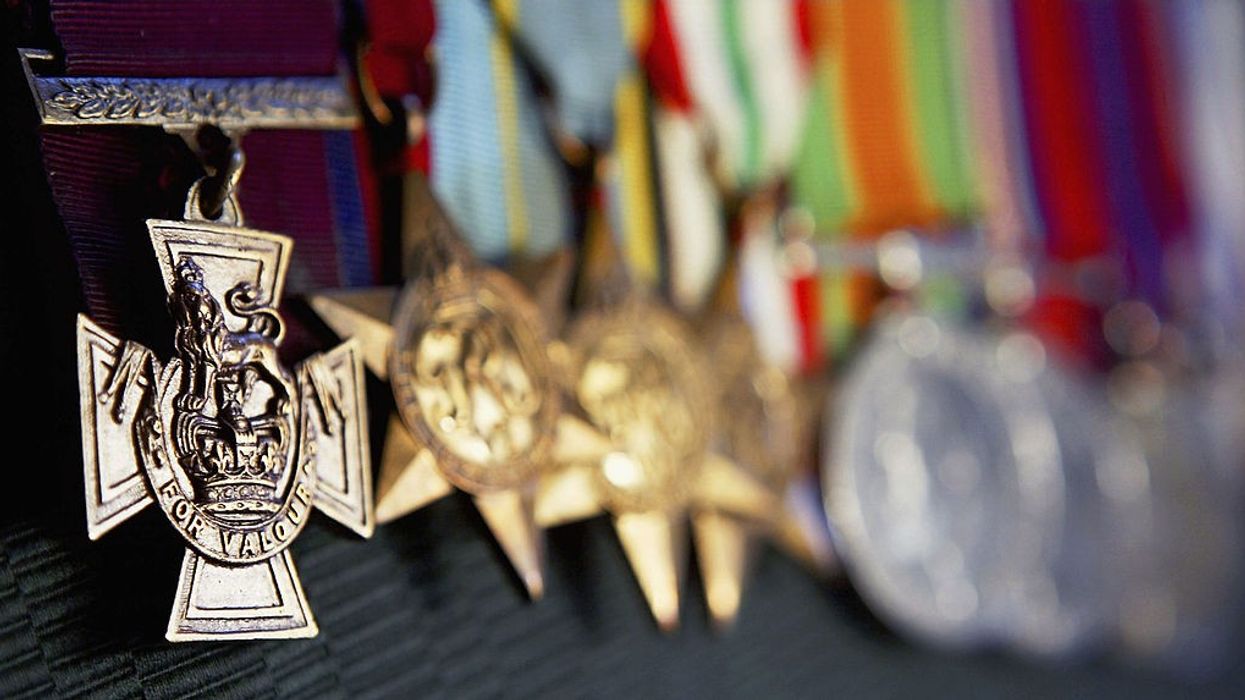

The first Victoria Cross awarded to a civilian will be auctioned at Noonans Mayfair on September 14, The Telegraph reported.
Thomas Henry Kavanagh, known as ‘Lucknow Kavanagh’, is one of just five civilians ever to receive the medal.
His act of bravery happened at the Siege of Lucknow, during India's First War of Independence, known at the time as the Indian Mutiny.
While most medals are sold for a fee of around £180,000 to £250,000, Kavanagh’s medal is likely to fetch up to £400,000 at auction, the report added.
According to The Telegraph, in 1860s Britain, the name Kavanagh would have stirred a frisson of admiration and national pride among those who heard it. But he is barely remembered today.
Kavanagh, an Irishman from County Westmeath, exhibited a remarkable act of personal bravery during his time and became the stuff of folklore in the decades that followed.
Currently, the conflict is often portrayed as the thwarting of a nascent Indian anti-colonialist movement, but at the time it was considered a heroic triumph against a barbaric, atrocity-prone enemy.
In May 1857, Kavanagh, an employee of the Bengal Civil Service, was trapped with fellow Britons and pro-British Indians in the British Residency colonial quarter of Lucknow.
The first relief force suffered heavy casualties and failed to reach those trapped in the Residency.
When a second force finally arrived in November, they had no knowledge of how to reach the hundreds trapped in the colonial quarter.
Kavanagh volunteered to be the messenger, disguising himself as a sepoy and sneaking out alongside a local man to head across the city and reach the relief force commanded by Sir Colin Campbell.
The two men mixed with rebel forces, blagged their way past enemy sentries and forded across rivers and swamps to reach Campbell. He then guided the relief force into the city and to the Residency, the newspaper report said.
His act was later immortalised in a painting by Louis William Desanges which is now at the National Army Museum in Sandhurst.
During that time, was invited to tour Windsor Castle.
Mark Smith, an expert in medals at A. H. Baldwin & Sons auction house, told The Telegraph that it was the rarity of a civilian Victoria Cross that gave the medal its worth. While “He is one of just five civilians, out of 1,358, so his is a rare story,” said Mr Smith.
The medal goes on sale