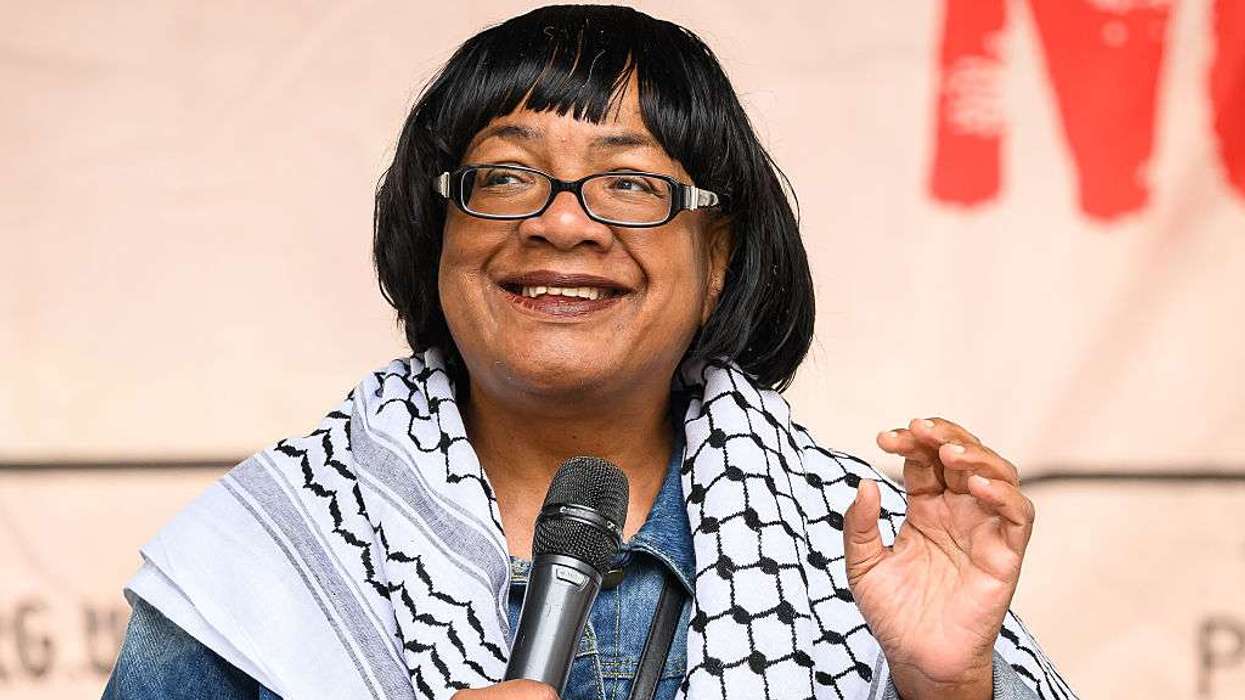

LABOUR PARTY said on Thursday (30) that it had readmitted the country's longest-serving female lawmaker Diane Abbott, ending a suspension imposed last year over comments on racism that had reignited a row over antisemitism.
Abbott, Britain's first Black woman member of parliament, was suspended by the Labour in July 2025 under Keir Starmer – who stepped down as prime minister earlier in July – after she had said she did not regret remarks on racism that had led to an earlier suspension in 2023.
In a statement on Thursday, Labour said Abbott had been readmitted to the party and had the Labour whip restored following a process conducted under party rules and approved by its independent review board.
Abbott said in a statement posted on X that she had been and remains "a lifelong anti-racist and remain deeply committed to opposing racism in all its forms."
A Labour spokesperson said the party had also reinstated Joani Reid, who had been sitting as an independent lawmaker after voluntarily suspending herself from Labour following reports that her husband had been arrested on suspicion of assisting China's foreign intelligence service.
A party source familiar with the matter said Reid was never part of the police investigations into the alleged spying.
Abbott was suspended by Labour in 2023 after saying the prejudice experienced by Jewish people was similar to, but not the same as, racism. She later apologised and withdrew the remarks. She was readmitted to Labour shortly before the July 2024 national election.
But the party suspended her again the following year after she had told BBC Radio that there was a difference between racism based on skin colour and other forms of racism, and said she did not regret the earlier controversy.
Starmer had made tackling antisemitism within Labour a central part of his leadership, after the party faced accusations of discrimination and harassment against Jewish people under former leader Jeremy Corbyn.
(Reuters)




 Curator Emma Slocombe with ikat robes and arabachi coats in the Peter the Great Room in Blickling Hall Amit Roy
 View of the entrance to Blickling Hall on a rainy autumn dayAmit Roy
 Kente cloth from Ghana in the Long Gallery in Blickling Hall
 Decoration in the Great Hall at Blickling Hall Amit Roy
 Palampore fragment made in coastal south-east India in the Brown Room in Blickling Hall Amit Roy
 Bed valance dating from early 1700s in the Italian Print Room at Blickling Hall Amit Roy
 Indian inspired fabric draped on sofas in the South Drawing Room in Blickling Hall Amit Roy
 Indian inspired fabric draped on sofas in the South Drawing Room with Indian carpet in Blickling Hall Amit Roy
 Karun Thakar has picked out the geometric patterns in the bookcase and the Kente cloth in the Long Gallery in Blickling Hall Amit Roy
 Large tapestry depicting Peter the Great defeating the Swedish army at the Battle of Poltava in 1709 Amit Roy
 ikat robes and arabachi coats in the Peter the Great Room in Blickling Hall Amit Roy
 Baghs and kanthas made by women provide contrast to the men only portraits in the Great Hall at Blickling Hall Amit Roy
 Baghs and kanthas in the entrance Great Hall at Blickling Hall Amit Roy
 Baghs and Kanthas in the Great Hall in harmony with stained glass window at Blickling Hall Amit Roy
 Kimonos reflect Japanese influence in Upper Ante Room in Blickling Hall Amit Roy
 Kimono in Upper Ante Room in Blickling Hall
 A view of the Palace and fort at Agra shows romantic side of India Amit Roy
 Blickling Hall Amit Roy
 Table carpet, European 1670-1680 Amit Roy
 Unfinished 17th century Italian embroidery in the Print Room at Blickling Hall Amit Roy
 Picture of Kashmir shows a romantic view of India Amit Roy
 A panel of Ashburnham bed hangings made in Gujarat for sale in Europe in the Brown Room in Blickling Hall Amit Roy
 Colcha made in the 1600s by women in Bengal for the Portuguese market in the Long Gallery at Blickling Hall Amit Roy




