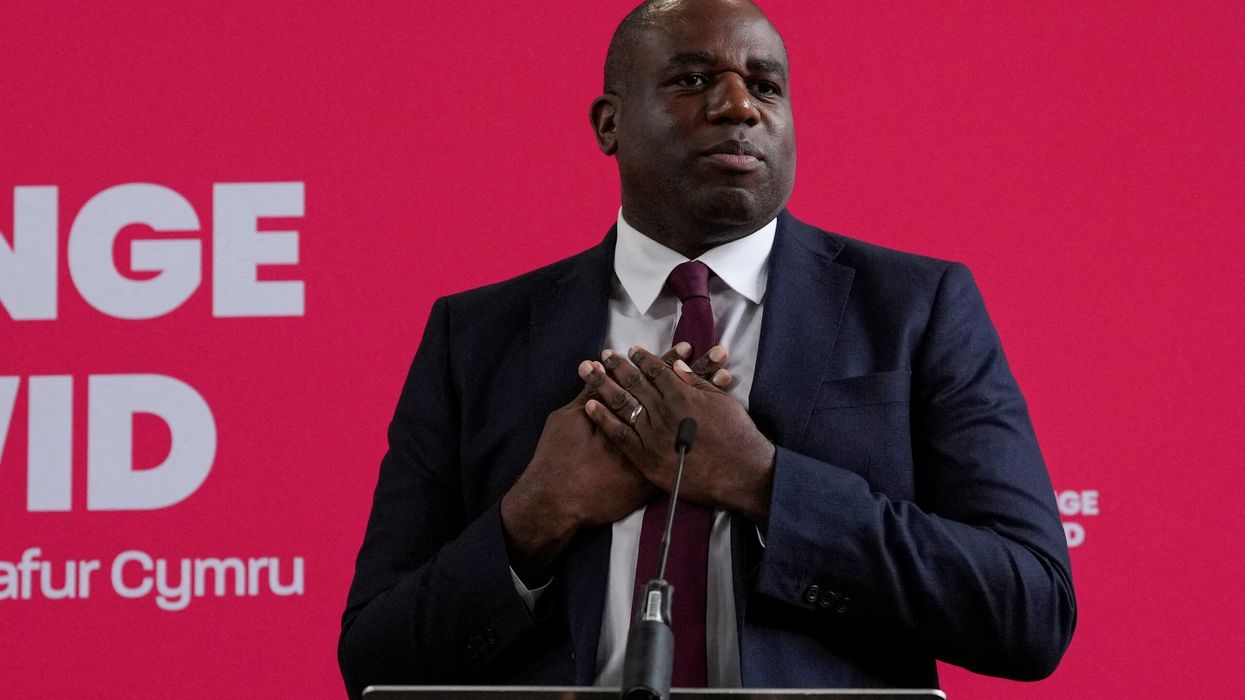

NEWLY appointed foreign secretary David Lammy reiterated his support Friday (5) for international efforts to secure an "immediate ceasefire" in the Israel-Hamas war and for the release of remaining hostages.
Lammy, 51, said he would "get to work with tireless diplomacy" towards those twin aims, in his first comments after becoming the country's top diplomat.
New Labour prime minister Keir Starmer had confirmed Lammy -- the party's spokesperson on foreign affairs since 2021 -- in the post hours earlier, following Labour's landslide victory in the UK general election.
"All of us recognise the agony of communities who have seen the scenes coming out of Israel and Gaza," Lammy said from the Foreign Office.
"But the job now is to get to work with tireless diplomacy to support an immediate ceasefire and move towards getting those hostages out."
Lammy, who replaced Conservative David Cameron as foreign secretary, added that he will "do all I can diplomatically" to support US president Joe Biden's efforts to secure the ceasefire.
Biden announced a pathway to a truce deal in May that he said had been proposed by Israel. It included an initial six-week truce, Israeli withdrawal from Gaza population centres and the freeing of hostages by Palestinian militants.
The government under Starmer's predecessor Rishi Sunak has supported the US-led efforts, and Labour regaining power is not expected to represent a shift in London's policy towards the conflict.
While the six initial priorities promised in its election manifesto focussed on domestic matters, a long list of international issues awaits Lammy in his in-tray.
Labour has said long-term peace and security in the Middle East would be an immediate focus. It has committed to recognising a Palestinian state as a contribution to a renewed peace process which results in a two-state solution.
Lammy, 51, travelled widely before the election, particularly to the United States, where he has been working to build ties with Republicans, after once writing in Time magazine that Trump was a "woman-hating, neo-Nazi sociopath".
He has met Republican figures seen as candidates for roles in a Trump cabinet, including Mike Pompeo.
Lammy has strong links with leading Democrats and is a close friend of former President Barack Obama, a fellow Harvard Law School alumni.
Lammy, the son of Guyanese immigrants, represents an inner-London constituency and has spent much of his political career campaigning for social and racial justice.
He supported Britain remaining in the European Union in the 2016 referendum. While Labour has promised Britain will stay outside the bloc, it wants to reset the relationship and seek to deepen ties, including through a new UK-EU security pact.
Lammy has previously described Marine Le Pen, a leading figure in France's far-right National Rally (RN), as xenophobic and malevolent. Polls show her party is on course to win the most seats in the French parliamentary election but fall short of an absolute majority.
"France is one of Britain's closest allies and we will work with whoever is elected. It is a democracy and it is up to the French people who governs them," Lammy told reporters earlier this week. "We will wait to see what happens in the second round on July 7."
(Agencies)