Britain's government stoked controversy by issuing new schools guidance that urges teachers to avoid "contested" areas in history, anti-racism and climate change.
The guidance, which singles out the activist group Black Lives Matter, comes with prime minister Boris Johnson fighting for his political survival and accused of trying to distract voters' attention by pushing an "anti-woke" agenda.
Citing the Israeli-Palestinian conflict and the legacy of the British Empire, the Department for Education said "teachers must not promote partisan political views and should offer a balanced overview of opposing views when political issues are taught".
Also Read | British student returns home from Ukraine
Education secretary Nadhim Zahawi stressed that no subject should be "off-limits in the classroom".
But it should be taught "in an age-appropriate way, with sensitivity and respect, and without promoting contested theories as fact", he said in a statement.
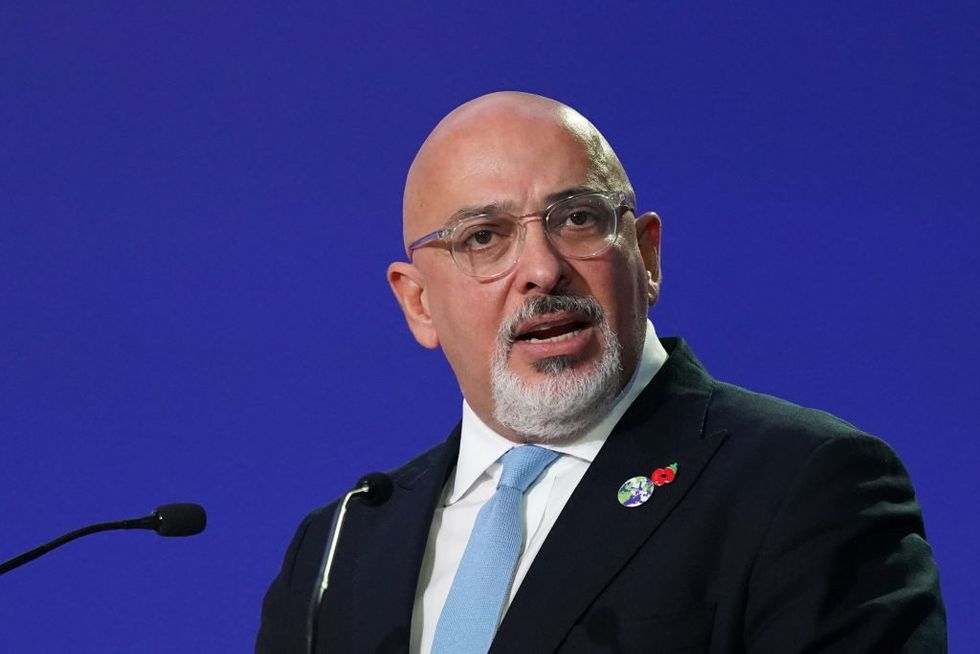 British education secretary Nadhim Zahawi. (Photo by Ian Forsyth/Getty Images)
With Johnson under police investigation over a series of lockdown-breaching parties held in Downing Street, the government has been making a renewed push on "culture wars" ahead of nationwide local elections in May.
The government is driving through legislation to toughen up penalties for vandalising historical sites, after one statue of a historical slaver was toppled in Bristol and another of wartime prime minister Winston Churchill was defaced in London.
In a speech, this week at a right-wing think-tank in Washington, Conservative party chairman Oliver Dowden denounced a "painful woke psychodrama" that he said was undermining democratic freedoms in the West.
Dowden, who sits in Johnson's cabinet, said "woke" thinking was prevalent in schools, universities and companies.
"But I tell you, it is a dangerous form of decadence. Just when our attention should be focused on external foes, we seem to have entered this period of extreme introspection and self-criticism," he said.
"And it really does threaten to sap our societies of their own self-confidence."
Schools should respect political impartiality
UK schools are already required by law to respect political impartiality. But the new guidelines go further by highlighting specific issues that have sparked fierce debate, including demands for a more critical examination of Britain's imperial past.
The Department for Education said that on the environment, schools are not required to "present misinformation, such as unsubstantiated claims that anthropogenic climate change is not occurring".
"However, where teaching covers the potential solutions for tackling climate change, this may constitute a political issue."
Mary Bousted, joint leader of the National Education Union, accused the government of adding "new layers of mystification and complexity" to teachers' heavy workload.
"The warning lights that the government is flashing around climate change, racism, world poverty and the legacy of empire as topics of exploration are more likely to decrease students' engagement with learning than to stimulate it," she said.
When Zahawi previewed the new guidelines earlier this week, Bousted also tweeted: "When ministers engage in culture wars, ask yourself what is the news story that they don't want you to think about."
Geoff Barton, head of the Association of School and College Leaders, said the "vast majority of teachers" were skilled at teaching in a balanced way.
New guidance "should not be over-prescriptive, as it could have the unintended consequence of deterring open discussions", he warned.
(AFP)






 Sabina Nessa: Hundreds gather for vigil in Eastbourne Getty Images