by PRITI PATEL
Conservative MP for Witham
LAST week’s vote in the Commons on the withdrawal agreement sent a clear message to the government that it must get on with delivering Brexit.
This means that as the dust settles, the government needs to swiftly dismiss those who want to use the defeat as an excuse to stop Brexit. For too long they have been permitted to carry influence on the Brexit process and decision-making. Many of those now trying to unpick Brexit voted leave in the referendum, stood on a manifesto to deliver Brexit, voted in favour of Article 50 and agreed to our departure from the EU on March 29, 2019.
Preparing for Brexit on WTO [World Trade Organisation] terms also presents an opportunity to force the EU back to the negotiating table to get a better deal for Britain.
There are many advantages to leaving the EU under WTO terms and with careful preparation, there is nothing to fear.
First, doing so gives business and the country certainty to plan for the future as it gets rid of the uncertainty caused by the withdrawal agreement.
Second, as there will be no financial settlement, the government will have £39 billion available to invest in the economy to address concerns about volatility and to support economic growth.
Third, we can immediately work on agreeing new trade deals with the rest of the world. Under the proposed deal and while in the EU, the UK is unable to negotiate and commence new trade arrangements with fast-growing economies including India, Asia and Africa. The customs union acts as a protectionist racket that discriminates against our friends in the Commonwealth and penalises some of the poorest countries in the world.
Fourth, we will have taken back control and delivered the outcome of the referendum.
As well as leaving on these terms, we can also extend the hand of friendship to the EU to continue to cooperate in areas of mutual interest and to pursue an advanced free trade deal.
But while it is imperative that the government prepares for departure under WTO terms, it is still preferable that we leave with a deal, so ministers should press for the withdrawal agreement to be amended. The government should put new legal text on the table which changes the worst aspects of the agreement to make it more acceptable.
This must include replacing the backstop with a better alternative that does not threaten the integrity of the United Kingdom and removing those elements that bind the UK into a single customs territory. With £39bn at stake, there’s every prospect that the EU will return to the table for what should be seen as modest but important revisions.
Looking to negotiate a better deal while being prepared to leave on March 29 is the sensible and right course of action to take. The government now has a chance to ensure we leave the EU and deliver on the promises made to the British people.




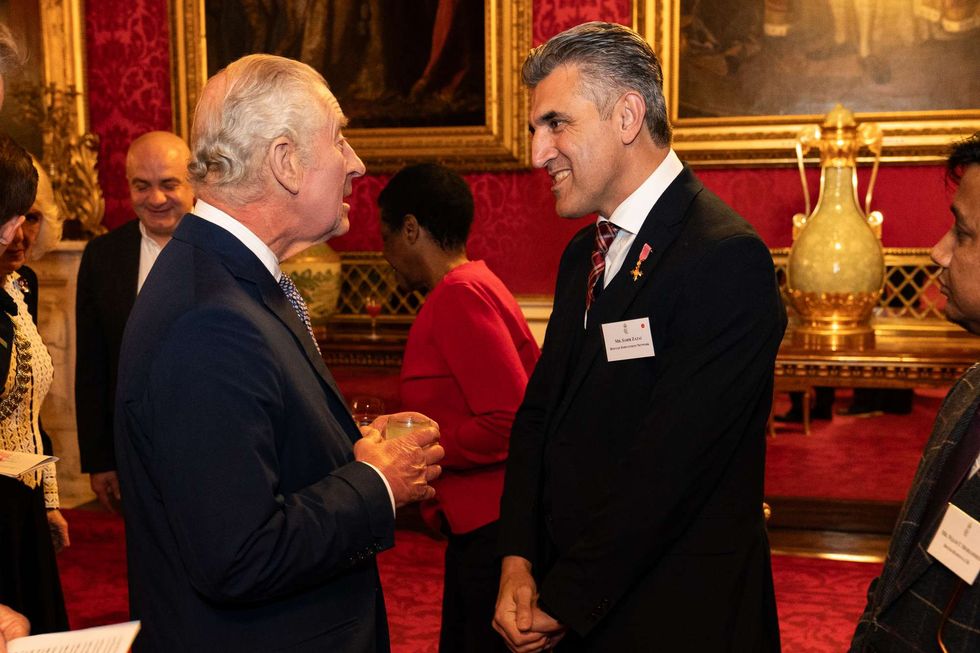 Sabir Zazai (right) speaks with King Charles III during a reception at Buckingham Palace to recognise the UK's contribution to humanitarian efforts across the world and to mark 60 years of the Disasters Emergency Committee on November 8, 2023 in London, England.Getty Images