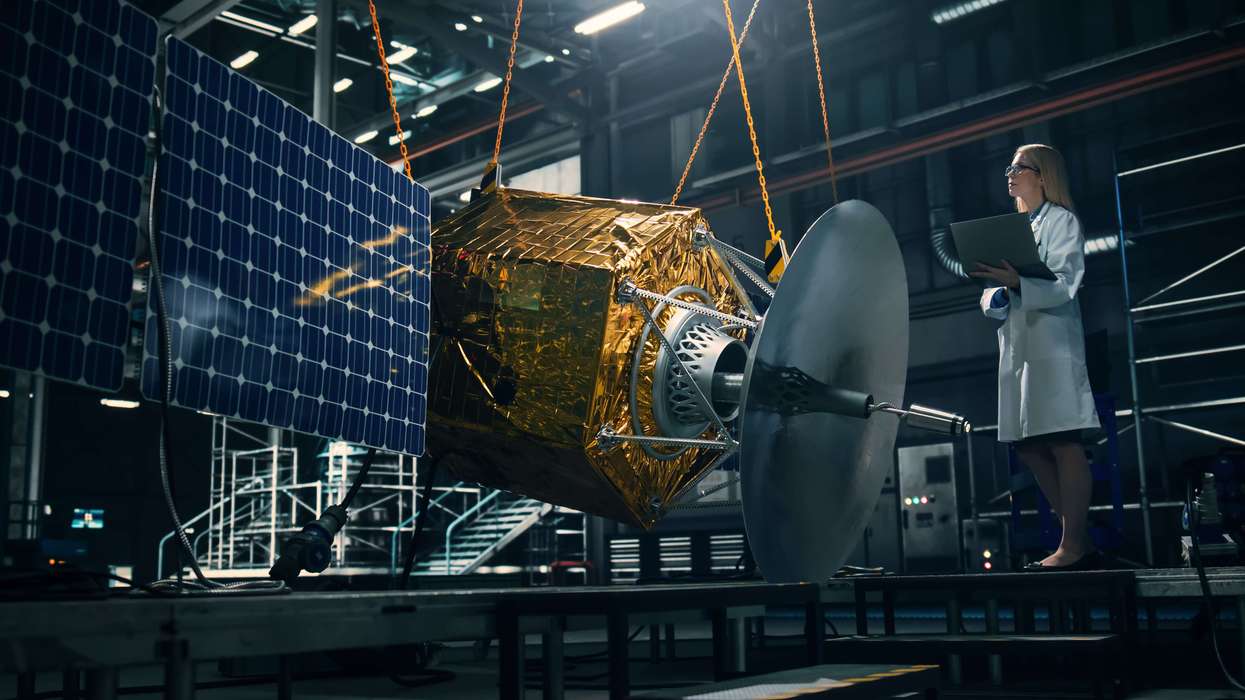

- Britain plans to launch a spacecraft in 2029 to capture and remove two dead satellites.
- Space debris travelling at more than 17,000mph can damage satellites supporting GPS, weather forecasts and communications.
- The £61 million mission could help British companies develop technology for a growing satellite servicing industry.
Britain is preparing to tackle the growing problem of space junk with a robotic spacecraft designed to capture and remove two dead satellites, in a mission aimed at protecting the technology behind GPS, weather forecasts and communications.
The UK's Active Debris Removal (UK ADR) mission is scheduled to launch in 2029 from SaxaVord Spaceport in Scotland. The spacecraft will approach two defunct UK-registered satellites, capture them using robotic technology and guide them towards Earth's atmosphere, where they are expected to burn up.
The UK Space Agency has appointed ClearSpace UK to lead the mission under a £61 million contract. The project is being presented as a world-first national mission of this kind, with the spacecraft designed to remove more than one satellite during a single operation.
The challenge is becoming harder to ignore. Space around Earth contains growing quantities of discarded satellites, rocket parts and other debris. Objects travelling at speeds exceeding 17,000mph can cause serious damage if they collide with functioning spacecraft.
Thousands of active satellites support services used on Earth every day, from navigation and mobile communications to weather forecasting and national security. A collision that damages one of these satellites could disrupt services far beyond the space industry itself.
A growing risk above Earth
Satellites are often left in orbit when they run out of fuel or develop faults that make them unusable. Unlike rubbish on the ground, debris in space cannot simply be collected and taken away. Capturing an old satellite is technically difficult because it was not designed to be approached, held or moved by another spacecraft.
The UK ADR mission is intended to demonstrate how that problem could be addressed. The spacecraft will need to locate each target, approach it safely and capture it before guiding it towards a lower orbit for disposal.
The technology is being developed with future missions in mind. The spacecraft is intended to be refuellable, potentially allowing similar systems to support further operations rather than being discarded after a single use.
Space Minister Liz Lloyd said the mission would help protect the satellites that underpin everyday life, from keeping people connected to providing accurate weather forecasts and supporting national security.
The project also fits into Britain's wider space strategy, which identifies in-orbit servicing, assembly and manufacturing as priority areas. These technologies could eventually allow satellites to be repaired or refuelled in space, extending their working lives and reducing the need to replace them.
A new market for British space companies
The government hopes the mission will do more than remove two satellites. It is also intended to build British expertise in robotic capture, spacecraft navigation and the complex manoeuvres needed to approach objects in orbit.
The UK Space Agency is working with ClearSpace UK and suppliers across the country to develop the technology. ClearSpace UK managing director Rob Atchison said the next stage would involve designing, building and testing a spacecraft capable of safely approaching an object that was never designed to be captured.
The work could create opportunities for specialist engineers and companies involved in robotics, spacecraft systems, guidance and mission operations.
The potential market extends beyond debris removal. In-orbit servicing, assembly and manufacturing, collectively known as ISAM, could allow companies to repair satellites, replenish fuel and carry out other work in space. Analysts have predicted that the sector could grow into a billion-dollar industry over the coming decade.
The UK's space industry was valued at £18.6 billion and supported more than 55,000 jobs, according to the government's 2024 industry assessment. The mission is intended to help British companies build the expertise needed to compete in this emerging market.
However, the immediate task remains a demanding one. The spacecraft must be designed, tested and launched before it can demonstrate that multiple defunct satellites can be safely removed in a single mission.
If successful, the project could provide a foundation for further debris-removal operations and other services that help keep Earth's orbital environment usable as satellite numbers increase.






 nationaltrustonline
 nationaltrustonline
 nationaltrustonline