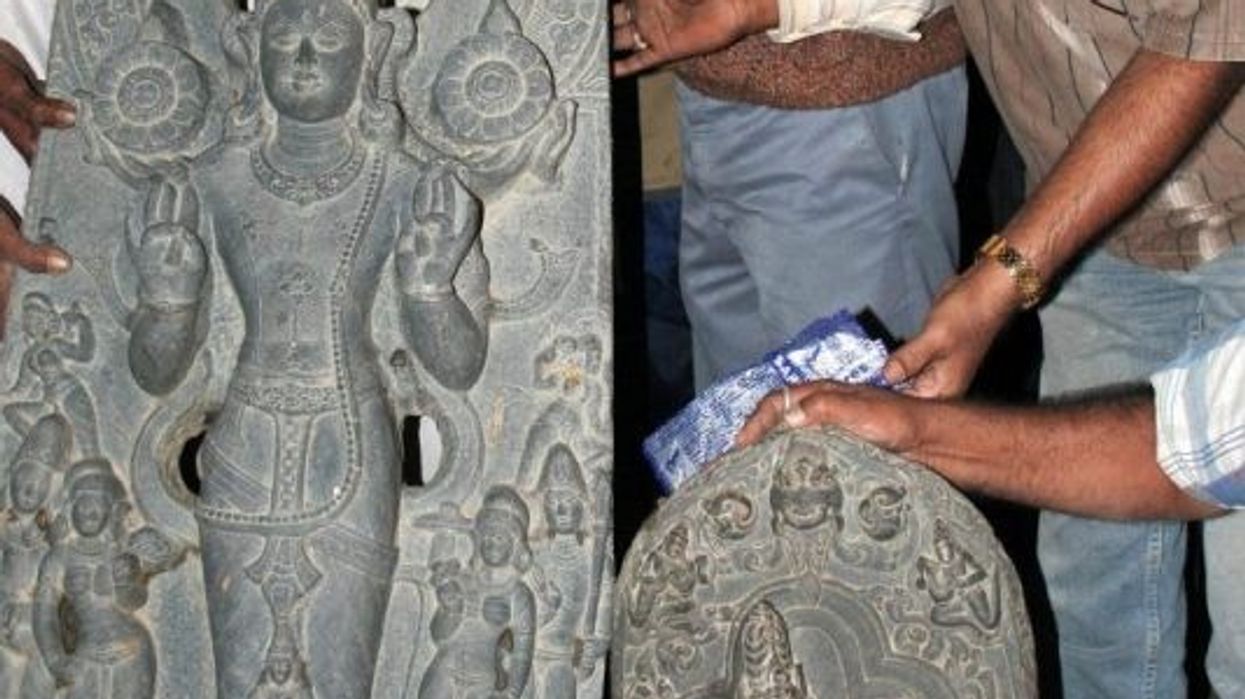

THE National Gallery of Australia will return 14 artworks to India, of which at least six are believed to have been stolen or exported illegally.
The artworks, which include religion and culture related sculptures, photographs and a scroll are worth about $2.2 million (£1.8m). Some of them date back to the 12th century.
The Canberra gallery director Nick Mitzevich said the works would be returned to the Indian government within months.
"It's a relief that they can be returned to the Indian people, and it's a resolution for the National Gallery to close a very difficult chapter of our history," he said.
Thirteen of the works are connected to alleged trafficker Subhash Kapoor, a former Manhattan art dealer who was the subject of a massive US federal investigation known as Operation Hidden Idol.
Also read: British restorer arrested for being part of Asian antiquities smuggling ring
Kapoor, 72, is behind bars and is facing a trial in India.
The National Gallery of Australia has already returned several other works it had acquired through Kapoor, including a $5m (£4.2m) bronze statue of the Hindu god Shiva that had been stolen from a Tamil Nadu temple.
Mitzevich said the gallery introduced guidelines to assess any legal and ethical issues with works it holds.
It is also investigating three other sculptures from its Asia collection.
"It's very much a live issue with galleries around the world. And we want to make sure that we can resolve these issues in a timely manner," he said.
Several of the antiquities that Kapoor dealt in dated back to the 11th and 12th centuries, when the Chola dynasty presided over a flourishing Hindu art in Tamil Nadu, India.
Since his arrest in 2011, the US has also returned hundreds of artefacts.