“MANY people from other countries have been caring for my dad. I want those carers to know we appreciate you – and we appreciate what you are doing to support people here”.
Andy Burnham chose fixing social care for his first major policy speech as prime minister. He also offered the most positive and personal expression of gratitude for migrants’ contribution since Boris Johnson name-checked the nurses from around the world who provided him with life-saving care during the pandemic.
“It really matters that I say that” said the new prime minister, hinting at a broader ambition to shift the tone of the immigration debate. His words have policy implications, too. This autumn, he must resolve the controversy inside the government over its settlement reforms – to decide not just how long recent migrants must wait to secure permanent status, but also how many are unable to remain at all.
“I am listening and will come to a fair resolution. People would expect me to bring a new pair of eyes: to find the fairness and the right balance”, Burnham told the BBC. That was the latest signal of the search for a compromise inside government.
The enormously complex settlement reforms remain poorly understood. The government initially proposed to extend the standard wait for permanent residence from five years to ten years, while allowing high earners and public service workers to qualify sooner.
Home secretary Shabana Mahmood toughened the plan, proposing that most workers who came on visas during the last parliament should wait 15 years. That was sharply contested. Angela Rayner, now communities secretary, declared from the backbenches it would be un-British to make such drastic changes for those already in the UK. Burnham has kept Mahmood on as home secretary – but Rayner seems to have won this argument, for care workers, at least.
What is unclear is whether the government’s compromise plan is primarily a carve out for care workers – or will protect other workers, too. That matters since the real world consequences are much tougher still than the proposals sound.
Few of those offered a hypothetical 15-year wait in principle will be able to stay long enough to qualify in practice. Those who do not earn the £50,000 salary needed to meet new visa renewal rules in 2030 would have to leave.
The vocal demand of the champions of “remigration” on the political right is that what they call the “Boriswave” must be made to leave. Without significant changes, the government’s own proposals are a recipe for mass remigration by stealth. How far that was by design or unwitting accident has never been quite clear.
Exempting care workers from the new settlement rules protects three-quarters of those who could have been forced out – but leaves 250,000 other workers at risk of losing their legal status.
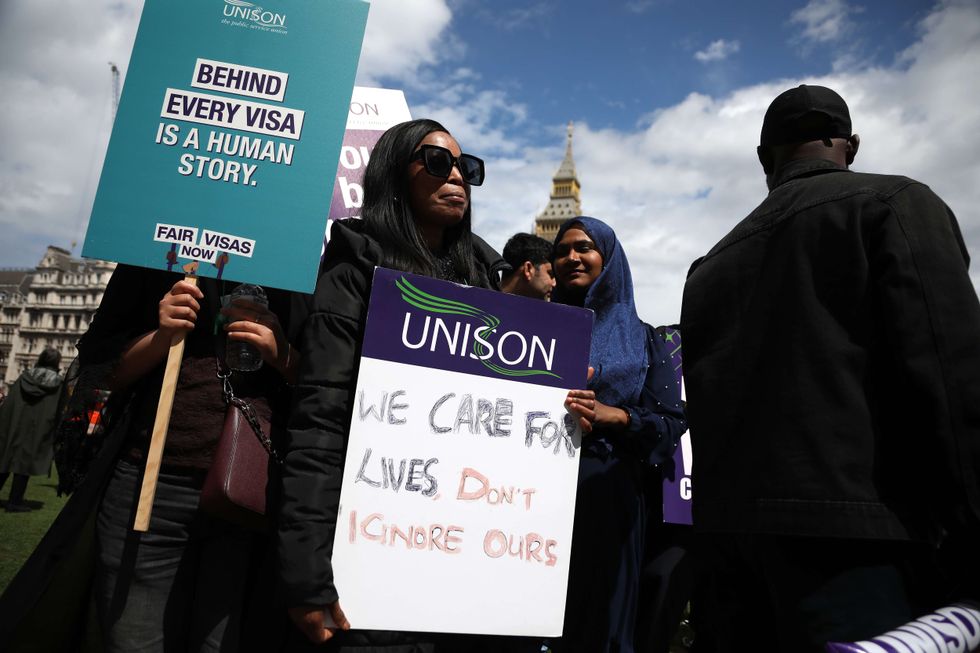 The new prime minister paid tribute to migrant health and social care workersAlishia Abodunde/Getty Images
Burnham’s instinct is that the public want fair rules without kicking care workers out. Surely this should be reassuring to the thousands of chefs and lab technicians, scientists and others who would not be able to stay.
Burnham found himself talking again about immigration after dramatic scenes on the Moroccan border. Reports said 50,000 migrants entered the Spanish enclave of Ceuta before returning en masse by last Friday (31) night and 72 people died. Yet that tragic death toll was treated as an incidental detail amid political arguments.
Existing border controls between Ceuta and the Spanish mainland meant that none of the Moroccan migrants were able to reach the European landmass – which did not stop the Italian and Danish governments demanding new measures to achieve that.
“Be in no doubt, many of these migrants are heading to Calais” tweeted Zia Yusuf of Reform, even after 95 per cent of the Moroccans had returned home.
Yusuf even made a weekend trip to Ceuta, reporting that he had personally witnessed Spain restoring control of the Moroccan border, expressing some cognitive bemusement as to how that was possible, with a left-wing Spanish government signed up to the European Convention on Human Rights.
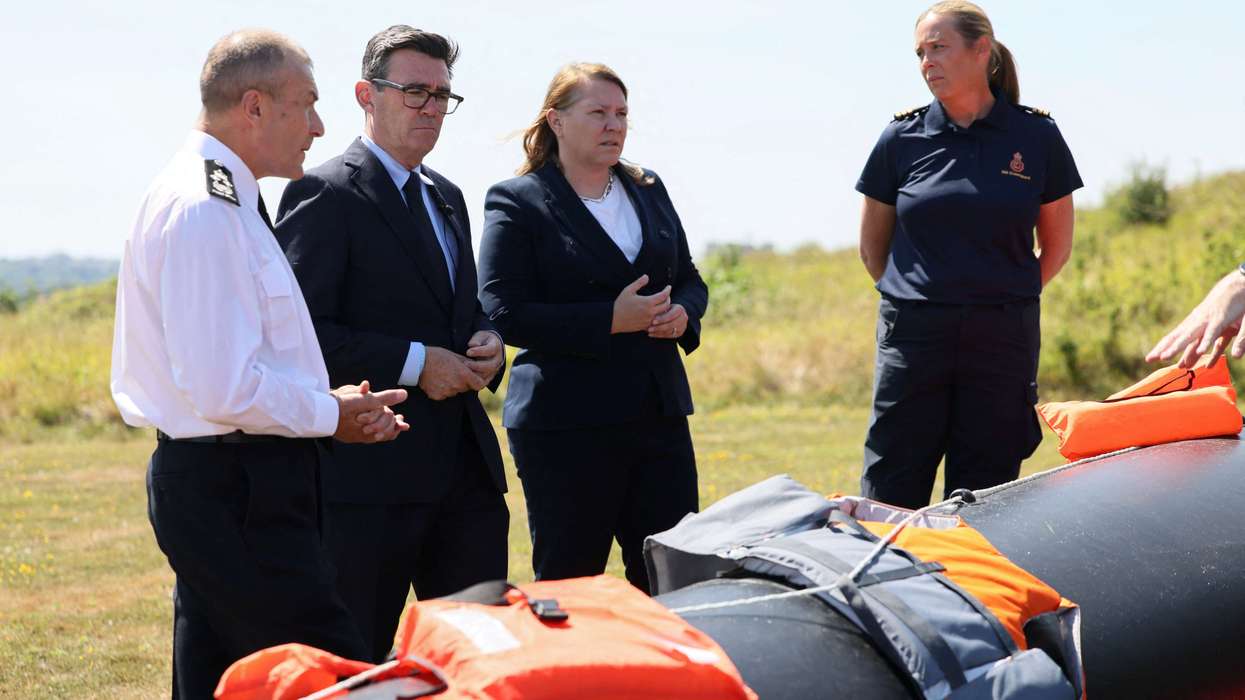
Burnham found himself on the white cliffs of Dover last Sunday (2). His hastily arranged trip demonstrated a sensitivity in Downing Street to opponents questioning why he had not yet spoken about asylum in his first fortnight.
The prime minister noted that Channel Crossings had fallen 40 per cent this year. The fall has been little noticed. Visible arrivals will continue to be reported. Invisible trends are harder to communicate.
Yet Burnham in Dover once again demonstrated his balancer instincts. “People want this issue addressed. We also need to build a system that offers safer routes for people as well, because that takes away the selling point of the gangs”, he said.
This is a prime minister keen to talk about both control and compassion, about rules and contribution. It is a promising start if he can show what that balancer agenda can deliver.