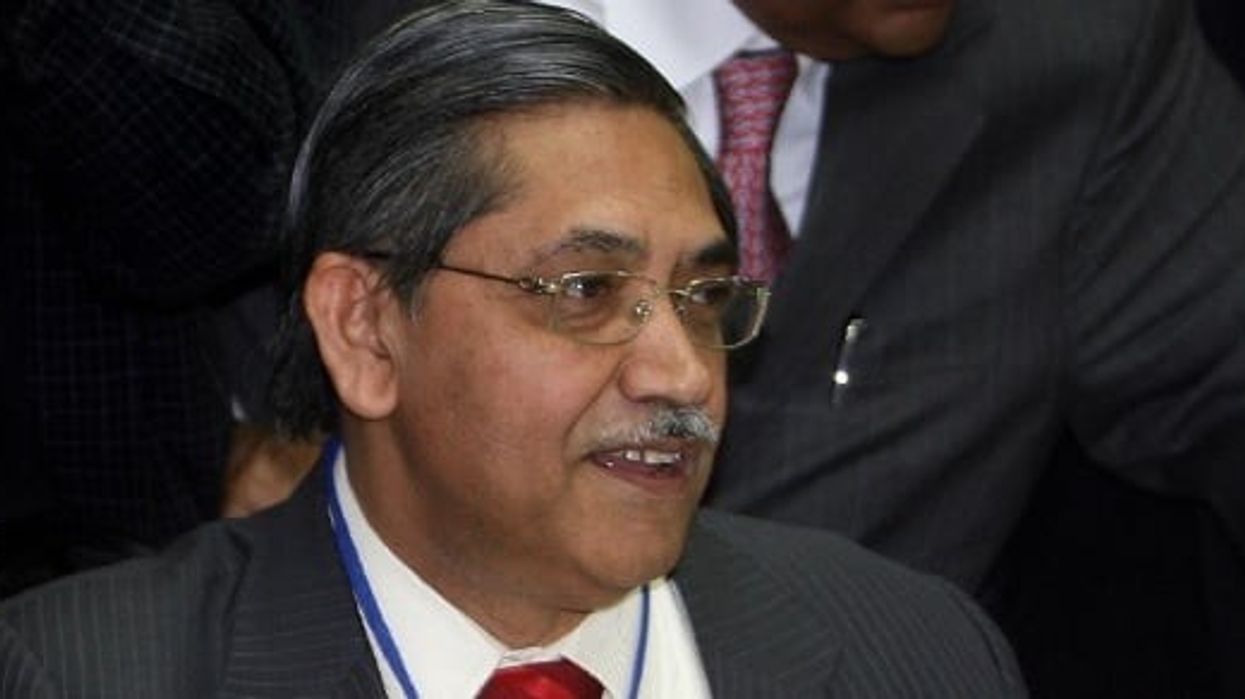

By Satya Ghatia
WHEN television channels in India last Friday (26) started flashing the news about the sudden demise of former deputy governor of the Reserve Bank of India, Dr KC Chakrabarty, his colleagues and friends deeply felt the vacuum he left behind. He was not only a veteran banker but also a radical thinker and innovator.
As many groups on social media were abuzz with condolence messages and shared memories about this stalwart of Indian banking, the following message from Alok Tewary immediately caught my attention:
While listening to Dr Chakrabarty at a farewell event in May 2004 at Bank of Baroda in London, Alok was so mesmerised that he took a paper napkin from the table and started making notes. Afterwards Alok requested Dr Chakrabarty to autograph it.
At first, he did not agree. “However, on my insisting, he relented. He was a gentleman to the core.”
Dr Chakrabarty influenced and inspired the lives and careers of thousands of bank officials, such as Alok, in all the organisations where he worked.
He was a mentor to many. His career growth itself is legendary in the Indian banking industry. In the initial years of his career at Bank of Baroda, he dreamt of becoming the deputy governor of the RBI. He used to ask colleagues why they considered it an impossible dream. With meticulous planning, knowledge, intelligence and dedication, he reached the top rungs of Indian banking:
Thanks to his constant efforts, Bank of Baroda became the first Indian bank to have its own office property in London. He was instrumental in the success of public issues of shares in Bank of Baroda and Indian Bank.
At the RBI, he succeeded in changing the interest rate and service charges rules in favour of customers. There is a long list of similar achievements to his credit in every organisation where he worked.
At the macro level, he made significant contributions in financial inclusion, financial literacy, restructuring of RRBs, banking regulation and supervision, currency management, financial stability, customer service, rural credit and human resources management. Dr Chakrabarty was chairman of Bhartiya Reserve Bank Note Mudran Pvt. Ltd. and chairman of the College of Agricultural Banking.
As RBI nominee, he was closely associated with National Housing Bank, Oriental General Insurance Co., Confederation of Indian Industry, Central Depository Services Ltd., National Institute of Bank Management, Agricultural Finance Corporation Ltd., Indian Institute of Banking and Finance and General Insurance Corporation Ltd, among others.
Though straightforward and outspoken in expressing his views, he was an intellectual with a warm heart and always open to correction.
Having worked for 26 years with Bank of Baroda, he remained a Barodian at the core of his heart. Throughout the banking industry and the people with whom he came into contact, Dr Chakrabarty will be missed a lot for his excellent qualities of head and heart.
Satya Ghatia is a former banker and a freelance writer. He authored the book Charting the Future: A History of Indian Bank and many articles with particular reference to economy, banking and financial services.

 Kees Van Dongen’s The White LadyAmit Roy