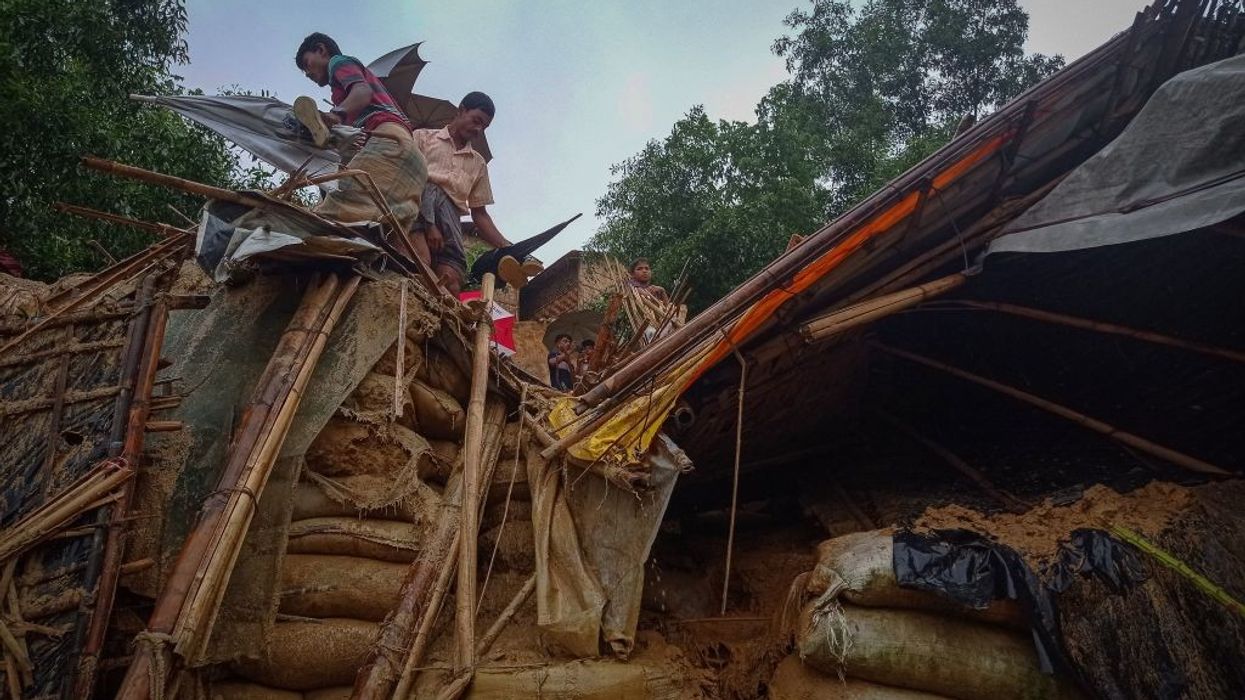

AT LEAST six Rohingyas died Tuesday (27) and thousands were relocated in refugee camps in Bangladesh's southeast after monsoon rains triggered landslides and flash floods in the hilly settlements, officials said.
Five Rohingyas including three children were buried and killed after part of a hill crushed their bamboo-and-tarpaulin shanties in Balukhali camp, refugee commissioner Shah Rezwan Hayat said.
"Days of heavy rains caused the landslides," he said.
Another Rohingya child died after he drowned in a stream in the nearby Palongkhali refugee camp, the official said, adding that all streams in the camps were raging due to flash floods.
"We also have rescued two injured people and sent them to hospitals," he said, adding that thousands of Rohingya families had been relocated within the camps to keep them safe.
Nearly a million Rohingyas live in overcrowded camps in Bangladesh's southeastern district of Cox's Bazar, which borders Myanmar.
Some 740,000 Rohingya fled their Rakhine state homes in August 2017, escaping a brutal clampdown by Myanmar security forces.
Thousands of these refugee families, especially those who live in the valleys within the 7,000-acre (2,832-hectare) settlements, remain at a high risk of landslides every year during the monsoon.
Last month two refugees were killed in separate landslides during heavy rain.