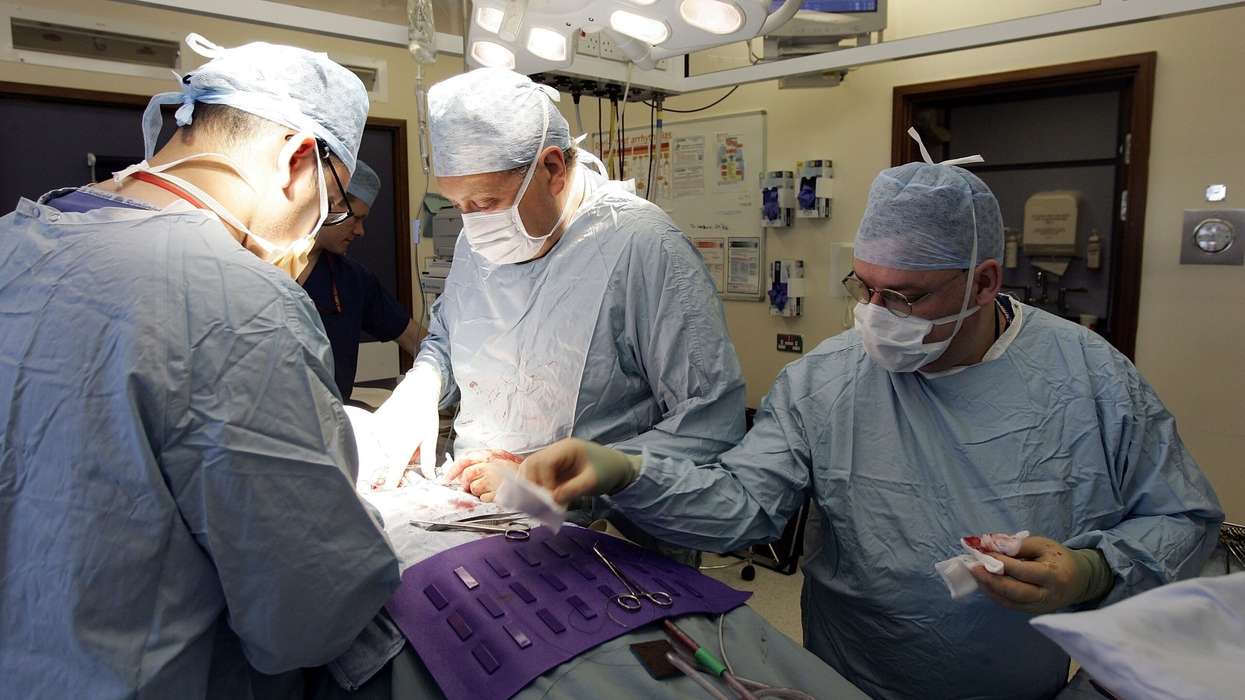

An evaluation of data from the National Organ and Tissue Transplant Organisation (Notto) in India has revealed that a significant majority of organ donors in India are women.
Between 1995 and 2021, among the 36,640 patients who underwent transplants, approximately four out of five living donors were women. Correspondingly, four out of five recipients were men.
This disparity underscores the pervasive influence of gender inequality across various spheres of life, The Sunday Times reported.
The statistics, which have garnered attention in India, sparked headlines, prompting a Times of India editorial to underscore the pronounced pattern of organs primarily flowing from mothers and wives to husbands and sons.
Dr Anil Kumar, the director of Notto said that there is an assumption that the prevalence of conditions necessitating transplants affects both men and women similarly. If women requiring transplants are not receiving adequate treatment, it signifies a noteworthy concern.
The most substantial contributions from living donors predominantly involve kidneys, with considerably fewer donations involving a portion of the pancreas, liver, or lung.
Dr Srivari Bhanuchandra, the organ transplant coordinator at Osmania General Hospital in Hyderabad (capital city of Telangana in south India) shared the prevalent perception regarding organ donations among genders.
He said, there is a belief that if something happens to a woman post-donation, it might be perceived as less severe because she is often a homemaker, assuming the husband could take care of the children.
He said it is rare for husbands to donate organs to their wives, attributing this rarity to societal pressures.
Dr Bhanuchandra highlighted that even if a woman considers accepting such an offer, she faces pressure, both from her husband's parents and her own, dissuading her. Conversely, when the situation reverses, and the husband requires a donation, both sets of parents encourage her to donate.
Also, in certain instances, a man might opt to receive an organ from his wife despite having an ideal donor in his brother.
According to Dr Anupam Sibal, a paediatric liver transplant surgeon at Indraprastha Apollo Hospital in New Delhi, more men are now stepping forward due to counselling efforts.
He mentioned that at his hospital, the percentage of donations from women has reduced from 75 per cent to 51 per cent. This change occurred as doctors assured men of their full recovery post-surgery, encouraging their willingness to participate in donations.