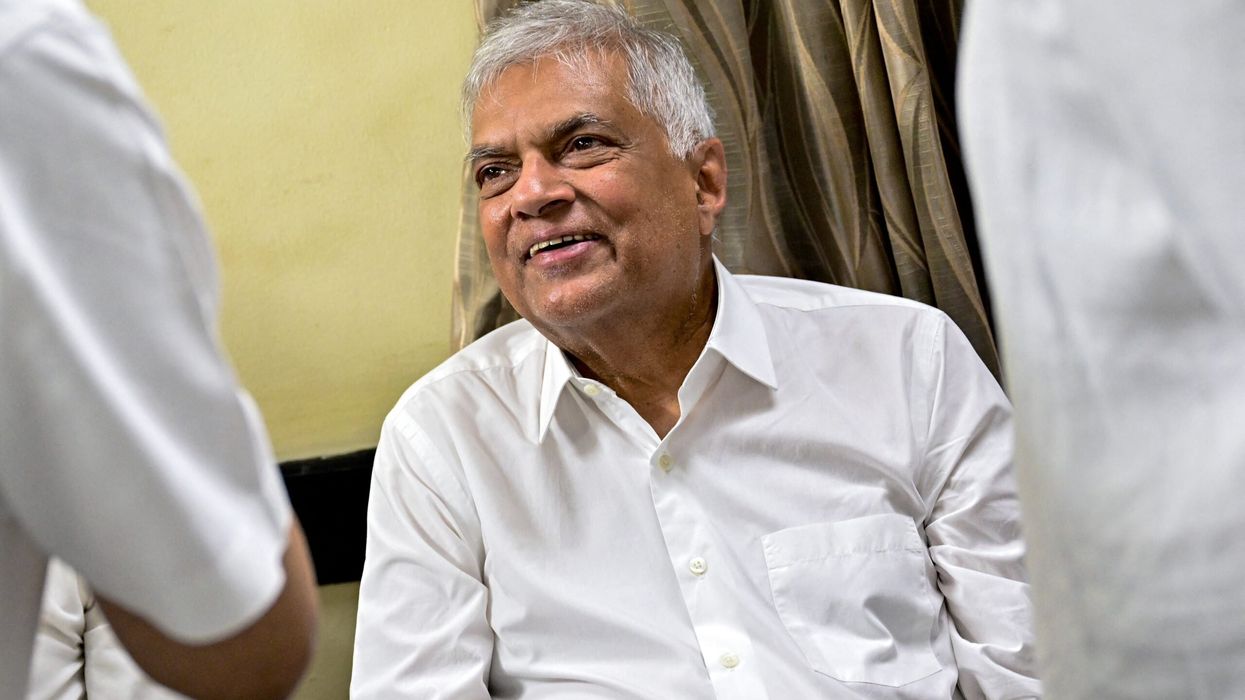

SRI LANKAN president Ranil Wickremesinghe faced a setback on Monday (29) when he failed to secure the backing of the largest political party in parliament for his re-election bid, posing a significant challenge to his prospects in the September 21 vote.
Nearly 17 million of Sri Lanka's 22 million population are eligible to cast ballots in this crucial election, which will determine the future of reforms in the South Asian island nation grappling with its worst financial crisis in decades.
Wickremesinghe, seen as the most market- and reform-friendly candidate, took office in July 2022 amid a severe financial crisis triggered by a record shortfall of foreign exchange reserves.
However, with just one seat in parliament, he needs the support of the Sri Lanka Podujana Peramuna (SLPP), which holds a parliamentary majority and includes key figures like former president Mahinda Rajapaksa and his brother, to bolster his re-election bid.
Although the SLPP decision is a blow to Wickremesinghe, it does not take him out of the race entirely, as he is contesting as an independent candidate and a breakaway faction of the SLPP and other opposition parties could end up supporting him.
“The politburo decided by a significant majority that Sri Lanka Podujana Peramuna will present a candidate under the SLPP party symbol,” SLPP General Secretary Salaga Kariyawasam told reporters after the party’s politburo meeting.
The SLPP candidate would be announced in the next few days, Kariyawasam added.
There was no immediate comment from Wickremesinghe or his office in response to the SLPP decision.
A source in Wickremesinghe's United National Party said the outcome was expected.
"We are still expecting a group of SLPP members to support president Wickremesinghe as well as parliamentarians from minority parties," said the source with direct knowledge of the matter. "This allows us to build a broader coalition across different parties and ethnic lines."
Wickremesinghe's predecessor, Gotabaya Rajapaksa, was the first sitting president to be ousted from power after thousands of disgruntled protesters occupied his office and official residence forcing him to flee the country and later resign.
Over the past two years Wickremesinghe has overseen a fragile economic recovery securing a $2.9 billion (£2.2bn) International Monetary Fund (IMF) bailout programme that helped stem a fall in the rupee, tame runaway inflation and rebuild dollar reserves.
Wickremesinghe also set the groundwork for Sri Lanka to start debt restructuring talks with its official creditors and bondholders.
But pain from the financial fallout is far from over. Under the IMF programme Sri Lanka still has to increase tax revenue, fix loss making state companies and finalise a $12.5 billion (£9.7bn) debt rework with bondholders.
Rising poverty levels, corruption and policy gridlock are also concerns, analysts said, adding that the crisis may have eroded the previously strong SLPP vote base, making the outcome of its alliance with Wickremesinghe unpredictable.
"People are silently waiting to give their decision on election day," said political scientist Prof. Jayadeva Uyangoda.
"It is actually judgement time for Sri Lanka." (Reuters)