
Sri Lanka's stock market halted trading after a nearly 13 per cent plunge Monday as the island nation's beleaguered government faces new pressure to resign from influential Buddhist leaders over a crippling economic crisis.
The country's worst downturn since independence in 1948 has brought widespread hardships to its 22 million people, with months of regular blackouts and acute shortages of food and fuel.
Monday was the first morning of trade on the Colombo bourse after a two-week break, during which the government imposed a record interest rate hike and defaulted on its $51 billion foreign debt.
But trading was halted after a frenzied market sell-off, and called off for the day entirely when a brief resumption failed to dampen the downward slide, with the local S&P index finishing 12.6 per cent down.
Equities had already shed nearly 40 per cent of their value since January and the local currency has fallen by a similar amount against the greenback in the past month.
The latest market crash came as the country's most influential Buddhist clerics joined a growing list of former allies calling for the government's resignation.
"The country is fast becoming a failed state," senior monk Medagama Dhammananda told reporters in the central city of Kandy.
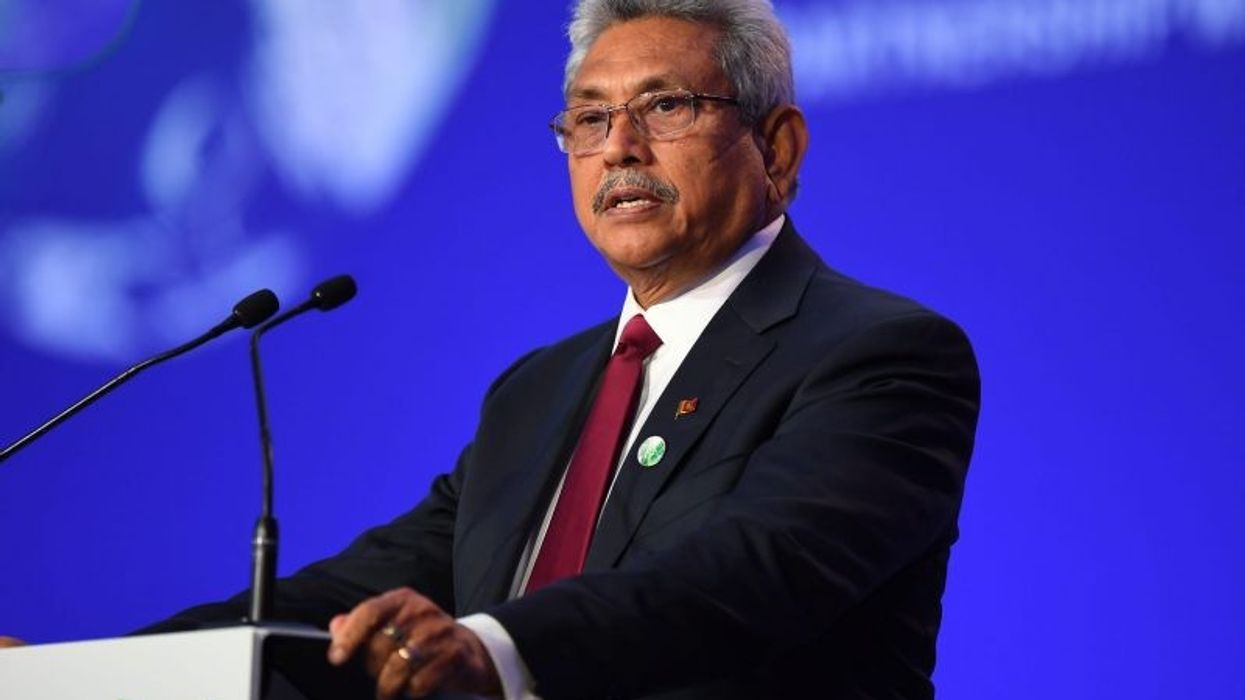
Dhammananda said he and fellow Buddhist leaders had jointly petitioned president Gotabaya Rajapaksa to establish an interim government "to pull the country out of this crisis".
Such a move would require the resignation of prime minister Mahinda Rajapaksa -- the president's brother and head of Sri Lanka's powerful ruling family.
Gotabaya has faced similar calls to step down, with thousands of protesters camped outside his seafront office in Colombo for more than two weeks.
Before the crisis, both men were beloved by much of the country's Sinhalese Buddhist majority for bringing a decades-long ethnic civil war against the Tamil Tigers to a brutal end.
Monday's rebuke from the Buddhist clergy is the latest public departure by formerly steadfast allies of the Rajapaksa clan.
Recent weeks have seen the fracturing of the government's ruling coalition, along with business leaders and a former cabinet minister urging the Rajapaksas to resign.
- 'Painful few years' -
Sri Lanka's economic collapse began to be felt after the coronavirus pandemic torpedoed vital revenue from tourism and remittances.
Utilities unable to pay for fuel imports have imposed lengthy daily blackouts to ration power, while long lines snake around service stations as people queue for petrol and kerosene.
Hospitals are short of vital medicines, the government has appealed to citizens abroad for donations and record inflation has added to everyday hardships.
Public anger over mismanagement of the crisis is at a fever pitch, with weeks of protests demanding the government's resignation around the island.
Last week a man was shot dead when police fired on a road blockade in the central town of Rambukkana, sparking further outrage against authorities.
Sri Lankan officials were in Washington last week to negotiate with the International Monetary Fund for a bailout, but official sources said there was no immediate prospect of emergency funding from the lender.
Colombo is now banking on further bilateral help from India, China and Japan to help keep the country afloat, a finance ministry source told AFP.
Beijing's ambassador to Colombo, Qi Zhenhong, said his country was already involved in "all-out efforts" to help Sri Lanka and said European former colonial powers should also lend their assistance.
Finance minister Ali Sabry, who is part of the Washington delegation, warned last week that the economic situation would likely deteriorate even further.
"It is going to get worse before it gets better," Sabry told reporters. "It is going to be a painful few years ahead."